Corporate News: Recent Ownership Transitions at Nextera Energy Inc. and Implications for Grid Modernization
Nextera Energy Inc. (NASDAQ: NEX) filed two Form 4 disclosures on 17 November 2026, reporting changes in the ownership of its common stock by senior management. Both filings relate to transactions that occurred on 13 November 2026.
Summary of the filings
| Officer | Position | Shares Purchased | Total Holding After Purchase | Additional Notes |
|---|---|---|---|---|
| Senior Officer (name withheld) | Senior Officer | Several dozen shares (restricted stock) | Just over 10 000 shares | Portion held in a retirement‑savings‑plan trust |
| President & CEO of Subsidiary | President & CEO of Subsidiary | More than 100 shares | Mid‑thousands | Involves a retirement‑savings‑plan trust holding |
Both officers remain in their respective positions. No other material events or corporate actions were disclosed.
Linking Corporate Governance to Power System Strategy
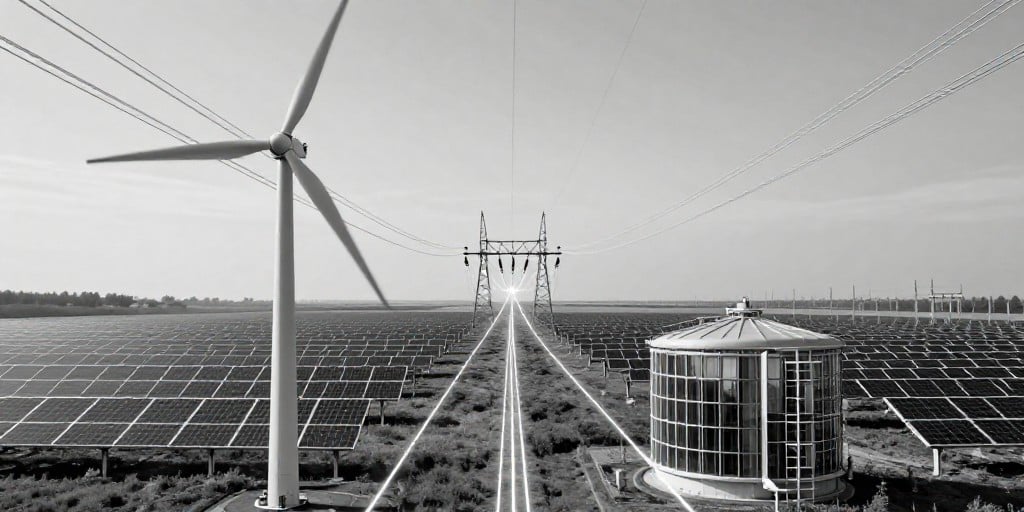
While the ownership changes are modest from a financial perspective, they underscore a broader trend: the integration of corporate governance practices with the technical trajectory of utility-scale power delivery. Nextera Energy, a leading operator of wind farms, solar assets, and advanced distribution systems, relies on a robust management team to steer its modernization agenda. The presence of senior executives holding significant equity aligns their incentives with the long‑term performance of the company’s grid‑related assets.
1. Grid Stability in a Renewable‑Heavy Era
The U.S. power grid is undergoing a rapid shift toward renewable energy sources, with solar and wind now supplying a growing share of the total generation mix. This shift introduces variable output profiles that challenge traditional notions of grid stability. Engineers now rely on synthetic inertia, energy‑storage systems, and advanced power‑electronics converters to emulate the inertial response of conventional synchronous generators.
Key technical considerations
- Frequency regulation: With fewer synchronous machines, the grid’s inertia constant (H) drops, shortening the time available for control actions to counteract frequency excursions.
- Voltage control: Reactive power provision must now come from inverter‑based resources, requiring sophisticated voltage‑control algorithms such as Volt‑Var and Volt‑Watt modes.
- Resiliency: The proliferation of distributed energy resources (DERs) introduces new fault currents and fault‑ride‑through challenges, demanding updated protection schemes and adaptive relays.
Nextera’s equity stake by senior executives reinforces the necessity for these technical strategies, ensuring that the company’s operational and financial objectives remain tightly coupled to grid reliability metrics.
2. Renewable Integration Challenges
2.1 Curtailment and Capacity Factor Management
In many wind‑rich basins, forecast errors and curtailment events erode the expected capacity factor, leading to lower revenue streams for operators. Modernization efforts, such as dynamic line rating and real‑time grid forecasting, help reduce curtailment by expanding available transmission capacity and improving dispatch decisions.
2.2 Grid Congestion and Transmission Planning
High penetration of renewables often creates load‑flow bottlenecks that constrain the amount of clean energy that can reach markets. Transmission owners must conduct reliability‑constrained economic dispatch (RCED) analyses and invest in high‑voltage direct current (HVDC) links or line‑reinforcement projects to relieve congestion.
2.3 Integration of Storage and Demand Response
Energy storage systems provide temporal decoupling between generation and load, enabling peak shaving and load shifting. Demand‑response programs, coordinated through advanced metering infrastructure (AMI), complement storage by offering flexible load profiles that can be shifted to periods of high renewable output.
3. Infrastructure Investment Requirements
Investing in a resilient, renewable‑friendly grid requires capital outlays in several key domains:
| Investment Domain | Typical Cost Drivers | Typical Return Metrics |
|---|---|---|
| Transmission upgrades | Reactors, breakers, conductors, tower reinforcement | Availability of transmission, avoided curtailment |
| Substation automation | Intelligent electronic devices (IEDs), SCADA upgrades | Enhanced protection, reduced outage duration |
| Distributed generation integration | Inverters, voltage‑control equipment | Increased renewable penetration, lower marginal cost |
| Energy storage | Battery modules, control systems | Capacity factor improvement, ancillary services |
The capital intensity of these projects is reflected in levelized cost of electricity (LCOE) calculations, which must incorporate investment amortization, operation & maintenance (O&M), and discount rates.
4. Regulatory Frameworks and Rate Structures
4.1 Transmission and Distribution (T&D) Rate Design
Regulatory bodies such as state public utility commissions (PUCs) evaluate rate proposals through revenue‑based, cost‑of‑service, and benefit‑based models. In a renewable‑heavy environment, incentive tariffs—which reward utilities for providing clean energy—are increasingly common.
4.2 Renewable Portfolio Standards (RPS) and Clean Energy Credits
Compliance with RPS mandates often drives utilities to procure renewable generation. The clean energy credit market enables utilities to trade compliance credits, creating an additional revenue stream that can offset higher investment costs.
4.3 Grid Modernization Incentives
Federal and state incentives, such as the Federal Investment Tax Credit (ITC) for solar and the Production Tax Credit (PTC) for wind, lower the effective cost of renewable assets. Additionally, grid‑modernization grants support advanced metering, real‑time pricing, and storage deployment.
5. Economic Impacts on Consumers
Utility modernization can influence consumer bills through multiple channels:
- Infrastructure cost pass‑through: Capital investments are typically recovered through service charges or per‑kWh rates.
- Efficiency gains: Improved grid reliability reduces outage costs and can lower distribution losses, partially offsetting rate increases.
- Renewable premium: Consumers may face higher charges for clean energy procurement, but these can be balanced by environmental benefits and potential savings from avoided environmental degradation.
Analytical tools, such as utility rate design simulations, allow regulators to assess the trade‑off between investment costs and consumer affordability.
6. Engineering Insights into Power System Dynamics
6.1 Dynamic Modeling of Inverter‑Based Resources
Modeling the behavior of inverters under grid disturbances requires capturing inner‑loop control dynamics, power‑electronics switching, and grid‑code compliance. Tools like MATLAB/Simulink and PSCAD enable utilities to simulate worst‑case fault scenarios and optimize inverter settings.
6.2 Multi‑Area Stability Analysis
Large‑scale power systems are partitioned into areas that interact through tie‑lines. Coherency analysis identifies groups of synchronous machines that oscillate together, guiding area‑constrained control strategies. In a grid dominated by inverter resources, virtual synchrony concepts replace physical inertia, necessitating novel stability assessment methodologies.
6.3 Market Integration and Ancillary Services
Renewable resources can provide ancillary services—frequency response, voltage support, spinning reserve—if they meet grid‑code requirements. Quantifying the service capability of a distributed resource involves solving optimization problems that balance economic dispatch with service provision constraints.
7. Conclusion
Nextera Energy Inc.’s recent Form 4 filings, while modest in scope, highlight the intersection between corporate governance and the technical evolution of the U.S. power grid. As utilities navigate the dual challenges of renewable integration and infrastructure investment, the alignment of executive incentives with grid reliability and modernization objectives becomes paramount. Advanced power‑system engineering, coupled with thoughtful regulatory frameworks, will continue to shape the economic and environmental trajectory of the electric utility sector.