Corporate Impact of the Upcoming Election on New Zealand’s Power Systems
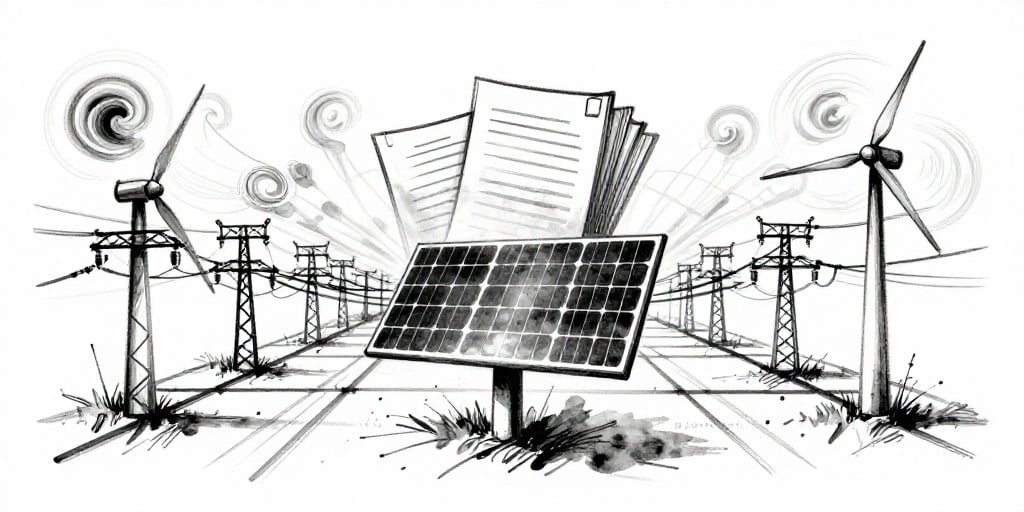
The forthcoming November 7 general election is casting a palpable cloud of uncertainty over New Zealand’s financial markets. While the S&P/NZX 50 Total Return Index has recently shed its August momentum and the New Zealand dollar has slipped against the U.S. dollar, the most critical implications for the energy sector revolve around policy direction, regulatory reforms, and the pace of infrastructure investment. This article examines how the election’s potential outcomes will shape power generation, transmission, and distribution (GTD) systems, grid stability, renewable integration, and the broader economic framework for utility modernization.
1. Political Proposals and Their Technical Ramifications
1.1 Generation Restructuring and Public Ownership
Smaller parties such as NZ First and the Greens have advocated for a comprehensive restructuring of generation assets and the establishment of a publicly owned energy company. From an engineering standpoint, a shift toward public ownership could alter investment signals, potentially prioritizing long‑term reliability and renewable penetration over short‑term profitability. However, the likelihood that such restructuring will materially change the earnings of incumbents—Contact Energy, Meridian Energy, Genesis Energy, and Mercury NZ—remains low. The capital‑intensive nature of GTD projects and the existing contractual frameworks (e.g., long‑term power purchase agreements) provide a degree of insulation against abrupt ownership changes.
1.2 Capital‑Gains Tax on Investment Property
A proposed capital‑gains tax on investment property could influence real‑estate development patterns, indirectly affecting the spatial distribution of renewable generation sites (e.g., solar farms). Reduced demand for high‑density property could shift land use toward rural or peri‑urban zones, potentially easing siting constraints for large‑scale renewable projects. However, the effect on the GTD sector is expected to be marginal, as renewable developers often secure land through long‑term lease agreements that are insulated from property taxation fluctuations.
1.3 Labour‑Led Healthcare Expansion
An expansion of public healthcare spending under a Labour‑led government could boost demand for district‑level energy services in hospitals and research facilities. Hospitals require stringent reliability standards (N‑1 or higher redundancy) and increasingly are exploring on‑site renewable generation combined with battery storage to meet both reliability and sustainability goals. The resulting demand for advanced distribution infrastructure (e.g., microgrids) may accelerate investment in resilient GTD assets.
2. Regulatory Frameworks and Rate Structures
2.1 Regulatory Oversight of Grid Stability
The New Zealand Energy Authority (NZE) currently mandates grid stability metrics such as frequency containment reserve (FCR) and voltage stability indices. A shift toward a publicly owned generation portfolio could compel the NZE to re‑evaluate these metrics to align with a more distributed generation mix. The emphasis may move from bulk‑power transmission reliability to distributed energy resource (DER) coordination, necessitating real‑time data analytics and advanced protection schemes.
2.2 Rate‑Setting and Consumer Cost Implications
Rate structures are largely governed by the Independent Energy Regulator (IER), which balances cost‑of‑service principles against consumer affordability. A policy environment that favors renewables—particularly if coupled with a new publicly owned utility—could lead to higher upfront capital costs for renewable projects and storage systems. These costs may be passed through to consumers in the form of higher transmission and distribution tariffs. However, long‑term savings from reduced fuel volatility and lower maintenance requirements for renewables could offset initial rate hikes.
2.3 Funding Mechanisms for Infrastructure Investment
Infrastructure investment could be financed through a combination of regulated asset‑based financing (RAAF), green bonds, and public‑private partnership (PPP) models. The central bank’s decision to hold rates has introduced uncertainty around the cost of capital. A Labour victory might reduce the probability of future rate hikes, potentially lowering financing costs. Conversely, a coalition government could adopt a more conservative stance, keeping rates high and making capital investment more expensive.
3. Technical Insights into Grid Dynamics
3.1 Renewable Energy Integration Challenges
High penetration of intermittent resources such as wind and solar introduces variability that challenges frequency and voltage regulation. The GTD system must adapt by:
- Deploying Flexible Resources: Battery energy storage systems (BESS) and demand‑response programs provide rapid frequency response capabilities.
- Upgrading Protection Schemes: Advanced fault‑current relays and adaptive protection algorithms are necessary to handle reverse power flows and reduced fault‑current margins.
- Implementing Grid‑Edge Intelligence: Distributed control centers utilizing AI and machine‑learning models can predict renewable output and adjust dispatch accordingly.
3.2 Grid Stability Considerations
Maintaining a stable grid with high renewable penetration requires:
- Enhanced Synchronous Generation: Power‑electronic inverters in PV plants must emulate inertial response to support frequency regulation.
- Dynamic Voltage Support: Reactive power control through inverters and voltage‑sourced converter (VSC) HVDC links can maintain voltage levels.
- Robust Transmission Planning: Reinforcing key corridors and adding HVDC back‑up lines improves inter‑regional power transfer capability, reducing reliance on any single path.
4. Economic Impact of Utility Modernization
4.1 Cost‑Benefit Analysis of Modernization Investments
Modernizing the GTD network—through smart grid deployment, high‑voltage DC (HVDC) interconnectors, and advanced control systems—generates upfront capital expenditures but yields long‑term benefits:
- Reduced Transmission Losses: Upgraded lines and HVDC interconnectors can cut losses from ~3 % to ~1.5 %, improving overall system efficiency.
- Lower Operating Costs: Predictive maintenance reduces unplanned outages, decreasing the total cost of ownership (TCO) for utilities.
- Enhanced Market Flexibility: A more flexible grid accommodates diverse energy sources, fostering competition and potentially lowering wholesale prices.
4.2 Impact on Consumer Bills
While modernization can lead to higher capital costs, consumer bills may remain stable or even decline over a medium‑term horizon:
- Economies of Scale: Large‑scale renewable projects benefit from lower per‑MW costs, translating to lower marginal generation costs.
- Fuel Price Hedging: Reduced reliance on imported fossil fuels mitigates exposure to volatile global commodity markets.
- Regulatory Incentives: Feed‑in tariffs and renewable portfolio standards may be adjusted to ensure fair compensation for renewable generation without excessively burdening consumers.
5. Conclusion
The New Zealand election is poised to influence the trajectory of the power sector’s transformation. While political proposals may not drastically alter the earnings of existing energy firms, they can reshape investment signals, regulatory expectations, and consumer rate structures. Technically, the continued integration of renewable energy sources and the modernization of GTD infrastructure will demand sophisticated protection schemes, advanced control strategies, and robust financing mechanisms. The economic implications—particularly on consumer costs—will hinge on how quickly the country can balance the dual objectives of grid stability and sustainable growth. As investors await election outcomes, the energy sector remains a focal point for understanding the broader implications of policy uncertainty on New Zealand’s financial markets.