
Corporate Update on Naturgy Energy Group SA
Naturgy Energy Group SA announced the convening of a general shareholders meeting, a routine corporate event scheduled to address the company’s strategic direction and governance matters. The call follows a series of recent developments that illustrate Naturgy’s adaptive stance on its renewable energy portfolio and underscore its continued emphasis on core gas operations.
Strategic Asset Realignment in the United States
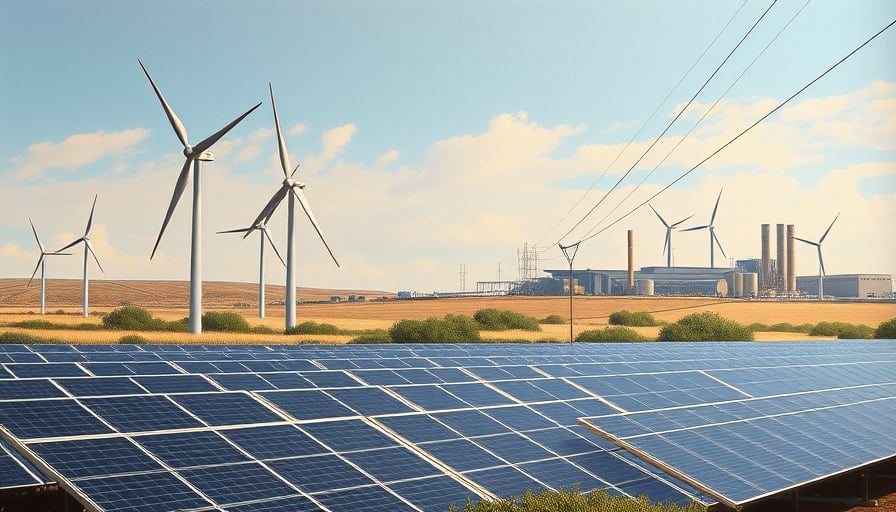
In its 2025 annual report, Naturgy disclosed the divestiture of nine renewable energy projects in the United States, comprising both photovoltaic farms and battery‑storage facilities. The decision was motivated by heightened regulatory uncertainty that intensified after the U.S. administration transition. While the company retained two additional renewable assets that remain under consideration for sale, the divestitures signal a broader consolidation strategy aimed at mitigating exposure to volatile policy environments.
From an engineering perspective, the exit of these solar and storage assets reflects the challenges of integrating intermittent renewables into the grid. In the U.S., the integration of large‑scale photovoltaic farms necessitates sophisticated grid‑management solutions—including dynamic voltage control, frequency support, and advanced forecasting—to maintain voltage stability and prevent cascading failures. Battery‑storage projects, while providing dispatchable power and grid‑frequency regulation, introduce complexities in state‑of‑charge management and thermal limits that can strain existing transmission assets.
Naturgy’s withdrawal from the U.S. renewable market also reduces its participation in the U.S. wholesale electricity market, which operates under a deregulated regime with market‑based pricing. The reduced exposure to this market may lower the company’s revenue volatility but also limits its ability to leverage arbitrage opportunities that arise from price differentials between peak and off‑peak periods.
Continued Commitment to Core Gas Operations
While the U.S. renewable divestments dominated the public narrative, Naturgy reiterated its commitment to its core gas portfolio, which spans liquefaction, regasification, transport, storage, distribution, and international sales. These activities remain central to the company’s revenue model and provide a stable platform for financing future infrastructure investments.
From a technical standpoint, the company’s gas infrastructure serves a dual purpose. First, natural gas is a key fuel for peaking power plants that provide grid‑frequency support and reserve capacity, thereby contributing to system reliability. Second, the gas network itself—particularly the high‑pressure transmission pipelines—requires continuous monitoring to detect pressure drops, hydrate formation, and corrosion, all of which can impact line‑of‑sight operations and safety margins.
The integration of gas and power systems, often referred to as gas‑to‑electricity (G2E), is gaining traction as a flexible solution for renewable curtailment. By converting surplus renewable power into compressed natural gas (CNG) or synthetic methane via electrolysis and methane synthesis, utilities can effectively store energy in the form of a liquid fuel. Naturgy’s expertise in liquefaction and regasification positions it favorably to participate in such cross‑modal projects, thereby enhancing grid resilience and reducing carbon footprints.
Implications for Grid Stability and Renewable Integration
Grid stability hinges on the ability to balance supply and demand in real time. The removal of significant renewable assets from the U.S. market reduces the volume of intermittent generation that must be managed by balancing reserves. However, it also removes ancillary services such as voltage ride‑through and reactive power support that large solar farms can provide through inverters equipped with smart‑inverter functionalities.
Modernization of the grid requires substantial investment in both physical infrastructure and digital controls:
Transmission Upgrades: Reinforcement of high‑voltage corridors to accommodate bi‑directional power flows, especially from concentrated renewable hubs. Advanced conductors, such as high‑temperature low‑sag (HTLS) cables, can improve capacity without expanding the right‑of‑way footprint.
Substation Automation: Deployment of intelligent electronic devices (IEDs) and phasor measurement units (PMUs) enables real‑time monitoring of voltage and frequency, facilitating automatic corrective actions and reducing the reliance on manual interventions.
Energy Storage Integration: Battery and pumped‑hydro storage systems provide rapid frequency response and peak shaving capabilities. However, their effective utilization demands robust coordination protocols and standards, such as IEC 61850 for substation communication.
Demand Response and Smart Metering: Advanced metering infrastructure (AMI) and dynamic load management programs reduce peak demand, thus easing the need for costly capacity expansions. Utilities can employ time‑of‑use tariffs to incentivize consumer behavior that aligns with system needs.
Regulatory Frameworks and Rate Structures
Regulatory uncertainty remains a pivotal factor influencing investment decisions. In the U.S., the Energy Policy and Regulatory Climate has shifted dramatically under successive administrations, affecting tax incentives for renewable energy, permitting timelines, and grid interconnection standards. A stable regulatory framework is essential to attract capital for long‑term projects such as offshore wind farms and high‑capacity transmission lines.
Rate structures also play a decisive role in the economic viability of utility modernization:
Energy‑Based Tariffs: Traditional fixed rates incentivize consumption irrespective of demand, potentially exacerbating peak loads. Transitioning to time‑of‑use (TOU) or dynamic pricing can redistribute load profiles and improve system efficiency.
Capacity Tariffs: Charges based on peak demand encourage utilities to invest in distributed generation and demand response. However, excessive capacity pricing may deter smaller renewable developers and undermine the competitiveness of distributed energy resources (DERs).
Ancillary Services Compensation: Monetizing services such as voltage support, frequency regulation, and reserve provision aligns the financial incentives of market participants with system reliability needs. Integrating DERs into ancillary services markets requires standardized interface protocols and robust forecasting tools.
Economic Impacts and Consumer Costs
Investment in grid infrastructure and modernization translates into long‑term economic benefits but may also influence consumer bills. The cost of reinforcing transmission corridors, installing advanced substations, and deploying storage can be partially recovered through regulated rate adjustments. However, efficient integration of renewable resources and demand‑side management can offset these costs by reducing the need for expensive peaking plants and curtailment losses.
Furthermore, the transition to a more distributed and renewable‑rich system can yield social cost benefits—lowering air pollution, reducing greenhouse gas emissions, and enhancing local economic resilience through job creation in renewable manufacturing and grid services.
Conclusion
Naturgy Energy Group SA’s recent decision to divest renewable projects in the United States underscores its strategic focus on risk mitigation in uncertain regulatory climates while maintaining a robust core gas portfolio. The company’s actions illustrate the broader challenges facing utilities worldwide: balancing the imperative of renewable integration with the need for grid stability, navigating evolving regulatory frameworks, and managing the economic impacts of infrastructure investment on consumer costs. As the energy transition accelerates, utilities that successfully integrate technical expertise, forward‑looking investment strategies, and adaptive regulatory engagement will be best positioned to secure long‑term resilience and profitability.