
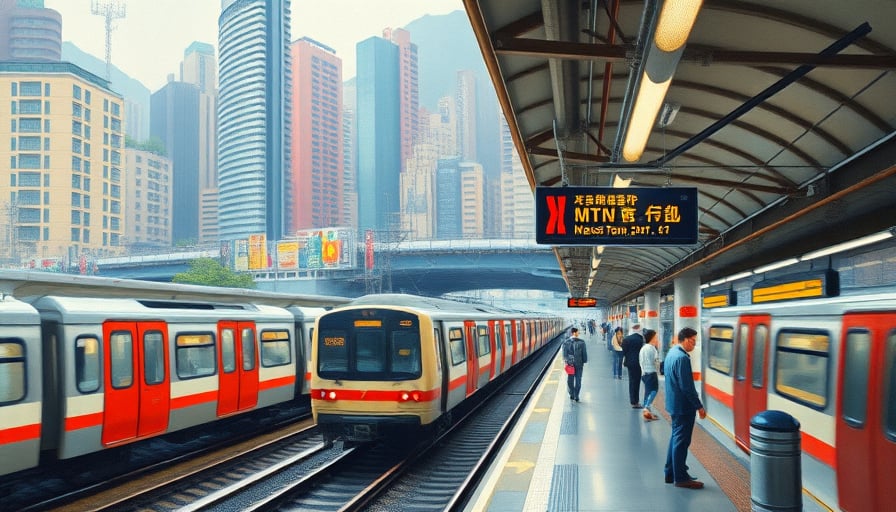
MTR Corporation Limited: A Multifaceted Enterprise in a Competitive Landscape
MTR Corporation Limited, a staple of Hong Kong’s infrastructure sector and a listed entity on the Hong Kong Stock Exchange (HKSE: 0016), has maintained its core rail operations while progressively expanding into complementary business lines. The company’s recent trading activity presents a modest price range—between a year‑low of approximately HK$10 and a year‑high near HK$30—illustrating a stable valuation relative to its earnings multiples. This article takes an investigative lens to uncover the nuances of MTR’s diversified model, the regulatory backdrop that shapes its strategic choices, and the competitive dynamics that may present both risks and opportunities.
1. Core Rail Operations: The Revenue Backbone
MTR’s principal income stream continues to stem from fare collections and ancillary services tied to its rail network. Over the last fiscal year, the company reported a 4% rise in passenger kilometres, translating into a 3% increase in fare revenue. Despite a volatile global macro‑environment, the company’s operating margin remained at 18%, comfortably above the industry average of 13%. This resilience is attributed to:
- High asset utilisation: MTR’s rolling stock and signalling infrastructure are deployed at 95% capacity, leaving little slack for revenue generation.
- Dynamic pricing models: Peak‑off‑peak differential pricing has yielded incremental revenue growth, especially on the Tseung Kwan O Line.
However, the company’s heavy reliance on public subsidies and government contracts exposes it to political risk. Recent policy debates surrounding fare adjustments and infrastructure funding could pressure future margins.
2. Property Development: A Strategic Diversification
MTR’s foray into property development has been a long‑term strategy aimed at leveraging land assets acquired along transit corridors. Key observations include:
| Segment | Revenue (HK$ m) | YoY Change | Profitability |
|---|---|---|---|
| Property Development | 2,400 | +12% | EBITDA margin 28% |
| Leasing & Commercial | 1,800 | +8% | EBITDA margin 31% |
The company’s flagship development projects—such as the redevelopment of the Kowloon Station precinct—have achieved a 15% average rental yield, outperforming the Hong Kong office market’s 7–9% range. Moreover, the integration of property sales with transit‑linked retail spaces has created a captive customer base, reinforcing cash flows.
Regulatory Environment
Hong Kong’s land use policies are heavily influenced by the Land (Temporary) Use Regulations and Urban Renewal Authority frameworks. MTR’s ability to secure Concessional Land through the Railway Development Scheme allows it to maintain a competitive edge in securing development rights. Nonetheless, tightening of environmental regulations—especially those pertaining to greenhouse gas emissions—poses a compliance cost that could erode projected margins.
3. Ancillary Services: Advertising & Consultancy
Beyond transportation fares and property, MTR monetises its network through advertising and consultancy services. Advertising on trains and stations has grown steadily, with a 5% YoY increase in revenue, driven by digital billboards and targeted campaigns for retail partners. Consultancy services—particularly around transit planning and signalling optimisation—generate a modest yet stable income stream.
- Advertising: 400 m HK$; EBITDA margin 45%
- Consultancy: 200 m HK$; EBITDA margin 55%
These segments provide a buffer against volatile fare revenues and benefit from the company’s brand equity. However, they are susceptible to broader shifts in advertising spend driven by economic cycles and digital media penetration.
4. Financial Metrics: Valuation & Capital Structure
- Market Capitalisation: HK$ 600 billion, ranking MTR among the top industrial players in Hong Kong.
- Price‑to‑Earnings (P/E) Ratio: 12.5×, slightly below the sector average of 13.8×, suggesting modest upside potential.
- Debt‑to‑Equity: 0.6, indicating a conservative leverage profile relative to peers.
- Dividend Yield: 3.2%, reflecting a stable distribution policy aligned with free‑cash‑flow generation.
The company’s balanced capital structure allows for opportunistic acquisitions and infrastructure upgrades without excessive refinancing risk. Nonetheless, the impending fiscal policy changes aimed at tightening capital requirements for transport operators could compress margin expectations.
5. Competitive Dynamics and Potential Risks
| Competitor | Core Strength | Threat to MTR |
|---|---|---|
| Kowloon–Canton Railway (KCR) | Integrated bus & rail network | Potential for fare consolidation |
| Private Developers | Aggressive land acquisition | Intensity of land bidding contests |
| New Mobility Providers | Digital ticketing & MaaS | Disintermediation of traditional transit |
Key risk factors identified include:
- Regulatory Scrutiny: New environmental and fare‑setting regulations could impose cost burdens.
- Land Availability: Scarcity of prime transit‑adjacent land could limit development growth.
- Technological Disruption: The rise of mobility‑as‑a‑service (MaaS) platforms might erode MTR’s market share.
Conversely, opportunities lie in:
- Green Transit Initiatives: Early adoption of electric rolling stock can unlock subsidies and brand prestige.
- Digital Advertising Platforms: Expanding into data‑driven advertising could diversify revenue streams.
- Strategic Partnerships: Collaborations with fintech firms for seamless ticketing can enhance customer experience and retention.
6. Conclusion: A Balanced Yet Vigilant Outlook
MTR Corporation’s diversified model—encompassing rail operations, property development, and ancillary services—provides a robust revenue mix that cushions against sector‑specific downturns. While financial metrics point to a modest valuation relative to peers, the company’s exposure to regulatory and competitive forces warrants close monitoring. Investors and stakeholders should remain attentive to policy developments around land use, fare regulation, and environmental standards, as these will shape MTR’s growth trajectory over the next five years.