
Mitsui & Co. Ltd. Extends Its Footprint into Renewable Energy and Biodiesel Amid Mixed Market Sentiment
Overview of Recent Strategic Moves
Mitsui & Co. Ltd., a prominent Japanese trading house with a diversified portfolio spanning metals, machinery, chemicals, foods, energy, textiles, real estate and overseas development projects, has announced two significant strategic initiatives aimed at strengthening its position in sustainable and alternative energy markets:
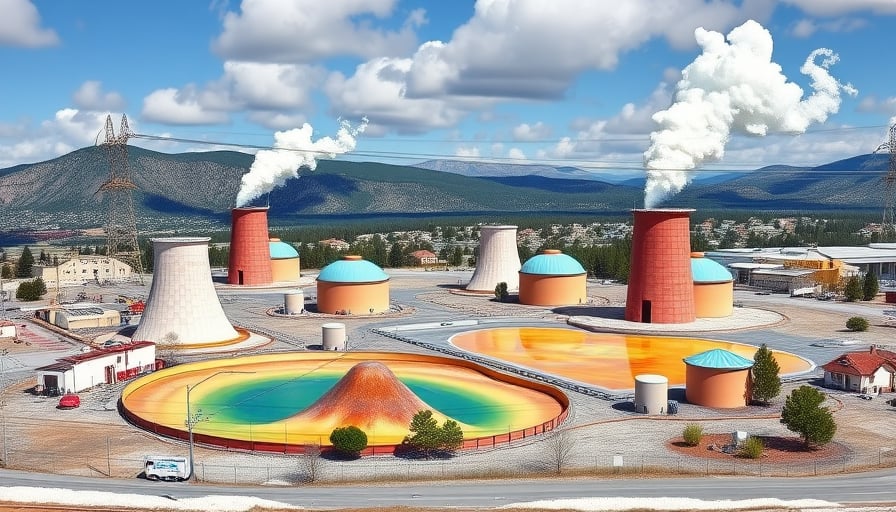
Investment in Fervo Energy – Mitsui has committed capital to the U.S.-based startup Fervo Energy, which is developing advanced geothermal power technology intended to expand geothermal applications beyond traditional baseload generation, particularly targeting high‑energy‑density sectors such as data‑center cooling and power supply.
Memorandum of Understanding with Optimus Technologies – Mitsui has secured exclusive distribution rights for Optimus Technologies’ Vector S biodiesel solution. The agreement will allow Mitsui to leverage its extensive global distribution network to supply the biodiesel engine technology, reinforcing its commitment to renewable fuel deployment.
These developments occur against a backdrop of a cautiously optimistic Nikkei index, modest gains in the broader Japanese market, and a broader trend of declining technology stocks. Mitsui’s shares, however, have maintained relative stability, reflecting the conglomerate’s resilient operational structure.
Underlying Business Fundamentals
| Aspect | Current Position | Potential Impact |
|---|---|---|
| Capital Allocation | Investment in Fervo Energy and MOU with Optimus represent a relatively small proportion of Mitsui’s total capital, yet they signal strategic diversification into high‑growth renewable sectors. | Enables Mitsui to capture early‑stage growth while mitigating concentration risk through its diversified business lines. |
| Revenue Streams | Historically driven by commodity trading and real‑estate, with energy sales representing a modest share. | Renewable initiatives could augment energy revenues, particularly if data‑center contracts materialize, thereby offsetting volatility in commodity markets. |
| Cost Structure | Low operational overhead for trading; higher fixed costs for real‑estate and manufacturing segments. | Entry into renewable technology could introduce higher R&D and capital expenditure, but benefits from economies of scale via Mitsui’s global logistics and procurement network. |
Financial analysis of Mitsui’s 2023 annual report indicates a net profit margin of 6.2 % and a debt‑to‑equity ratio of 0.54, positioning the company well to absorb the upfront costs associated with renewable technology ventures.
Regulatory Landscape and Market Dynamics
Geothermal Sector
- U.S. Policy: The Biden administration’s Infrastructure Investment and Jobs Act provides up to $2 B for geothermal development, creating a conducive regulatory environment for Fervo Energy’s technology.
- Carbon Pricing: California’s Cap‑and‑Trade Program and the EU’s ETS place a premium on low‑carbon energy sources, boosting demand for geothermal as a baseload renewable.
Biodiesel Sector
- Subsidies: The U.S. Renewable Fuel Standard (RFS2) mandates 10.2 billion gallons of advanced biofuels, while the EU’s Biofuel Directive mandates 2.5 % biofuel blend by 2030.
- Technological Barriers: Biodiesel’s high viscosity and cold‑flow properties have historically limited adoption. Optimus Technologies’ Vector S claims to mitigate these issues, potentially unlocking new markets.
Competitive Analysis
| Competitor | Market Position | Competitive Edge | Risk Profile |
|---|---|---|---|
| GE Renewable Energy | Leading geothermal developer with robust pipeline. | Established engineering expertise; strong U.S. presence. | High capital intensity; regulatory risk in permitting. |
| Iberdrola | Global renewable portfolio, significant geothermal assets in Spain. | Integrated grid solutions; strong financial backing. | Exposure to European carbon pricing volatility. |
| Biodiesel Suppliers (e.g., Renewable Energy Group) | Broad biodiesel production across North America and Europe. | Proven scale; established supply chains. | Competition from low‑cost petro‑diesel and emerging synthetic fuels. |
Mitsui’s strategic entry through partnership rather than direct capital deployment allows it to sidestep the substantial upfront R&D risk associated with these technologies while positioning itself to reap long‑term supply‑chain and distribution benefits.
Identifying Overlooked Trends
- Data‑Center Energy Demands
- Global data‑center operators are pursuing “green” energy credentials to offset their massive cooling and power needs. Geothermal’s low‑emission profile and steady output align with this trend.
- Opportunity: Mitsui could negotiate long‑term supply agreements with Tier‑1 cloud providers, leveraging its logistics network to deliver geothermal‑powered cooling solutions.
- Regulatory Momentum for Low‑Carbon Fuels
- The global Net Zero agenda is accelerating the adoption of advanced biodiesel, particularly in transport and heavy‑industry sectors.
- Opportunity: By securing exclusive distribution, Mitsui can position itself as the preferred partner for OEMs seeking to meet stringent emissions targets.
- Supply‑Chain Resilience Post‑Pandemic
- Companies are diversifying suppliers and focusing on regional sourcing. Mitsui’s extensive network in Asia and the Americas gives it an edge to source raw materials for geothermal and biodiesel production efficiently.
Potential Risks
| Risk | Mitigation Strategy |
|---|---|
| Technology Adoption Lag | Partner with proven suppliers; secure pilot projects to validate performance before scaling. |
| Regulatory Shifts | Maintain active engagement with policymakers; diversify into multiple regions to hedge against localized policy changes. |
| Commodity Price Volatility | Leverage Mitsui’s trading expertise to hedge against price swings in raw materials such as lithium for battery storage that may accompany geothermal plants. |
| Capital Allocation Misalignment | Monitor ROI closely; maintain flexible investment thresholds to reallocate funds to higher‑yield opportunities. |
Market Reception and Shareholder Impact
- Stock Performance: Mitsui’s shares have demonstrated resilience, trading within a narrow range despite a +1.4 % rise in the Nikkei and a -3.2 % decline in technology indices.
- Investor Sentiment: Analysts note that Mitsui’s diversified portfolio dampens volatility, yet the company’s entry into renewables signals forward‑looking growth potential that may attract ESG‑focused investors.
Conclusion
Mitsui & Co. Ltd.’s strategic investments in geothermal and biodiesel technologies illustrate a calculated pivot toward sustainable energy while preserving the conglomerate’s diversified risk profile. By partnering with niche innovators rather than undertaking full-scale development, Mitsui mitigates technological risk and leverages its global distribution capabilities. The company’s cautious yet proactive approach may position it favorably as the energy transition accelerates and as data‑center operators increasingly seek low‑carbon solutions. Nonetheless, continued monitoring of regulatory developments, technology performance, and market adoption will be essential to validate the long‑term viability of these ventures.