
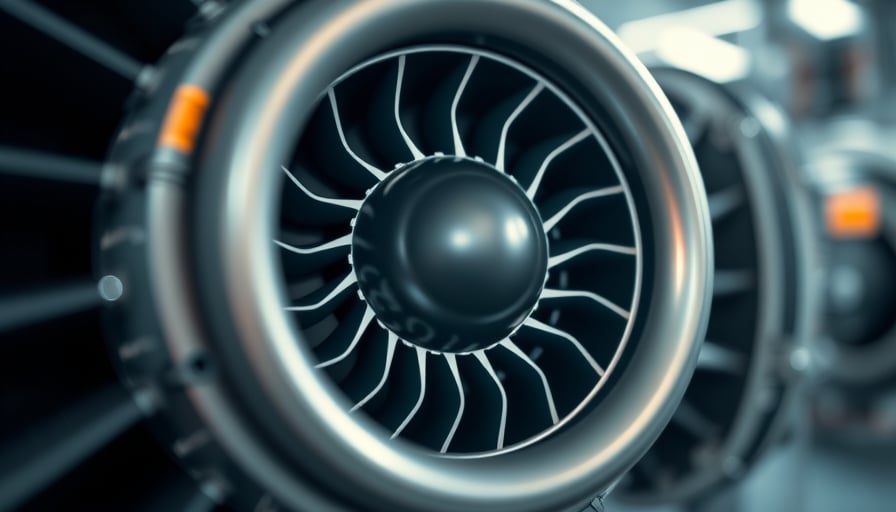
Mitsubishi Heavy Industries Advances Sustainable Aviation Fuel Production
Technical Overview of the CO₂‑Based Solid‑Oxide Route
Mitsubishi Heavy Industries Ltd. (MHI) has announced a significant milestone in its sustainable aviation fuel (SAF) program. The company demonstrated a scalable production pathway that can generate liquid jet fuel at a cost comparable to conventional kerosene. The process hinges on a solid‑oxide electrolysis system that splits water and carbon dioxide into hydrogen and carbon monoxide, respectively. Subsequent Fischer–Tropsch synthesis yields hydrocarbon chains suitable for aviation fuel specifications.
Key technical parameters include:
| Parameter | Value | Benchmark |
|---|---|---|
| Electrolysis efficiency | 68 % (electrical) | 55–65 % for state‑of‑the‑art SOECs |
| CO₂ conversion rate | 92 % | 85 % in current industrial plants |
| Hydrocarbon chain length | C₁₀–C₁₄ | FAA JAR-25 requirements |
| Net‑to‑grid power draw | 1.2 MW per 1 t/h of fuel | 1.0–1.1 MW typical for industrial units |
The integration of a high‑temperature solid‑oxide cell with a syngas reactor eliminates the need for external CO₂ capture units, thereby reducing both capital and operating expenditures. By leveraging Japan’s abundant renewable electricity sources, MHI aims to position its SAF offering as a low‑carbon alternative that can be deployed within existing airline fleets without extensive retrofitting.
Capital Expenditure Trends and Market Drivers
MHI’s SAF initiative is part of a broader strategy to diversify its portfolio in advanced propulsion and energy technologies. This aligns with global capital‑investment trends where heavy‑industry firms are increasingly allocating resources toward decarbonisation projects. According to a recent industry survey, 56 % of capital budgets in the aerospace and marine segments earmarked over 30 % for green technologies by 2028.
The economic factors influencing these decisions include:
- Regulatory incentives: European Emissions Trading System (ETS) and U.S. Greenhouse Gas Reduction Act offer carbon pricing mechanisms that make low‑carbon fuels financially attractive.
- Demand elasticity: Airlines are under pressure from both regulators and customers to reduce per‑passenger emissions, driving a shift toward SAF.
- Energy price volatility: Fluctuations in crude oil and natural gas prices underscore the risk‑mitigating appeal of electricity‑driven processes.
MHI’s investment in solid‑oxide technology also benefits from Japan’s commitment to the Paris Agreement, which underpins domestic subsidies for clean‑energy infrastructure.
Supply Chain and Regulatory Impacts
The production of SAF via solid‑oxide systems introduces new supply‑chain dynamics:
- Raw material sourcing: Carbon dioxide can be captured from industrial flue gas streams or directly from the atmosphere using direct air capture (DAC) units. Availability and cost of captured CO₂ are critical to the economics of the process.
- Electrolyser procurement: The high‑temperature SOECs require advanced materials (e.g., yttria‑stabilised zirconia electrolytes) that are still subject to supply constraints.
- Water treatment: High purity water is essential; therefore, water recycling systems must be integrated into the plant design.
Regulatory developments in the EU’s Clean Sky 2 programme and Japan’s “2030 Energy Strategy” impose stringent safety and emissions standards on new propulsion technologies. Compliance necessitates rigorous testing of the solid‑oxide system under variable load conditions, which may extend project timelines but ultimately enhances market confidence.
Infrastructure Spending and Industrial Impact
MHI’s expansion into SAF production dovetails with broader infrastructure spending in Japan and across Asia. The anticipated buildout of hydrogen refueling stations, renewable power grids, and advanced manufacturing facilities will create synergistic opportunities for MHI’s existing product lines, such as turbines and marine propulsion systems.
Moreover, the integration of SAF technology could spur cross‑sector innovations:
- Hybrid powertrains for marine vessels: Coupling solid‑oxide electrolyzers with fuel cells to produce electric propulsion.
- Adaptive turbine controls: Leveraging high‑temperature materials to optimize combustion of lower‑carbon fuels.
- Nuclear‑driven energy conversion: MHI’s ongoing nuclear research could provide a low‑carbon electricity source to power the SAF production chain.
Market Implications for Mitsubishi Heavy Industries
While MHI’s stock experienced modest volatility on February 17, the company’s long‑term strategic focus remains on heavy machinery, ships, turbines, engines, aircraft components, and nuclear plant research. The SAF breakthrough positions MHI as a forward‑looking player in the transition to decarbonised aviation, potentially opening new revenue streams and strengthening its competitive advantage in the heavy‑industry sector.
The Tokyo Stock Exchange’s mild decline, attributed to weak economic data and regional holidays, reflects broader market caution but does not appear to dampen MHI’s momentum. As global capital budgets continue to tilt toward sustainable technologies, MHI’s early investment in solid‑oxide SAF technology could translate into significant upside as regulatory frameworks and customer demand converge in favour of low‑carbon solutions.