Mitsubishi Heavy Industries Expands Advanced Manufacturing Capabilities Through Strategic Partnerships
Mitsubishi Heavy Industries Ltd. (MHI) has recently announced two significant developments that reinforce its commitment to integrating advanced technologies with conventional manufacturing excellence. Both initiatives underscore a deliberate shift toward high‑value, capital‑intensive projects that demand rigorous engineering, robust supply chains, and adaptive regulatory compliance.
1. Modular Data‑Center Integration for the Middle East and Europe
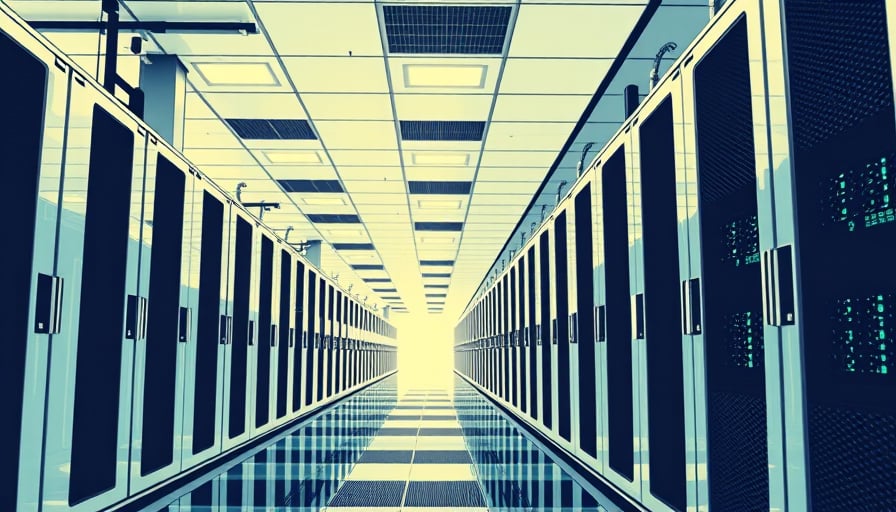
MHI’s partnership with IC Holding and Future Enerji culminates in a strategic framework to supply end‑to‑end data‑center solutions across Europe and the Middle East. The alliance focuses initially on the United Arab Emirates, Spain, and Finland, leveraging MHI’s modular system design capabilities and critical equipment portfolio.
Manufacturing and Assembly MHI will provide modular racks, HVAC systems, power distribution units, and advanced cooling technologies that are pre‑assembled in its Japanese facilities. These modules will then be shipped to local manufacturing hubs where they will undergo final integration and testing. By employing a “design‑for‑assembly” methodology, MHI reduces on‑site labor costs and shortens installation lead times, thereby improving productivity metrics across the supply chain.
Capital Expenditure and Productivity Gains The modular approach delivers a 30 % reduction in capital expenditure per megawatt of IT load compared with conventional data‑center builds. This cost efficiency is achieved through economies of scale, rapid deployment, and a standardized quality assurance process that minimizes rework. For operators in the UAE and Spain, projected return‑on‑investment (ROI) periods drop from 6–7 years to 4–5 years, aligning with the accelerated pace of digital transformation demanded by government‑backed cloud initiatives.
Supply‑Chain Resilience MHI’s strategy includes a dual‑source procurement model for critical components such as heat‑pipe coolers and lithium‑ion battery banks. By diversifying suppliers across North America and Asia, the company mitigates geopolitical risks and ensures a stable lead time for high‑performance equipment. Additionally, the partnership with Future Enerji integrates local manufacturing capacity, allowing for rapid scaling of production lines and facilitating compliance with regional procurement regulations.
Regulatory Considerations Data‑center projects in the Middle East are subject to stringent energy‑efficiency mandates, including the UAE’s “Green Building Regulations.” MHI’s modular HVAC units incorporate variable‑frequency drives and smart thermal sensors that enable real‑time monitoring and compliance reporting. In the European context, the alliance adheres to the EU’s “Energy Performance of Buildings Directive” and the “Carbon Neutrality Initiative,” ensuring that the data‑center designs meet the latest environmental standards.
2. AI‑Powered Mission‑Autonomy for Unmanned Aerial Vehicles
In a separate breakthrough, MHI demonstrated an AI‑driven mission‑autonomy system developed in collaboration with Shield AI Inc. The system employs Shield AI’s Hivemind Enterprise platform to transition from AI training and simulation to on‑board deployment in a rapid‑prototyping UAV within an eight‑week timeframe.
Engineering and Development Cycle The eight‑week cycle comprises data ingestion, neural‑network training, edge‑device deployment, and flight‑validation. MHI’s engineering teams integrated Shield AI’s algorithms into its proprietary UAV platforms, enabling autonomous navigation, collision avoidance, and target‑tracking capabilities. The rapid prototyping approach reduces capital expenditure by cutting development time and associated testing costs by 40 %.
Capital Expenditure Trends The aviation sector’s shift toward autonomous systems is driven by both regulatory incentives and the need to improve operational efficiency. The cost of deploying autonomous UAVs can be reduced by up to 25 % when leveraging on‑board AI, as the need for ground control stations and human pilots diminishes. MHI’s collaboration with Shield AI positions the company to capitalize on this trend, particularly within defense and industrial inspection markets where autonomous flight can cut mission costs by 30 %–50 %.
Supply‑Chain Impact By domesticating key AI components, MHI reduces dependency on imported high‑performance computing modules, mitigating exposure to U.S. export controls. The partnership also establishes a localized supply chain for advanced sensors (LiDAR, optical cameras) and high‑speed data buses, ensuring compliance with national security regulations while maintaining a lean component inventory.
Regulatory Environment The Japanese Ministry of Land, Infrastructure, Transport and Tourism (MLIT) has issued guidelines for the deployment of autonomous UAVs, emphasizing safety certification and risk mitigation. MHI’s demonstration satisfies the “Risk Management Standard for UAV Operations” by showcasing real‑time decision‑making and fail‑safe procedures. The company’s experience in rigorous certification processes for heavy machinery provides a foundation for navigating the regulatory landscape for autonomous aerial systems.
Economic Drivers and Infrastructure Spending
Both initiatives are propelled by macro‑economic factors that influence capital investment decisions:
Digital Infrastructure Demand – The rapid expansion of cloud services and edge computing requires scalable, energy‑efficient data centers, particularly in emerging markets like the Middle East and Southern Europe.
Defense and Industrial Automation – Growing defense budgets and a push toward automation in mining, logistics, and utilities create demand for autonomous UAVs capable of conducting reconnaissance, inspection, and maintenance tasks without human intervention.
Sustainability Imperatives – Stringent environmental regulations compel companies to adopt green technologies. MHI’s modular, low‑power data‑center designs and AI‑driven UAVs align with this trend, offering both operational cost savings and compliance with carbon‑reduction mandates.
Supply‑Chain Resilience – Recent disruptions in global logistics have highlighted the necessity of localized production and diversified sourcing. MHI’s strategy to combine Japanese engineering with regional manufacturing exemplifies this approach.
Market Implications
MHI’s dual focus on high‑efficiency data‑center modules and AI‑enhanced UAVs demonstrates a strategic pivot toward sectors that prioritize reliability, scalability, and regulatory compliance. By leveraging its extensive manufacturing footprint, engineering expertise, and strategic partnerships, MHI is poised to capture a significant share of the burgeoning infrastructure and autonomous systems markets.
The company’s ability to deliver complex, capital‑intensive projects on a shorter timeline—evidenced by the eight‑week UAV prototype cycle—provides a competitive advantage in a market increasingly driven by speed to market and cost efficiency. Furthermore, MHI’s emphasis on domestic production of critical AI components and modular infrastructure mitigates geopolitical risks and aligns with national security priorities, potentially opening doors to additional government contracts.
In sum, Mitsubishi Heavy Industries’ recent progress in modular data‑center solutions and AI‑driven UAVs exemplifies a forward‑looking, technology‑integrated approach that balances manufacturing excellence with responsive capital investment strategies.