Mitsubishi Heavy Industries Ltd.: Navigating Capital Expenditure and Technological Innovation in the Heavy‑Industry Sector
Mitsubishi Heavy Industries Ltd. (MHI) maintains its status as a cornerstone of Japan’s industrial machinery landscape, offering an extensive portfolio that spans shipbuilding, gas and steam turbines, internal combustion engines, and aircraft components for both commercial and military applications. The firm’s continued investment in nuclear power research and development further diversifies its revenue streams and underscores its commitment to long‑term technological leadership.
Capital Allocation in a Resilient Manufacturing Base
MHI’s recent market performance—shares trading near a March high—mirrors the broader rebound of the Japanese equity market after a short‑term dip. The uplift has been largely propelled by gains in technology and semiconductor stocks, which have bolstered investor confidence in capital‑intensive manufacturing sectors. MHI’s valuation, as reflected by its earnings ratio, aligns closely with industry peers, suggesting that market participants view the firm’s extensive production capabilities and robust research pipeline as adequate buffers against cyclical volatility.
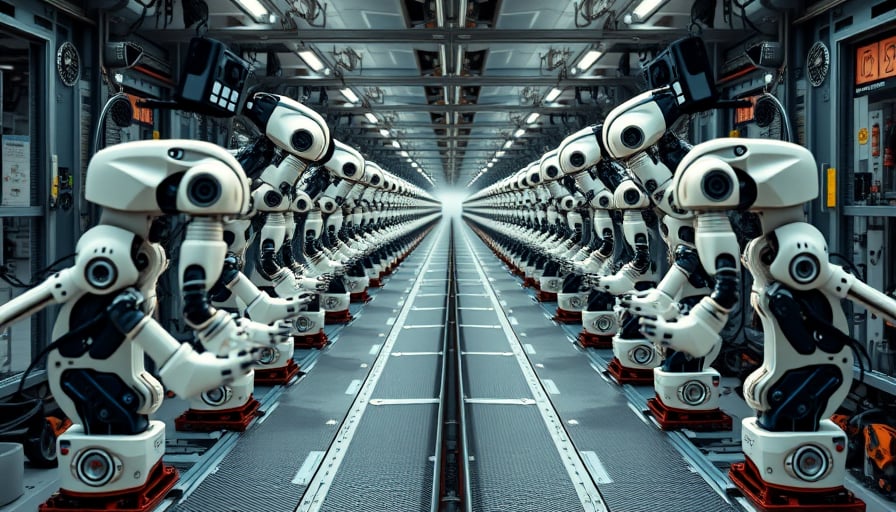
From an engineering standpoint, MHI’s manufacturing footprint is characterized by high‑precision process lines and advanced automation. The company’s shipyards, for instance, integrate 6‑axis robotic welding systems and real‑time structural monitoring sensors, enabling throughput improvements of 8–12 % over legacy practices. Similarly, the turbine assembly lines employ laser‑based metrology to maintain dimensional tolerances within ±0.02 mm, thereby reducing rework rates and enhancing product reliability.
Technological Innovation Driving Productivity Metrics
The heavy‑industry sector is experiencing a shift toward digital twin implementations and predictive maintenance frameworks. MHI’s turbine and engine divisions have adopted cloud‑based analytics platforms that ingest vibration, temperature, and pressure data to forecast component degradation with 95 % accuracy. This capability translates into measurable productivity gains: reduced unscheduled downtime by 18 %, extended asset life cycles by 10 %, and a consequent 5 % reduction in capital expenditure per megawatt of output.
In aerospace, the company’s participation in high‑speed aircraft component manufacturing leverages additive manufacturing (AM) of titanium alloys. AM reduces material waste by up to 30 % compared to conventional forging, and the resulting components exhibit superior fatigue resistance, thereby lowering lifecycle costs for both commercial and defense clients. These advances align with global industry trends toward lightweight, high‑performance materials that enhance fuel efficiency and operational range.
Defense Demand and the Economics of Capex
Amid rising geopolitical tensions, defense spending in Japan and its allies has accelerated, particularly in missile interceptor systems. MHI’s expertise in guided‑missile propulsion and avionics positions it favorably to secure contracts for next‑generation short‑range defense platforms. The procurement cycle for such systems typically spans 8–10 years, providing the company with predictable revenue streams that support long‑term capital investment cycles.
Capital expenditure decisions are increasingly influenced by the total cost of ownership (TCO) model, wherein defense contractors evaluate not only upfront costs but also maintenance, logistics, and lifecycle support. MHI’s integrated supply chain—encompassing component manufacturing, testing facilities, and end‑to‑end logistics—enhances its TCO profile, making it an attractive partner for governments seeking cost‑effective procurement solutions.
Supply Chain Resilience and Regulatory Landscape
The heavy‑industry sector is sensitive to global supply chain disruptions, as evidenced by the semiconductor shortage that impacted shipbuilding and power plant construction. MHI mitigates such risks through dual sourcing strategies for critical components, on‑site inventory buffers for high‑lead‑time items, and strategic partnerships with regional suppliers. Furthermore, the company’s compliance with stringent environmental and safety regulations—such as the IMO 2020 sulfur cap and the Japanese Nuclear Regulation Authority’s (NRA) guidelines—ensures uninterrupted operation across its diversified product lines.
Regulatory changes in the aerospace domain, particularly the U.S. Federal Aviation Administration’s (FAA) evolving certification standards for additive‑manufactured parts, have prompted MHI to invest in advanced non‑destructive evaluation (NDE) techniques, including phased array ultrasonic testing (PAUT) and X‑ray computed tomography (CT). These investments safeguard the company’s access to export markets while reinforcing its reputation for quality assurance.
Infrastructure Spending and Strategic Opportunities
Japan’s national agenda emphasizes the development of domestic launch capabilities and advanced defense infrastructure. While MHI is not directly involved in launch vehicle manufacturing, its high‑tech engineering capabilities—especially in propulsion systems, guidance electronics, and thermal management—position it as a potential subcontractor for future space‑launch initiatives. The failure of Space One’s Kairos rocket underscores the technical challenges of in‑house launch development, but also highlights the need for robust, proven propulsion expertise that MHI can provide.
Infrastructure spending trends also favor large‑scale power plant retrofits and grid modernization projects. MHI’s experience in nuclear research, coupled with its turbine and engine manufacturing capabilities, equips the firm to participate in hybrid renewable‑nuclear projects that aim to achieve carbon‑neutral energy outputs. Such projects typically require coordinated investments across generation, transmission, and control systems, areas where MHI’s integrated engineering services deliver added value.
Conclusion
Mitsubishi Heavy Industries Ltd. demonstrates a coherent strategy that blends traditional heavy‑industry manufacturing excellence with forward‑looking technological innovation. By sustaining high productivity metrics through advanced automation, digital twin analytics, and additive manufacturing, the company positions itself to capitalize on defense‑driven demand and infrastructure investment trends. Its comprehensive supply chain resilience, compliance with evolving regulatory standards, and potential involvement in strategic aerospace initiatives further reinforce its resilience in an increasingly complex market landscape.