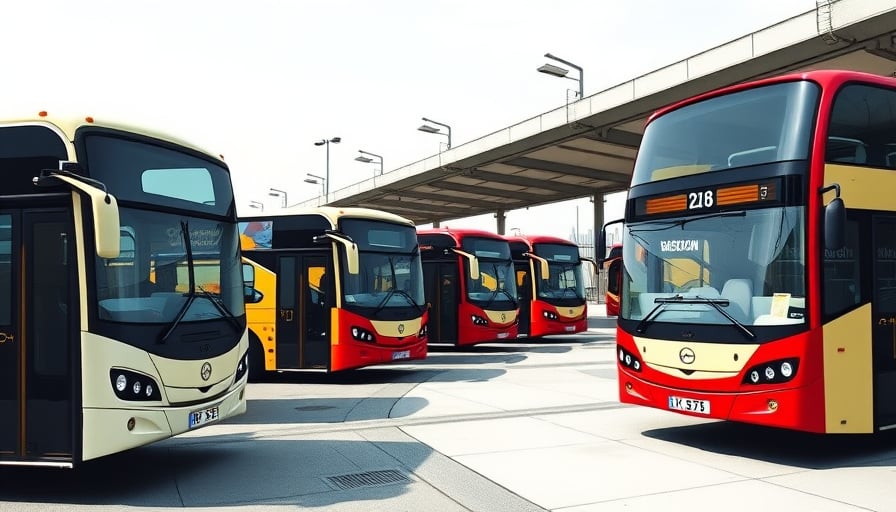
Corporate News: M&G plc’s Infrastructure Division Divests Polish Public‑Transport Operator Relobus
M&G plc’s infrastructure investment arm has finalized the sale of the Polish public‑transport operator Relobus to a fund managed by Infracapital. The transaction represents the divestiture of Mutares SE & Co. KGaA’s portfolio company, Relobus Transport Polska, and signals a strategic realignment of assets within M&G’s infrastructure portfolio.
Transaction Overview
- Seller: M&G plc’s infrastructure arm, operating through its subsidiary Mutares SE & Co. KGaA.
- Buyer: An infrastructure fund managed by Infracapital, a specialist asset manager focused on transport and logistics assets.
- Asset Sold: Relobus Transport Polska, a leading public‑transport operator in Poland responsible for bus and coach services across major urban centers.
- Announcement: The sale was disclosed by Mutares and subsequently reported by bond‑focused media outlets.
- Deal Structure: No publicly available details specify the transaction price, payment structure, or any earn‑out provisions.
Strategic Context
M&G’s infrastructure portfolio has been undergoing a systematic reshaping aimed at optimizing asset allocation and enhancing overall risk‑adjusted returns. This divestiture aligns with broader trends in the infrastructure sector where firms are increasingly streamlining holdings to concentrate on core competencies and high‑growth opportunities. Key elements of this strategic shift include:
- Portfolio Concentration – By shedding non‑core or low‑growth assets, M&G can re‑invest capital into sectors with superior long‑term prospects, such as renewable energy, data infrastructure, or digital connectivity.
- Risk Management – Removing assets that may be exposed to volatile regulatory environments or regional economic downturns can improve the stability of the portfolio’s cash flows.
- Capital Efficiency – The proceeds from the sale, although undisclosed, are likely to be redeployed into higher‑yielding infrastructure projects or into diversifying the firm’s asset base.
Market Dynamics and Industry Implications
The sale reflects a broader pattern of asset re‑allocation observed across the global infrastructure investment landscape. Several factors are driving these movements:
- Shift Toward Digital and Green Infrastructure: Investors are reallocating capital toward projects that support digital transformation and climate‑friendly initiatives. This shift is propelled by policy incentives and growing demand for sustainable transport solutions.
- Regulatory Evolution in Poland: Changes in Poland’s transport policy, including potential liberalisation of public‑transport tendering processes, may influence the attractiveness of assets like Relobus. Firms with flexible asset management strategies can exploit such regulatory changes.
- Valuation Pressures: Infrastructure assets have historically delivered stable, inflation‑linked returns. However, evolving investor expectations and comparative valuations in sectors such as renewable energy or data centres are prompting re‑evaluation of traditional asset classes.
Comparative Analysis Across Sectors
While the sale is specific to public‑transport operations in Poland, it offers insights applicable to other infrastructure and industrial domains:
- Transport and Logistics: Similar to Relobus, many operators worldwide face pressure to modernise fleets, adopt electrification, and integrate digital ticketing systems. Companies that fail to adapt may find themselves earmarked for divestiture.
- Energy Infrastructure: Renewable energy assets are often subjected to aggressive acquisitions and strategic consolidations, mirroring the pattern seen in transport assets.
- Real Estate: Infrastructural assets linked to commercial real estate (e.g., parking garages, logistics hubs) are increasingly evaluated against environmental, social, and governance (ESG) criteria, influencing ownership decisions.
Implications for M&G plc
Although M&G plc has not disclosed the financial terms of the transaction, the divestiture indicates a focused approach to portfolio management. Key implications include:
- Capital Allocation Efficiency: The sale frees up capital that can be deployed into assets with higher projected internal rates of return.
- Strategic Focus: M&G may be positioning itself to capitalize on emerging infrastructure trends, such as sustainable mobility solutions or digital infrastructure, thereby enhancing its competitive positioning.
- Risk Profile Adjustment: Reducing exposure to a single country’s regulatory environment (Poland) may help diversify geographic risk across M&G’s portfolio.
Conclusion
The sale of Relobus Transport Polska to an Infracapital‑managed fund exemplifies a strategic realignment within M&G plc’s infrastructure division. By reallocating assets, M&G is responding to evolving market dynamics and seeking to optimise its investment portfolio. While specific transaction details remain undisclosed, the move aligns with industry-wide trends of portfolio concentration, risk management, and capital efficiency. This development underscores the importance of analytical rigor and adaptability when navigating unfamiliar industries, and highlights the interconnectedness of sector-specific dynamics with broader economic forces.