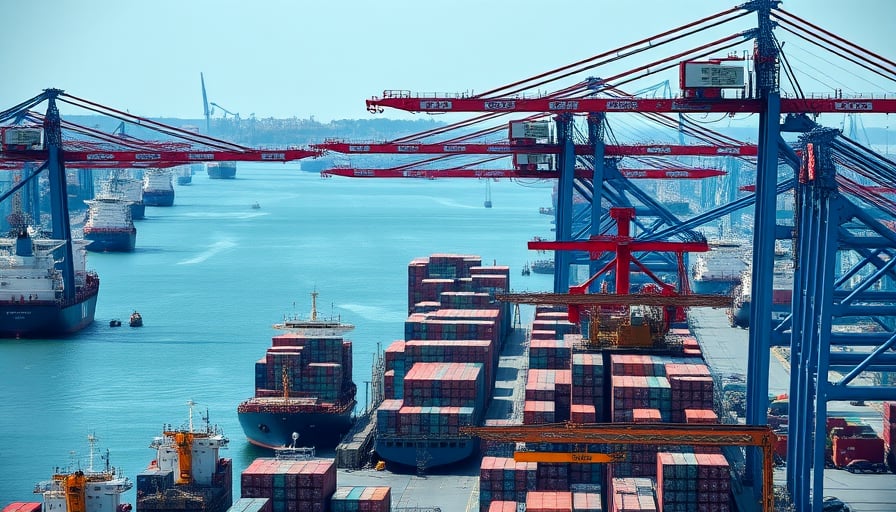
Corporate Analysis: A.P. Møller – Mærsk A’s Market Presence Amid Geopolitical Shifts
A.P. Møller – Mærsk A, the Danish shipping conglomerate, continues to be referenced in recent market reports, yet it has not undergone any significant corporate actions such as a merger, acquisition, or share‑repurchase program. The company’s performance remains anchored to its long‑standing operational model and global logistics footprint.
Share Price Reaction to Global Cease‑fire Agreement
During a recent period of heightened market volatility triggered by the United States–Iran cease‑fire agreement, the Danish equity index recorded a modest uptick. Within this context, Mærsk’s shares exhibited a slight upward movement in the national benchmark, while the broader index enjoyed a comparable, albeit modest, gain. Analysts attribute this modest rally to investor optimism about a temporary de‑escalation of geopolitical risk in critical shipping lanes, particularly the Strait of Hormuz.
European Market Dynamics and Shipping Operators’ Caution
A German‑language financial bulletin highlighted Mærsk’s presence in the European market, noting the cautious stance taken by major shipping operators amid speculation over the reopening of the Strait of Hormuz. The bulletin underscored that, despite a temporary easing of tensions, shipping lines and insurers remain vigilant. Resumption of traffic through the waterway would depend on further clarification from authorities in the region, implying that operational uncertainty continues to influence route planning and insurance premiums.
Corporate Governance and Financial Performance
No filings have indicated changes to Mærsk’s corporate structure, board composition, or financial performance. The company remains under its established leadership, maintaining its position as a leading global container shipping and logistics provider. This stability is reflected in the firm’s consistent dividend policy, robust free‑cash‑flow generation, and disciplined capital‑allocation strategy.
Sectoral Connections and Broader Economic Trends
Mærsk’s experience illustrates a broader trend across the shipping industry: geopolitical risk management remains a critical component of strategic decision‑making. The company’s cautious approach mirrors that of peers in the maritime sector, who are recalibrating routes and insurance coverage in response to fluctuating geopolitical dynamics. Moreover, the firm’s resilience underscores the importance of diversified logistics services—port handling, supply‑chain integration, and digital freight management—in sustaining revenue streams during periods of market turbulence.
In summary, while A.P. Møller – Mærsk A has not announced any transformative corporate actions, its market presence and strategic posture continue to be shaped by the interplay of geopolitical developments and industry‑specific risk factors. The company’s disciplined governance, stable financial performance, and strategic focus on global logistics ensure it remains a key player in the maritime sector, poised to navigate forthcoming uncertainties.