Corporate News: LVMH’s Market Performance and Strategic Outlook
LVMH Moët Hennessy Louis Vuitton SE remains the most valuable constituent of the CAC 40, its shares constituting the largest market‑cap within the Paris‑based index. Recent trading sessions have seen the stock move in line with broader European market sentiment, reflecting the group’s strong position in the luxury sector while also responding to macro‑economic and geopolitical developments that affect investor risk appetite.
Short‑Term Market Movements
In late March, the CAC 40 exhibited modest volatility, with the LVMH share price oscillating around the €800‑to‑€900 range. Over the year, the index’s performance has been mixed; LVMH’s stock has followed a similar trajectory, showing a decline of roughly a quarter of its year‑to‑date level. Analysts note that this movement is driven more by technical factors than by fundamental changes within the group. The firm’s resilience in key markets such as China and Europe continues to underpin its long‑term valuation.
Cross‑Sector Comparison
Across the euro‑zone equity market, LVMH’s shares have been compared favorably against peers in the luxury space, maintaining a consistent ranking among the most valuable constituents of the CAC 40. Its dividend policy and share‑repurchase activity have preserved a stable return to shareholders, while the company’s ongoing investment in brand development and digital commerce continues to reinforce its competitive advantage.
Consumer Goods Trends and Omnichannel Innovation
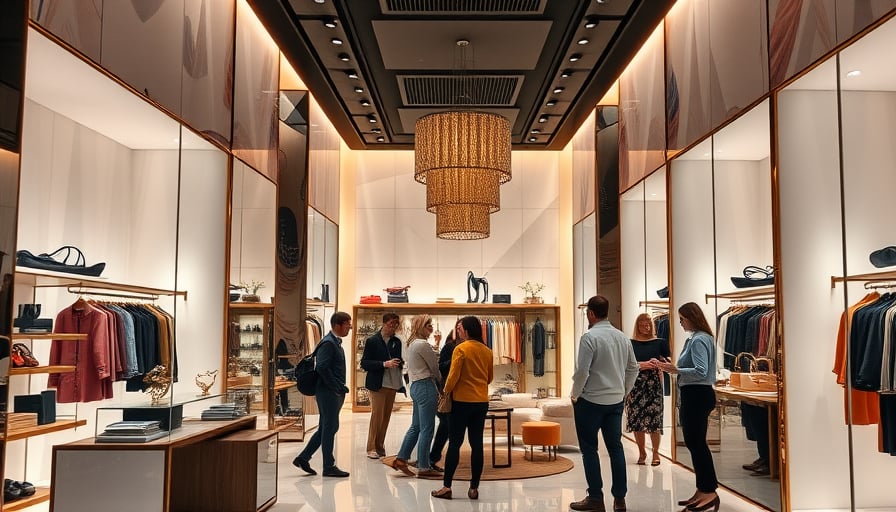
LVMH’s strategy demonstrates a clear alignment with broader consumer goods trends. The conglomerate is aggressively expanding its omnichannel retail footprint, integrating physical boutiques with e‑commerce platforms to deliver a seamless brand experience. Recent data from the European retail sector shows that consumers are increasingly valuing convenience and personalization—attributes that LVMH has incorporated through data‑driven marketing, in‑store technology, and targeted digital campaigns.
The company’s investment in experiential retail—such as pop‑up shops, virtual reality showcases, and brand‑specific loyalty programs—has proven effective in driving foot traffic and online conversions. This hybrid approach also mitigates supply‑chain disruptions, allowing the firm to respond rapidly to shifting demand patterns and regional regulatory changes.
Supply Chain Innovations
LVMH has leveraged advanced supply‑chain technologies to streamline operations across its diverse product portfolio. Blockchain‑enabled traceability, AI‑powered demand forecasting, and decentralized manufacturing hubs have reduced lead times and inventory costs. These innovations not only enhance operational efficiency but also support sustainability goals, a growing concern for consumers and investors alike.
Long‑Term Industry Transformation
While short‑term market movements reflect broader European equity trends and investor sentiment, LVMH’s underlying fundamentals point to a durable competitive moat. High‑quality governance, robust cash generation, and a disciplined capital‑allocation framework position the company well for long‑term value creation. As consumer preferences shift toward digital engagement and experiential consumption, luxury brands that integrate omnichannel strategies and supply‑chain agility will likely outperform their peers.
In a market where high‑quality stocks attract investor preference during periods of heightened uncertainty, LVMH’s performance benefits from its reputation for stability and resilience. Continued investment in brand development, digital commerce, and supply‑chain innovation will likely sustain its leadership position, reinforcing investor confidence amid fluctuating market conditions.