
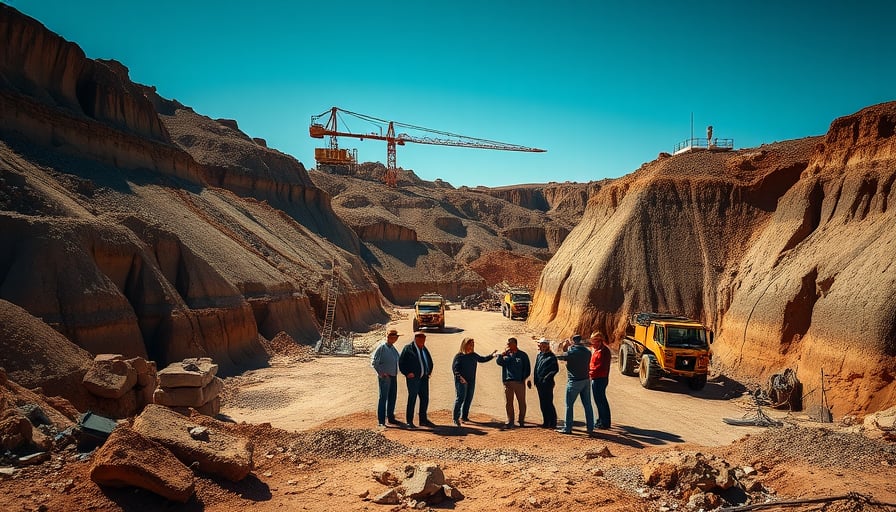
Corporate Analysis: Lundin Mining Corp’s Resource Expansion and Market Response
Lundin Mining Corp’s recent disclosures reveal a significant uptick in its copper mineral resources, with reserves projected to climb by approximately 37 % through the end of 2025. The company’s updated technical data for the Vicuña project—situated at the Argentina‑Chile frontier—underscores a strategic pivot toward a diversified copper, gold, and silver operation that could rival the world’s most prolific mines.
1. Quantitative Strengthening of the Resource Base
- Reserve Growth: The 37 % increase in copper mineral resources is anchored in a revised grading and tonnage assessment that extends the life of the Vicuña project by an estimated 5‑6 years under current production assumptions.
- Resource Profile: Lundin now reports a total of 4.8 million tonnes at a grade of 0.68 % Cu, 1.7 ppm Au, and 11 ppm Ag—figures that place the project in the upper echelon of Latin‑American copper operations.
- Economic Implications: Assuming a 2025 copper price of US$9,000 per tonne, the incremental resources translate to a gross value increase of roughly US$1.7 billion, subject to metallurgical recoveries and capital expenditure (CAPEX) considerations.
2. Technical Performance and Project Viability
- Mining Methodology: The Vicuña operation will employ a combination of open‑pit and underground techniques, leveraging a high‑grade, low‑infrastructure footprint to mitigate initial CAPEX.
- Recovery Rates: Preliminary metallurgical testwork indicates copper recoveries of 91 % and gold recoveries of 88 %. However, the company has yet to publish a definitive long‑term metallurgical strategy, leaving a gap in risk assessment.
- Infrastructure Synergies: Proximity to existing Argentine rail corridors and Chilean ports offers potential for cost‑effective logistics, yet cross‑border regulatory compliance and customs procedures remain a variable factor.
3. Regulatory Landscape and Geopolitical Considerations
- Mining Legislation: Both Argentina and Chile have recently re‑tendered mining concessions, tightening environmental and social governance (ESG) requirements. Lundin must secure new environmental permits and negotiate community benefit agreements within a compressed timeline.
- Border Dynamics: The Vicuña project straddles a border that has historically experienced bilateral trade tensions. While a 2024 treaty eased cross‑border mineral transport, lingering concerns over customs duties and regulatory alignment could impact operational timelines.
- Taxation: The tax regimes differ markedly between the two countries, with Argentina imposing higher royalties (up to 15 % on gross revenue) than Chile (typically 7 %). A dual‑jurisdiction project introduces complex tax planning challenges that may erode net margins.
4. Competitive Positioning in the Copper‑Gold‑Silver Space
- Peer Comparison: In a sector where companies like BHP, Glencore, and Southern Copper dominate, Lundin’s Vicuña project offers a niche blend of copper and precious metal by‑products. This multi‑metal portfolio could insulate the company from copper price volatility but also exposes it to the volatility of gold and silver.
- Market Share Projection: If the Vicuña project reaches its 2025 production target of 200,000 t Cu eq., Lundin would capture approximately 1.5 % of global copper output, a non‑trivial figure for a mid‑cap miner.
- Differentiation: The company’s emphasis on low‑grade, high‑volume mining may appeal to ESG‑oriented investors, yet the lack of a clear sustainability framework raises questions about long‑term capital access.
5. Analyst Commentary and Valuation Outlook
National Bank’s downgrade from “Outperform” to “Sector Perform” reflects a cautious stance on Lundin’s valuation. While the analyst acknowledges the resource upgrade, they highlight the following concerns:
- Capital Allocation: The firm has yet to disclose the CAPEX schedule for the Vicuña project, making it difficult to estimate free‑cash‑flow generation accurately.
- Debt Load: Lundin’s current leverage ratios (Debt/EBITDA ≈ 2.1x) leave limited room for additional financing, potentially forcing the company to seek higher‑cost debt or equity dilution.
- Commodity Price Exposure: The valuation model assumes a mid‑range copper price scenario, yet the company’s sensitivity to a 20 % price swing could materially alter its intrinsic value.
6. Fourth‑Quarter Financial Outlook
- EBITDA Projections: Adjusted EBITDA of US$659 million is a 12 % increase from the previous year, driven largely by higher copper prices and cost efficiencies from the 2024‑2025 ramp‑up.
- Revenue Growth: Expected revenue growth of 8 % is modest relative to commodity price gains, suggesting a lag in operational scaling or conservative production forecasts.
- Profit Margins: Net margin improvement from 12 % to 14 % hinges on cost containment measures—particularly in logistics and environmental compliance—yet these measures have not been fully quantified.
7. Risk–Opportunity Assessment
| Opportunity | Risk |
|---|---|
| Expanded resource base could enable a diversified revenue stream across copper, gold, and silver | Uncertainty around cross‑border regulatory compliance could delay project ramp‑up |
| Potential for lower operating costs through high‑grade, low‑infrastructure mining | Dependence on commodity price cycles may erode margins if copper prices decline |
| ESG‑oriented multi‑metal portfolio may attract impact investors | Lack of a detailed sustainability strategy may limit access to low‑cost capital |
| Strategic location offers logistics synergies between Argentina and Chile | Dual‑jurisdiction tax regime increases complexity and potential cost burden |
8. Conclusion
Lundin Mining’s 37 % reserve increase and the technical affirmation of the Vicuña project position the company for a notable expansion in its resource base and product mix. However, the absence of a transparent CAPEX roadmap, the geopolitical intricacies of operating across two national jurisdictions, and the looming regulatory tightening in both Argentina and Chile introduce substantive uncertainties. Investors and market participants should weigh the potential upside of a diversified copper‑gold‑silver operation against the tangible risks associated with cross‑border logistics, tax complexity, and commodity price volatility. As Lundin prepares to release its fourth‑quarter results, the market will be keenly monitoring how effectively the company translates its resource gains into tangible financial performance while navigating the evolving regulatory landscape.