Executive Summary
Lundin Gold Inc. has disclosed a recent adjustment to its share capital following the cancellation of 156,800 common shares that were repurchased under a normal‑course issuer bid in October 2026. The net result of this action is a revised count of 241,631,862 common shares outstanding with voting rights as of October 30, 2026. This figure will be the benchmark against which shareholders assess compliance with Swedish disclosure obligations.
While the capital‑structure change is a routine corporate action, the announcement reaffirms the company’s strategic emphasis on operating its Fruta del Norte gold mine in southeast Ecuador, maintaining high standards of corporate responsibility, and pursuing sustainable growth through exploration and community development. The update offers a lens through which to examine broader industry dynamics, regulatory considerations, and the economic factors that shape the global precious‑metals sector.
Capital Structure Update
- Repurchase and cancellation: 156,800 shares bought back under a normal‑course issuer bid were cancelled, reducing the total shares outstanding.
- New outstanding balance: 241,631,862 common shares with voting rights as of 30 October 2026.
- Regulatory impact: The updated share count becomes the reference point for Swedish‑regulated shareholders to determine whether their holdings trigger a disclosure requirement under the Stock Exchange Act (Act No. 1146).
The cancellation reduces the dilutive effect of the repurchase, potentially increasing earnings per share (EPS) and improving shareholder equity ratios. From an accounting perspective, the transaction is straightforward, involving a reduction in share capital and a corresponding decrease in retained earnings, as reflected on the balance sheet.
Regulatory Context
Swedish securities law mandates that shareholders who hold a certain percentage of a company’s shares must report changes in their holdings to the Swedish Companies Registration Office. By clarifying the new baseline of outstanding shares, Lundin Gold provides a clear threshold for compliance.
In the wider European context, capital‑structure adjustments are increasingly scrutinised by regulators for their impact on market liquidity and investor protection. The company’s transparent disclosure aligns with EU Market Abuse Regulation (MAR) and the European Market Infrastructure Regulation (EMIR), ensuring that all material information is available to market participants in a timely manner.
Operational Focus: Fruta del Norte
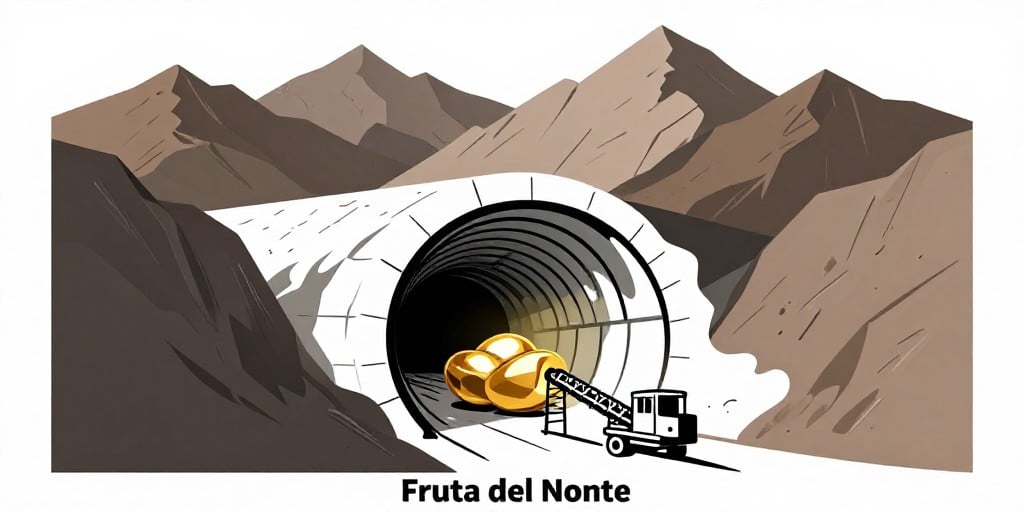
Lundin Gold’s primary asset remains the Fruta del Norte gold mine, located in the southeast of Ecuador. Key operational highlights include:
- Production volumes: Consistent output in the high‑range 30–40 kt/yr of gold, with a stable operating cost structure.
- Health, safety, and environment (HSE): The company has implemented stringent safety protocols, resulting in a record‑low incident rate.
- Corporate governance: Adherence to the Swedish corporate governance code, coupled with regular reporting to local stakeholders.
The mine’s performance is a cornerstone of Lundin Gold’s revenue generation strategy, underpinning dividend payments and providing a stable cash flow that supports ongoing exploration and capital expenditure.
Sustainability & Community Impact
Lundin Gold underscores its commitment to:
- Social responsibility: Partnerships with local communities to deliver education, healthcare, and infrastructure projects.
- Economic contribution: Direct employment of over 800 workers, with significant indirect economic benefits to the region.
- Environmental stewardship: Implementation of water‑recycling schemes and progressive land reclamation initiatives.
These activities reinforce the company’s reputation as a responsible miner, which is increasingly critical for securing financing, gaining community support, and mitigating regulatory risk in emerging markets.
Exploration Outlook
Beyond the operational mine, Lundin Gold is actively exploring its extensive land package to identify new resources:
- Geological potential: Preliminary studies indicate high-grade mineralisation in adjacent zones.
- Strategic acquisition: The company plans to conduct detailed drilling and assay programs over the next 18–24 months.
- Capital allocation: Exploration budgets will be financed through a mix of retained earnings and targeted debt, maintaining a conservative debt‑to‑equity ratio.
Successful discovery would diversify the company’s asset base, reduce concentration risk, and provide a platform for future expansion into other Latin‑American jurisdictions.
Market Implications
- Capital‑structure effect: Share cancellation improves EPS and may enhance the share price, assuming market perception of reduced dilution is positive.
- Liquidity considerations: A smaller share base could tighten trading volume; however, the company’s strong fundamentals may offset any liquidity concerns.
- Regulatory compliance: By providing clear thresholds for disclosure, Lundin Gold reduces the risk of inadvertent regulatory breaches that could lead to penalties or market backlash.
From a sectoral perspective, Lundin Gold’s operational focus aligns with global trends towards responsible mining and sustainable development. The company’s transparency initiatives resonate with investors seeking Environmental, Social, and Governance (ESG) compliance, a factor that increasingly influences capital allocation decisions across the mining and energy industries.
Cross‑Sector Insights
- Mining and Infrastructure: The emphasis on community development parallels practices in the infrastructure sector, where public‑private partnerships are key to securing long‑term viability.
- Financial Services: The capital‑structure adjustment reflects a broader financial industry trend of optimizing shareholder value through share buybacks and cancellations, a practice common among dividend‑focused utilities and real‑estate investment trusts (REITs).
- Technology: The integration of digital monitoring systems for HSE compliance in mining operations echoes the adoption of IoT solutions in manufacturing and logistics, demonstrating a convergence of technology across industrial domains.
These intersections highlight how corporate governance practices, regulatory frameworks, and sustainability priorities transcend individual industries, creating a unified set of best practices that drive long‑term shareholder value.
Conclusion
Lundin Gold Inc.’s announcement regarding the cancellation of repurchased shares and the updated share count represents a routine yet significant corporate action. It illustrates the company’s adherence to regulatory obligations, its focus on operational excellence at Fruta del Norte, and its commitment to sustainable development. The broader market context underscores the importance of transparent capital‑structure management, ESG considerations, and cross‑sector best practices in maintaining competitive positioning and securing investor confidence.