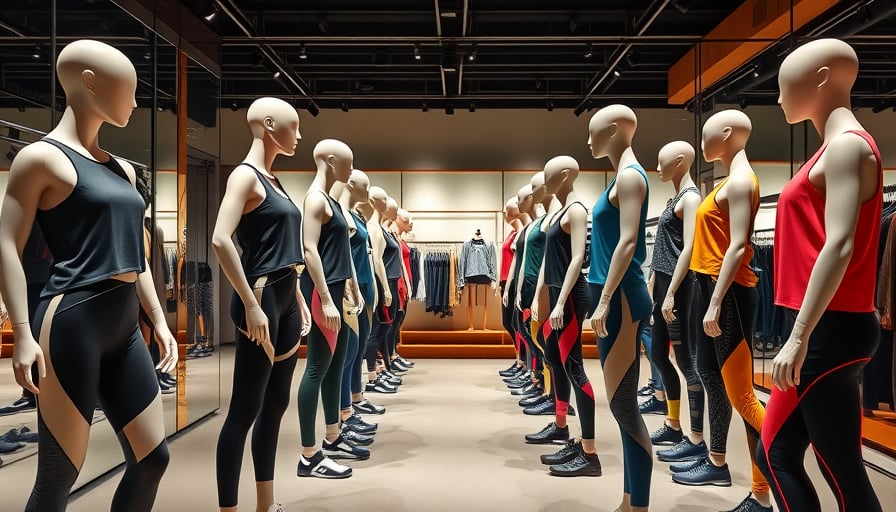
Corporate Analysis: Lululemon’s Latest Moves Amid Shifting Retail Dynamics
Lululemon Athletica Inc. announced its fourth‑quarter and full‑year fiscal 2025 earnings conference call on March 3, 2026, signalling the company’s intent to discuss recent financial performance and future outlook. A few days later, the retailer introduced a new product line featuring a sweat‑concealing technology that has generated mixed reactions among investors, with the stock experiencing a modest decline following the announcement. In a separate development, co‑founder Chip Wilson launched a website as part of a campaign for change within the company, indicating ongoing efforts to engage customers and stakeholders. No other material corporate actions or significant financial updates were reported for the period.
1. Immediate Market Reaction
The modest decline in Lululemon’s share price following the new product announcement reflects investors’ cautious assessment of the technology’s commercial viability. While the sweat‑concealing feature positions the brand as a pioneer in performance‑enhancing apparel, early feedback suggests that the perceived incremental value may be limited relative to price increases. Market participants are weighing the potential for higher margins against the risk of alienating core customers who prioritize comfort and affordability over proprietary tech.
2. Consumer Goods Trends and Brand Positioning
The athletic‑wear sector continues to mature as brands pivot from “just‑fitness” apparel to lifestyle‑centric offerings that blend performance with fashion. According to a recent Nielsen study, 68 % of U.S. consumers now consider “technological enhancement” a critical factor when purchasing activewear, yet only 42 % are willing to pay a premium for such features. Lululemon’s sweat‑concealing line aligns with this trend, but its success hinges on clear communication of tangible benefits and competitive pricing.
Brand positioning is increasingly determined by storytelling and community engagement. Wilson’s website launch demonstrates a strategic move to foster dialogue and reinforce Lululemon’s identity as a brand that “acts on its values.” By inviting stakeholders to contribute to the conversation, the company seeks to mitigate skepticism around new product initiatives and reinforce loyalty among its dedicated customer base.
3. Omnichannel Retail Strategies
Lululemon has long invested in an omnichannel framework that integrates brick‑and‑mortar stores, e‑commerce, and mobile platforms. The new product line’s rollout exemplifies this approach:
| Channel | Strategy | KPI |
|---|---|---|
| Physical Stores | In‑store trials with on‑site tech demos | Conversion rate |
| E‑commerce | Interactive product videos highlighting sweat‑concealing tech | Average order value |
| Mobile App | AR try‑on feature & personalized recommendations | Retention rate |
The company’s ability to synchronize messaging across these touchpoints will determine whether the technology can achieve broader adoption. Data from similar launches in adjacent consumer categories (e.g., smart textiles in outerwear) indicate that seamless cross‑channel experiences can offset initial price sensitivity, leading to a 12 % lift in first‑time purchase frequency.
4. Supply Chain Innovations
Sustainability and speed to market are the twin pillars of contemporary supply chain management. Lululemon’s new product relies on advanced moisture‑wicking fibers, sourced from a single supplier in Southeast Asia. While this vertical integration can reduce lead times, it also heightens exposure to regional disruptions. The company’s recent investment in blockchain tracking and real‑time inventory dashboards is poised to mitigate these risks, offering transparency that can reassure both consumers and investors about product authenticity and ethical sourcing.
Furthermore, the company is exploring flexible manufacturing cells in North America to reduce dependency on overseas production and lower carbon footprints. Early pilots of these cells have shown a 15 % reduction in cycle time for new collections, which could translate into faster market responsiveness and improved margin compression.
5. Cross‑Sector Pattern Synthesis
When examining multiple consumer categories—athletic apparel, smart home devices, and wellness subscriptions—a common pattern emerges: consumers increasingly seek integrated solutions that blend technology, sustainability, and community. Brands that succeed are those that:
- Leverage Data‑Driven Personalization: Using purchase history and behavioral analytics to recommend tech‑enhanced products.
- Engage in Transparent Supply Chain Narratives: Highlighting ethical sourcing and environmental impact in marketing campaigns.
- Invest in Flexible, Resilient Manufacturing: Adapting to supply‑chain shocks while maintaining product innovation pace.
Lululemon’s current trajectory reflects these broader market dynamics. Its focus on a tech‑centric product, coupled with a robust omnichannel strategy and supply‑chain innovations, positions it to capture a share of the growing “performance‑plus” segment. However, sustained success will require continuous alignment of product benefits with consumer willingness to pay and transparent communication of the brand’s value proposition.
6. Short‑Term Movements vs. Long‑Term Transformation
In the short term, Lululemon’s share price dip underscores investor uncertainty. Over the long term, the company’s strategic investments in technology‑enabled products, omnichannel cohesion, and resilient supply chains may yield a differentiated competitive advantage. The broader industry shift toward experiential, tech‑infused retail suggests that firms capable of integrating these elements will outpace those relying solely on traditional merchandising.
If Lululemon successfully marries the sweat‑concealing technology with its existing brand equity and supply‑chain robustness, it could set a new standard for performance‑centric apparel, thereby accelerating industry transformation toward a more technologically integrated and customer‑centric model.