
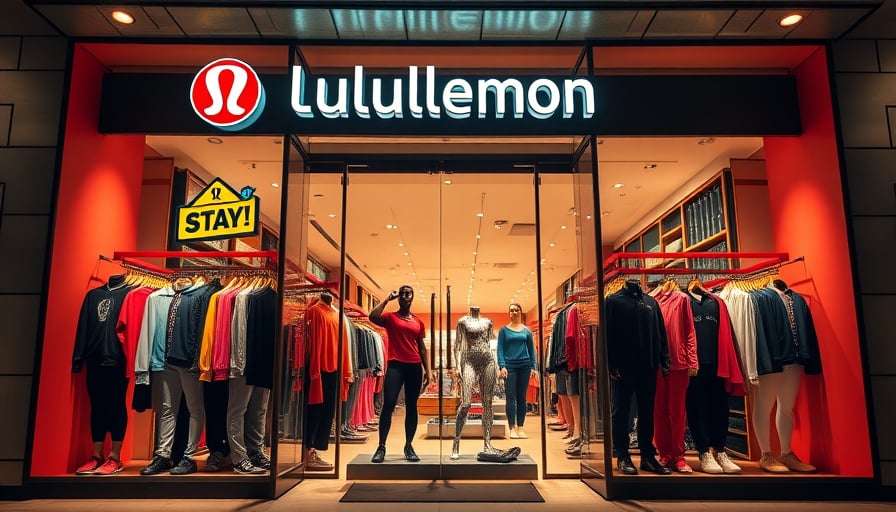
Lululemon Athletica Inc. Prepares for Third‑Quarter Earnings Amid Market Headwinds
Lululemon Athletica Inc. (NASDAQ: LULU) is set to disclose its fiscal‑year third‑quarter earnings for the period ending October 31, 2025. Market expectations point to a decline in earnings per share relative to the corresponding quarter of the previous year, a trend that the company attributes to a broader slowdown in discretionary consumer spending and softer U.S. demand. Analysts also highlight the impact of tariff challenges, particularly in key export markets, as a contributing factor to the anticipated dip.
Short‑Term Market Movements
Over the course of the current fiscal year, Lululemon’s stock has experienced pronounced volatility, falling sharply after a series of earnings releases that underscored competitive pressures within the athletic apparel segment. The market reaction has been compounded by macro‑economic uncertainty, with tightening monetary policy and heightened inflation expectations eroding discretionary income for the core consumer base. Investors are closely monitoring the forthcoming results for signals on how the company intends to adjust its pricing, inventory, and marketing strategies in response to these headwinds.
Consumer Goods Trends and Retail Innovation
The athletic wear segment, while still growing, has shown signs of saturation in the U.S. market. Consumers are increasingly valuing multifunctional apparel that blends performance with everyday wear, prompting brands to innovate across product lines and materials. Lululemon’s recent investment in sustainable fabrics and circular‑economy initiatives aligns with this trend, positioning the brand as a premium, socially responsible choice. However, the shift towards value‑conscious buying has pressured margins, compelling the company to refine its omnichannel approach.
Omnichannel retail strategies are becoming essential for capturing the modern shopper’s journey. Lululemon has accelerated its digital footprint, expanding its e‑commerce capabilities, enhancing virtual try‑on technology, and integrating data analytics to personalize the online experience. In physical stores, the focus has moved from traditional retail layouts to experiential hubs that foster community and brand storytelling. This dual‑channel approach is designed to mitigate the impact of store closures and to drive higher conversion rates in high‑traffic urban locations.
Cross‑Sector Patterns and Supply Chain Innovation
When examined alongside other consumer goods sectors—such as outdoor apparel, activewear accessories, and health‑and‑wellness products—Lululemon demonstrates a consistent pattern of premium pricing coupled with a strong emphasis on brand equity. Across these sectors, there is a growing trend of supply‑chain resilience through diversification of sourcing, adoption of advanced inventory‑management systems, and increased transparency to meet consumer expectations for ethical production.
Lululemon’s supply‑chain initiatives include the adoption of blockchain for traceability of raw materials, partnership with local manufacturers to reduce carbon footprints, and implementation of AI‑driven demand forecasting. These measures not only streamline operations but also enhance the brand’s ability to respond rapidly to shifting consumer preferences—a critical advantage in an environment where product life cycles are shortening.
International Markets and Long‑Term Initiatives
While U.S. demand remains a critical driver, Lululemon’s international markets—particularly in Asia and Europe—present opportunities for growth. The company has reported modest gains in these regions, attributed to localized marketing campaigns and the expansion of flagship stores in major metros. Long‑term initiatives, such as the development of “Athlete‑inspired” sub‑brands and strategic collaborations with fitness influencers, are expected to provide additional revenue streams and deepen customer engagement.
Furthermore, the company’s commitment to sustainability is resonating with global consumers, who increasingly prioritize brands that demonstrate environmental stewardship. By positioning itself as a leader in sustainable apparel, Lululemon is tapping into a cross‑sector shift towards eco‑conscious purchasing, which could offset domestic slowdowns over the long term.
Implications for Industry Transformation
The anticipated earnings decline, while a short‑term setback, underscores a broader industry transformation. Athletic apparel brands are recalibrating their growth models, moving from volume‑centric strategies to value‑centric, experience‑driven approaches that leverage technology and sustainability. Companies that can seamlessly integrate omnichannel retailing with supply‑chain agility and consumer‑centric innovation are poised to outpace competitors.
Investors will watch closely how Lululemon balances cost pressures against brand‑building initiatives. The company’s ability to sustain profitability while investing in digital, experiential, and sustainable capabilities will serve as a bellwether for the athletic apparel sector’s evolution in the coming years.