Corporate News
Deutsche Lufthansa AG, listed on Xetra under the ticker LHA, remains a dominant player in the global aviation sector, offering passenger and cargo transport alongside ancillary services such as travel agencies, catering, and aircraft maintenance. Recent trading activity shows the shares moving within a moderate range, reflecting a broader upward trend in the MDAX index that closed the month of February on a positive note.
Share Performance and Market Context
While Lufthansa’s own share price exhibited only modest volatility, it aligned with the MDAX’s broader gains, underscoring investor confidence in the European airline industry’s recovery trajectory. The MDAX’s performance, driven in part by stronger-than-expected demand for domestic travel and a rebound in freight volumes, provides a backdrop against which Lufthansa’s stock is being evaluated. Investors are watching closely for any operational shifts that might influence the airline’s future earnings profile.
Operational Developments: Terminal 3 Relocation
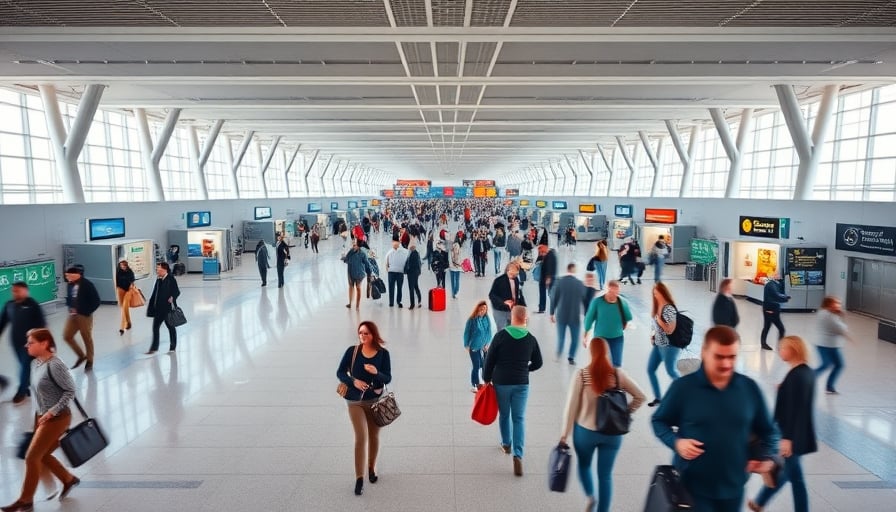
A significant operational update for Lufthansa comes from Frankfurt Airport, where the airline has announced that it will relocate its hub operations to the new Terminal 3 effective summer 2027. This move is poised to enhance Lufthansa’s connectivity and streamline passenger flow, offering a more integrated experience across its domestic and international routes. The new terminal is designed to support higher passenger volumes and incorporate advanced technology for baggage handling and security, which could translate into cost efficiencies and improved on-time performance.
The relocation also aligns with broader airport infrastructure trends, wherein major hubs are investing in modern, scalable terminals to accommodate post-pandemic travel demands. For Lufthansa, the shift to Terminal 3 is a strategic decision that may strengthen its competitive positioning against other German carriers and reinforce its status as the primary gateway to Europe’s largest airport.
Sectoral and Economic Implications
The aviation sector’s resilience is contingent upon macroeconomic factors such as fuel prices, regulatory changes, and global travel demand. Lufthansa’s decision to upgrade its hub infrastructure reflects a proactive stance on mitigating operational risks and enhancing customer experience, both critical in a highly competitive market. Moreover, the move to Terminal 3 may generate spillover benefits for the local economy in Frankfurt, including increased employment and ancillary services, thereby reinforcing the symbiotic relationship between the airline industry and regional economic development.
From an investor perspective, the terminal relocation is likely to be viewed as a capital-intensive but strategically sound investment. While immediate financial impact may be modest, the long-term benefits—through operational efficiencies and potential revenue growth from higher passenger throughput—could positively affect Lufthansa’s profitability metrics.
Current Corporate Actions and Outlook
At present, no additional corporate actions or financial results have been disclosed for Lufthansa in this reporting period. The company’s focus appears to be on infrastructure modernization rather than immediate earnings releases. As the industry continues to adapt to post-pandemic realities, stakeholders should monitor subsequent earnings statements and strategic updates that may reveal how the Terminal 3 transition influences Lufthansa’s financial performance and market share.
In sum, Deutsche Lufthansa AG’s upcoming relocation to Frankfurt Airport’s Terminal 3 signals a forward‑looking strategy that balances operational optimization with the broader economic imperatives of the airline industry. Investors and industry observers will likely assess how this move shapes the airline’s competitive stance amid evolving travel patterns and market dynamics.