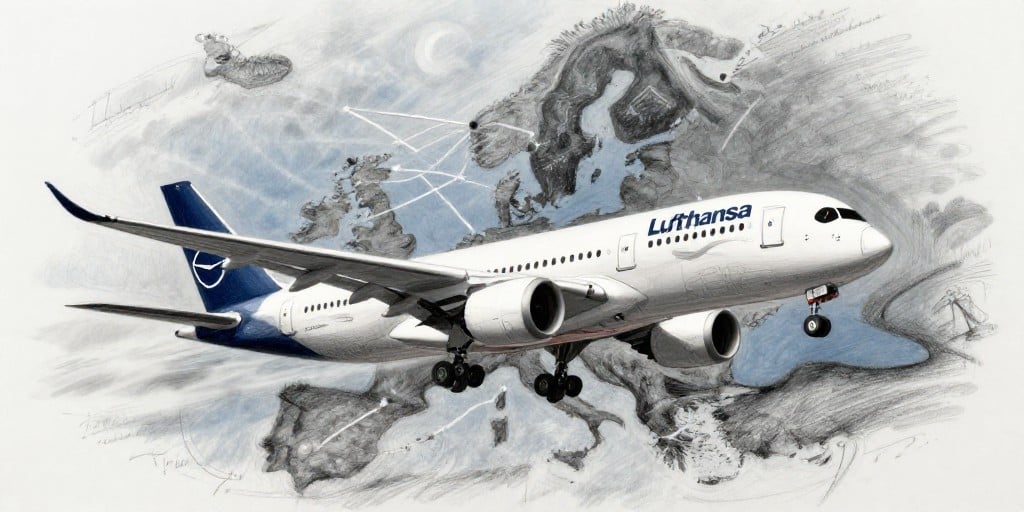
Corporate News Analysis: Lufthansa’s Strategic Expansion and Operational Adjustments
Lufthansa AG Pursues Major Stake in TAP Air Portugal
Deutsche Lufthansa AG has intensified its bid for a controlling interest in TAP Air Portugal, positioning the German carrier as a prominent contender alongside Air France‑KLM. Both firms have revised their binding offers to exceed one billion euros, targeting up to 44.9 % of the state‑owned airline. An additional 5 % stake remains earmarked for TAP employees, underscoring a commitment to workforce continuity.
The Portuguese government is slated to select a buyer by mid‑October. In evaluating the proposals, authorities will weigh not only the financial outlay but also non‑monetary commitments:
- Retention of Lisbon as a hub: Ensuring that TAP maintains its strategic base in Portugal.
- Network investment: Expanding route coverage and improving frequency to strengthen connectivity.
- Employment guarantees: Safeguarding jobs for the existing workforce.
- Environmental pledges: Committing to sustainability initiatives in line with European aviation goals.
TAP’s recent operating loss, largely attributable to fuel‑price volatility, highlights the need for scale and capital infusion to secure long‑term viability. A robust partner such as Lufthansa could provide the financial muscle and operational expertise required to reverse the loss trajectory and harness synergies across the European network.
Rising Operating Costs and Fleet Modernisation
Lufthansa’s own cost base is under pressure, chiefly from soaring jet‑fuel prices. The group has already adjusted fare structures to reflect this higher expense reality, while its CEO maintains a cautious stance on any future cost easing. In parallel, Lufthansa is pursuing a fleet renewal programme, with plans to add a significant number of new aircraft over the next year. This strategy is aimed at:
- Improving fuel efficiency: Reducing per‑seat fuel consumption to mitigate price shocks.
- Enhancing service quality: Introducing modern cabin configurations to attract premium travellers.
- Supporting network expansion: Providing the capacity to add new routes and increase frequencies.
The fleet refresh is expected to deliver tangible cost savings and operational flexibility, bolstering the airline’s competitive position amid tightening margins.
Integration of ITA Airways and Market Outlook
Lufthansa is preparing for the full integration of ITA Airways in 2027, a move anticipated to unlock system‑wide synergies. By consolidating IT, booking systems, and operational processes, the group aims to:
- Reduce duplication: Streamlining support functions across the two entities.
- Standardise customer experience: Delivering a unified brand offering across the combined network.
- Enhance revenue management: Leveraging shared data analytics to optimise pricing and inventory control.
While the integration presents complex challenges, analysts suggest that the long‑term benefits will outweigh short‑term disruptions, especially if executed within the planned timetable.
Share Performance and Investor Sentiment
Lufthansa’s share price has exhibited modest volatility, reflecting investor ambivalence over the impending integration tasks and the volatile fuel‑price environment. The stock remains one of the most liquid assets in the MDAX, trading with significant daily volume. Recent market behaviour indicates:
- Short‑term pressure: A reaction to cost‑increase concerns and operational uncertainties.
- Long‑term resilience: Analysts point to the airline’s premium‑segment demand and planned fleet renewal as potential catalysts for recovery.
- Sector dynamics: Lufthansa’s strategic moves—stake acquisition, fleet renewal, ITA integration—are expected to shape the company’s outlook positively, provided external pressures are managed effectively.
Conclusion
Deutsche Lufthansa AG’s aggressive pursuit of TAP Air Portugal, coupled with decisive fleet renewal and the integration of ITA Airways, signals a concerted effort to strengthen its European network and secure a competitive edge. However, escalating fuel costs and market sentiment remain critical variables that will influence both operational outcomes and shareholder value. The coming months will be pivotal in determining whether Lufthansa can translate its strategic initiatives into sustainable financial performance amid a complex and evolving aviation landscape.