
Lufthansa Accelerates Digital and Culinary Upgrades Amid Margin Pressures
Lufthansa has announced a series of strategic initiatives that underscore its intent to enhance the customer experience while navigating a challenging operating environment. The German carrier’s latest moves focus on digital connectivity, in‑flight catering, and workforce stability, all of which could reshape its competitive posture in an industry that remains highly sensitive to macro‑economic variables such as fuel costs and supply‑chain reliability.
Digital Connectivity Rollout
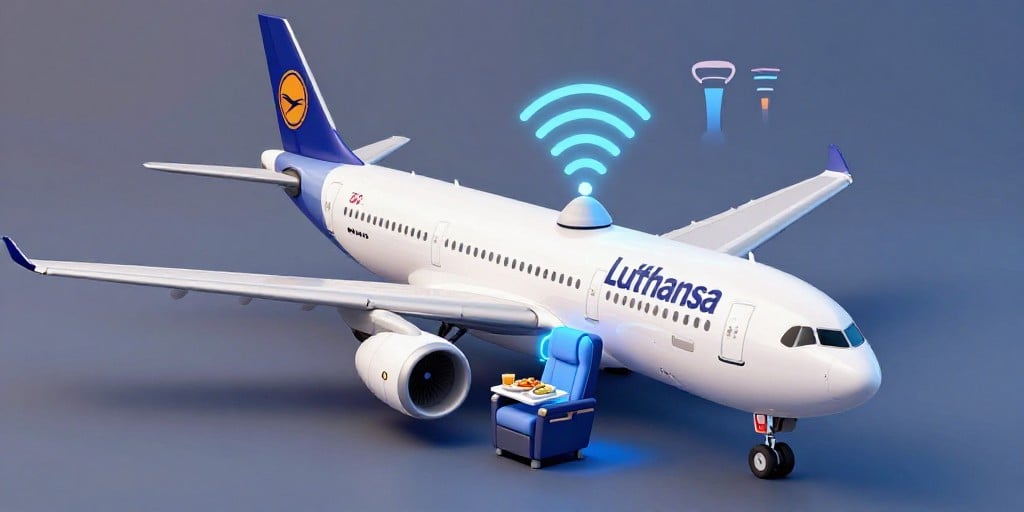
On 19 August, Lufthansa inaugurated a free, Starlink‑powered Wi‑Fi service on a Frankfurt‑Rome flight, marking the first step in a broader plan to equip roughly 850 aircraft by the end of 2029. The partnership leverages Starlink’s low‑orbit satellite network to deliver high‑bandwidth connectivity across the airline’s long‑haul fleet, positioning Lufthansa to capture a premium segment of passengers who value uninterrupted digital access during flight.
From an operational perspective, the initiative represents a substantial capital outlay but also offers potential revenue synergies. By differentiating its long‑haul product, Lufthansa can command higher yields on routes that traditionally suffer from thin margins. Moreover, the service could bolster the airline’s brand perception as a technological leader, a factor that may translate into increased customer loyalty and ancillary revenue opportunities such as in‑flight digital advertising.
Refresh of In‑Flight Menu
Complementing the connectivity upgrade, Lufthansa is revamping its onboard menu. Starting 1 September, economy‑class passengers will receive warmer meals, while business‑class passengers will enjoy an expanded selection. The culinary refresh is a modest investment that aligns with broader industry trends toward premium in‑flight services, which have proven effective in generating incremental revenue and enhancing passenger experience.
The menu changes are also a strategic response to evolving consumer expectations post‑pandemic, where travelers increasingly seek higher quality and healthier food options. By aligning its offerings with these preferences, Lufthansa can reinforce its competitive positioning against low‑cost carriers that have been undercutting the market on price alone.
Margin Sensitivity and Fuel Cost Volatility
Despite these forward‑looking initiatives, Lufthansa’s share price has struggled. The stock posted a modest intraday gain during the most recent trading session; however, its performance over the past month has trended downward, and year‑to‑date returns remain below market expectations. The primary concern for shareholders remains the group’s operational performance, especially in relation to fuel costs.
In its latest earnings guidance for 2026, Lufthansa trimmed the projected EBIT range to €1.7 billion – €2.2 billion following a decline in adjusted EBIT in the second quarter. Management attributes this shortfall primarily to higher jet‑fuel prices, which have remained stubbornly elevated despite a relatively steady demand curve. The airline’s sensitivity to fuel price fluctuations is well documented, and a recent kerosene shortage at Windhoek’s airport serves as a stark reminder of how swiftly supply‑chain disruptions can erode profitability.
Labor Settlements and Operational Stability
On the upside, the settlement reached with the pilots’ union in August mitigates the risk of future labor‑related disruptions. This development provides a measure of stability in an industry where labor negotiations often precipitate costly operational interruptions. A smoother labor environment should enable Lufthansa to focus its resources on deploying the aforementioned digital and culinary initiatives more effectively.
Analyst Outlook and Market Sentiment
Analysts remain cautious. While the Wi‑Fi rollout offers a clear path to differentiate Lufthansa’s long‑haul offering, the benefits will only materialize if jet‑fuel prices ease in the second half of the year and if the airline can convert digital upgrades into tangible revenue growth. Some analysts have downgraded the target price and maintained an “underweight” stance, citing the persistent volatility in fuel costs and the company’s trimmed EBIT outlook.
Investors are now keenly monitoring the forthcoming quarterly results to assess whether the revised guidance holds and whether the digital initiatives deliver measurable financial impact. The current share price, still below its 52‑week high, reflects a delicate balance between the promise of new services and the enduring risk factors that continue to weigh on Lufthansa’s profitability.
Connecting to Broader Economic Trends
Lufthansa’s experience mirrors a broader pattern across the airline industry, where carriers are increasingly adopting technology‑driven customer enhancements to offset margin pressure from commodity price swings and supply‑chain constraints. The push toward high‑quality, differentiated services—be it in‑flight connectivity, meal quality, or loyalty program benefits—appears to be a common response to the evolving expectations of a post‑pandemic traveler base that values both convenience and premium experiences.
In summary, Lufthansa’s dual focus on digital connectivity and culinary improvement positions it to strengthen its competitive edge. Yet, the overarching challenge remains the company’s ability to manage fuel cost volatility and operational disruptions—factors that will ultimately determine whether the announced initiatives translate into sustainable profitability growth.