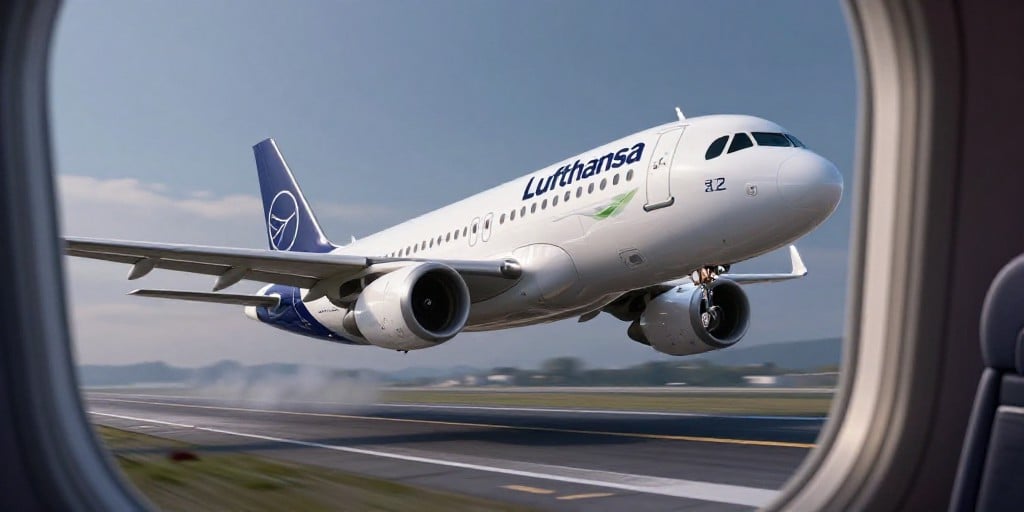
Corporate Analysis: Lufthansa’s Navigational Strategy Amid a Volatile Operating Landscape
Contextualizing the Challenges
Deutsche Lufthansa AG is operating within a macro‑economic environment characterized by persistently elevated jet‑fuel prices and a fragmented aircraft supply chain. The airline’s top management has repeatedly framed the years 2026 and 2027 as transitional, citing:
- Rising oil prices driven in part by geopolitical tension in Iran, which have increased the cost of jet fuel beyond forecasted levels.
- Escalating domestic operating expenses, including higher labor and regulatory costs across Europe.
- Delays in the delivery of new-generation aircraft, notably the Boeing 777X, which threatens to leave the fleet with older, less fuel‑efficient models such as the Airbus A340‑300.
These factors collectively place upward pressure on Lufthansa’s cost base while simultaneously constraining its capacity to meet planned growth trajectories.
Adjusted Financial Outlook and Profitability Focus
Despite the headwinds, Lufthansa’s board remains confident in the company’s ability to hit profitability targets, but has responded by trimming the upper bound of its projected adjusted EBIT range. This recalibration reflects:
- Cost‑structuring discipline – Emphasis on reducing variable expenses and streamlining operations.
- Revenue optimization – Leveraging premium cabin demand, which has historically shown resilience even during broader economic downturns.
The decision to moderate earnings expectations signals a prudent approach to risk management, acknowledging that the cost structure may remain strained until the fleet is fully modernized.
Strategic Deployment of Fuel‑Efficient Aircraft
A cornerstone of Lufthansa’s turnaround program is the acceleration of fuel‑efficient aircraft into service:
- Airbus A350‑1000 – The first of these models is slated for entry in November, offering significant reductions in fuel consumption and emissions compared to older wide‑body alternatives.
- Boeing 777X – While the delivery schedule remains uncertain, the absence of this aircraft in the 2027 summer timetable highlights a tangible gap in long‑haul capacity. Lufthansa is therefore forced to maintain a reliance on older, less efficient aircraft in the interim.
This dual‑approach underscores the company’s commitment to long‑term operational efficiency while managing short‑term supply constraints.
Operational Efficiency and Network Rationalisation
Lufthansa’s broader transformation agenda includes:
- Staff reductions – A targeted workforce optimisation to align labor costs with the evolving business model.
- Network rationalisation – A strategic focus on maintaining a competitive European hub network while pruning underperforming routes.
- Capital allocation – Prioritising investments in aircraft that deliver the best fuel‑economy-to-capacity ratio.
These measures are designed to create a leaner operation that can adapt to volatile fuel markets without compromising market share in key routes.
Market Demand Resilience
The airline’s management cites sustained demand for premium cabin services and a robust overall passenger market as mitigating factors. The premium segment often exhibits less price elasticity, allowing airlines to retain higher yield even when operating costs rise. Furthermore, Lufthansa’s established brand and loyalty programmes help insulate revenue streams from short‑term fluctuations.
Cross‑Industry Comparisons and Macro‑Trends
Lufthansa’s situation is not isolated. Similar challenges are observed across the global aviation sector:
- Fleet Modernisation Pressure – Airlines worldwide are investing in fuel‑efficient aircraft (e.g., Airbus A320neo family, Boeing 737 MAX) to reduce operational costs.
- Supply Chain Vulnerabilities – The Boeing 737 MAX and 777X delivery delays mirror issues faced by manufacturers in the automotive and electronics sectors, where component shortages and geopolitical tensions can stall product roll‑outs.
- Fuel Price Volatility – Elevated oil prices have forced a reevaluation of fuel hedging strategies, a trend shared by shipping and rail freight operators.
These parallels highlight that Lufthansa’s strategic choices, while tailored to aviation, are informed by broader economic dynamics that transcend industry boundaries.
Conclusion
Deutsche Lufthansa AG is confronting a confluence of cost pressures and supply‑chain constraints amid a volatile fuel market. By trimming earnings expectations, accelerating the deployment of fuel‑efficient aircraft, and tightening its operational cost base, Lufthansa is pursuing a structured transformation aimed at restoring profitability. The airline’s approach demonstrates analytical rigor and adaptability—qualities that will be essential as the industry navigates the transition to a more sustainable and resilient future.