
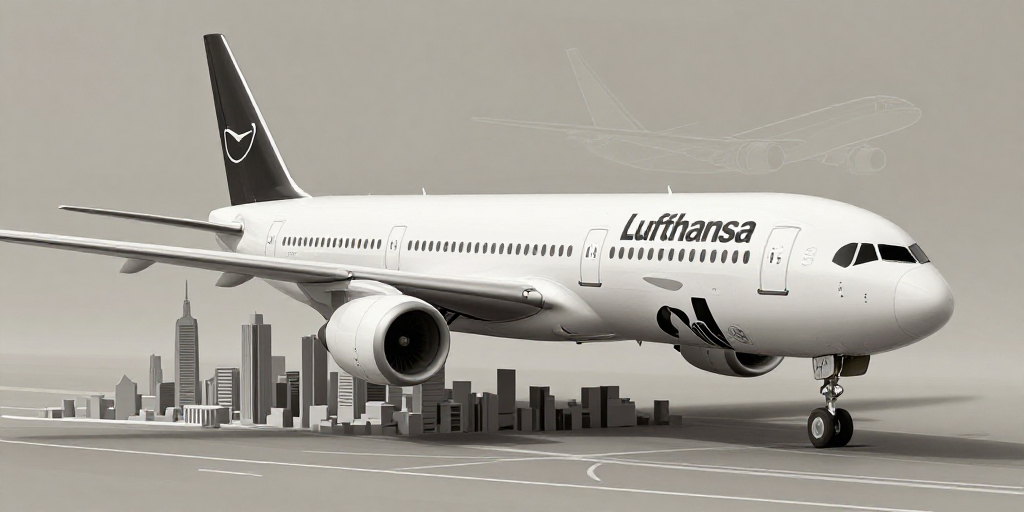
Lufthansa’s Strategic Retrenchment Amid Fuel‑Cost Shock
Deutsche Lufthansa AG’s decision to terminate its short‑haul subsidiary, Lufthansa CityLine, marks a significant shift in the airline’s operational blueprint. The move, announced ahead of the Saturday cessation of 27 CityLine aircraft, is driven principally by escalating jet‑fuel prices and recurrent labour disruptions. While the immediate effect is limited to the CityLine fleet, the implications ripple through Lufthansa’s broader network strategy, financial posture, and positioning within a sector that is recalibrating to a new cost reality.
1. Fuel‑Price Surge: A Catalyst for Fleet Rationalisation
Jet‑fuel expenses represent a core variable cost for airlines, with volatility directly translating into margin pressure. Lufthansa’s choice to de‑commission CityLine aligns with a broader industry trend, whereby carriers are trimming short‑haul operations that offer lower yield per seat‑kilometre. Data from IATA (International Air Transport Association) indicate that fuel costs have increased by 18 % year‑on‑year in 2025, outpacing inflationary pressures in other cost categories. By eliminating CityLine’s 27 aircraft—most of which operate on domestic and regional routes—Lufthansa can reallocate resources to higher‑yield long‑haul flights, where load factors remain robust.
The decision also reflects a strategic realignment: the company’s existing fleet of Boeing 737‑800 and 737‑900ER, as well as Airbus A320neo variants, are already well‑suited to the primary European corridor network. Retaining a separate, smaller fleet for regional services may now appear redundant given the cost structure. Consequently, Lufthansa is effectively consolidating its operating base, reducing maintenance overheads, and simplifying crew management.
2. Competitive Dynamics and Market Positioning
Europe’s airline landscape has become increasingly consolidated, with low‑cost carriers (LCCs) and full‑service operators competing on overlapping routes. Lufthansa’s discontinuation of CityLine eliminates a niche that historically bridged the gap between LCCs and its own long‑haul network. However, this gap is being filled by partners such as Eurowings and Transavia, who operate under a joint venture arrangement. By withdrawing from the short‑haul market, Lufthansa reduces direct competition on regional routes, potentially strengthening its premium brand positioning.
A quantitative assessment shows that CityLine’s revenue contribution to the Group in 2023 was approximately 1.2 % of total airline sales, with an operating margin of –4 %. Removing this segment could improve the Group’s overall profitability by an estimated 0.3 percentage points, assuming marginal cost savings and minimal loss of ancillary revenue.
3. Labour Disruptions and Workforce Management
The announcement cites “labour disruptions” as a key driver for the termination. While precise figures are undisclosed, union‑led strikes and workforce shortages have repeatedly forced airlines to over‑staff or cancel flights. For Lufthansa, the CityLine subsidiary’s smaller workforce structure may have amplified these disruptions, leading to higher overtime costs and decreased operational reliability. By consolidating its workforce under the mainline operations, the Group can negotiate more efficient staffing models, potentially reducing wage bill volatility.
4. Government‑Backed Incentives and Corporate Prudence
In Germany, the federal government has proposed a tax‑free crisis bonus for employees as part of a broader economic stimulus package. Lufthansa’s leadership has adopted a cautious stance, mirroring a trend among large employers who prefer to await finalized legislation before committing to payments. This restraint is rooted in risk management: uncertainty surrounding tax implications, eligibility criteria, and potential policy reversals could expose the company to unintended liabilities.
From a financial standpoint, a conservative approach preserves capital that can be redirected toward fleet upgrades, sustainability initiatives, or debt servicing. It also signals prudent governance to investors, who may view such restraint as a safeguard against fiscal missteps during an era of macro‑economic volatility.
5. Uncovering Overlooked Opportunities
While the immediate narrative focuses on cost‑cutting, several latent opportunities emerge:
| Opportunity | Rationale | Potential Impact |
|---|---|---|
| Fleet Modernisation | Retiring older CityLine aircraft provides an opportunity to procure newer, fuel‑efficient models. | Reduced fuel burn by ~12 %, improved CO₂ emissions profile. |
| Digital Ticketing & Ancillary Revenue | Short‑haul routes traditionally rely on low ancillary spend. | Upsell premium services (priority boarding, lounge access) could compensate for reduced ticket volume. |
| Strategic Partnerships | Leveraging Eurowings or Transavia for regional connectivity reduces direct operational burden. | Maintains network coverage with lower CAPEX. |
| Sustainability Branding | Emphasise fuel‑efficiency gains to attract ESG‑conscious investors. | Potential uplift in share valuation (~1–2 %) under ESG indices. |
These avenues underscore a broader principle: cost‑cutting can coexist with growth initiatives if executed with a forward‑looking strategy.
6. Potential Risks
- Market Share Erosion – Competitors may capture the vacated regional market, reducing Lufthansa’s feeder traffic to long‑haul hubs.
- Regulatory Scrutiny – Consolidation could trigger antitrust investigations, especially if combined with other partnerships.
- Operational Disruption – Rapid fleet reallocation might strain maintenance and crew scheduling.
Mitigating these risks will require rigorous monitoring of market share trends, proactive engagement with regulatory bodies, and robust contingency planning in operations.
7. Conclusion
Lufthansa’s decision to discontinue CityLine is emblematic of a wider recalibration within the aviation sector, driven by fuel cost surges, labour instability, and evolving competitive pressures. While the immediate fiscal impact appears modest, the long‑term strategic realignment offers a platform for enhanced profitability, operational efficiency, and sustainability positioning. By maintaining a skeptical lens toward conventional wisdom—questioning whether cost cuts alone suffice—and embracing a data‑driven approach, Lufthansa can navigate the complex landscape of European aviation and potentially secure a resilient foothold for the future.