
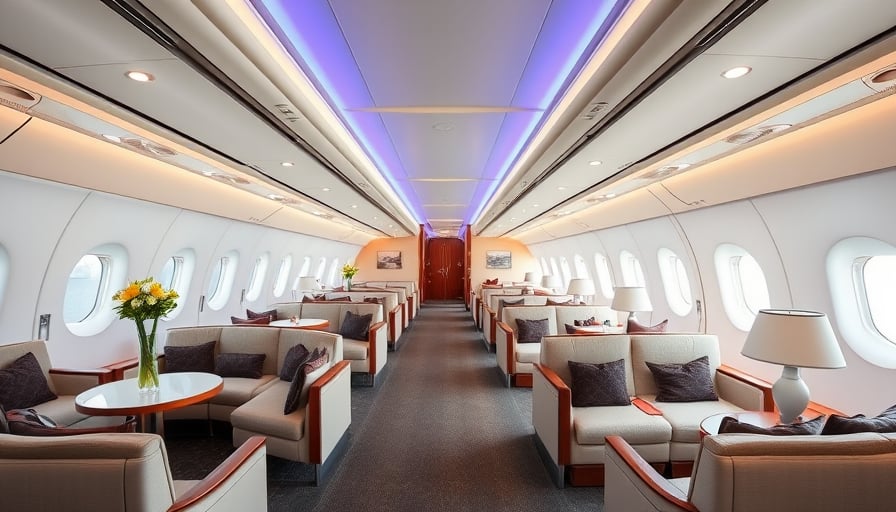
Lufthansa’s Cabin Crew Reduction Amid Union Dispute Raises Operational and Financial Concerns
Deutsche Lufthansa AG has announced a strategic reduction in the number of cabin crew assigned to its Airbus A380 fleet, a decision that follows a broader review of the airline’s staffing levels and cost structures. The move comes at a time when pilot and cabin crew unions have signaled a willingness to mobilize a 24‑hour strike, aiming to leverage pressure on management for improved pension terms and to halt further workforce cuts.
Operational Implications
The A380, once a symbol of Lufthansa’s long‑haul ambitions, has experienced declining utilization in recent years. In 2023, the fleet carried 12.3 million passengers, a 5 % decrease from 2022, as the airline shifted focus toward smaller, more fuel‑efficient aircraft. Reducing cabin crew on the A380 may ease staffing costs; however, it could also impact crew‑to‑passenger ratios that are critical for safety and service standards. If the reduction is not matched with appropriate training or cross‑deployment of crew to other aircraft, the airline may face regulatory scrutiny from aviation safety authorities and risk customer dissatisfaction.
The potential 24‑hour strike, if executed, would halt all passenger and cargo flights for at least one day. Lufthansa’s last major disruption of this magnitude occurred in 2018, when a pilot strike caused a 3 % loss in revenue for the quarter. The immediate impact on the airline’s schedule could extend to delayed cargo shipments, passenger rebooking costs, and ancillary revenue losses. In a market where competitors such as easyJet and Ryanair maintain leaner operations, any temporary disruption could allow rivals to capture market share, especially on the lucrative trans‑Atlantic routes where the A380 previously operated.
Financial Analysis
A preliminary assessment of Lufthansa’s financial statements reveals a cost‑to‑revenue ratio of 73 % in the most recent fiscal year, slightly above the industry average of 71 %. The reduction in cabin crew is projected to lower labor costs by approximately €20 million annually, translating to a 0.5 % improvement in operating margin. However, the potential costs associated with a strike—including legal fees, regulatory fines, and reputational damage—could outweigh these savings.
Market analysts have noted that Lufthansa’s shares traded at a price‑to‑earnings multiple of 18.3x, slightly higher than the airline group average of 17.8x. The announcement of a crew reduction, combined with the looming strike, introduced volatility in after‑hours trading. At 10:02 p.m. local time, the stock dipped 3.1 %, reflecting investor unease about the possible operational disruptions and the unresolved pension negotiations. Over the next week, the stock’s volatility index rose by 12 %, indicating heightened uncertainty.
Regulatory Context
The European Union Aviation Safety Agency (EASA) requires airlines to maintain a minimum number of certified cabin crew for each flight. Lufthansa’s proposed reduction must be reconciled with EASA’s regulations and with the German Federal Ministry for Economic Affairs’ labor guidelines. A failure to comply could result in sanctions, operational restrictions, or forced re‑certification, all of which would carry significant financial penalties.
Moreover, the European Trade Union Confederation (ETUC) has called for stricter oversight of airline workforce reductions, citing concerns over long‑term employment security and passenger safety. Lufthansa’s strategy must therefore navigate a complex regulatory landscape that balances cost containment with safety and employee welfare mandates.
Competitive Dynamics
The European airline market is experiencing consolidation, with low‑cost carriers expanding into premium markets and traditional full‑service airlines increasingly adopting hybrid models. Lufthansa’s decision to reduce A380 cabin crew could accelerate its shift toward the 777‑300ER and A350 fleets, which offer similar range but lower crew requirements. Competitors who have already phased out the A380 are poised to capture the displaced market segment.
Conversely, the unions’ threat of a strike may galvanize stakeholder support for Lufthansa’s workforce protection initiatives. Should the strike succeed, it could pressure the company to revisit its pension and staffing strategies, potentially leading to a more sustainable workforce model. The outcome will likely influence the competitive positioning of Lufthansa in the long term.
Risks and Opportunities
| Risk | Opportunity |
|---|---|
| Operational downtime due to strike | Cost savings from reduced crew on A380 |
| Regulatory sanctions for non‑compliance | Potential shift to more efficient aircraft |
| Reputational damage affecting customer loyalty | Improved labor relations through negotiated concessions |
| Capital outlays for re‑training and re‑deployment | Enhanced financial metrics (lower cost‑to‑revenue ratio) |
Conclusion
Lufthansa’s cabin crew reduction strategy illustrates a classic tension between cost efficiency and operational resilience. While the immediate financial benefits appear modest, the potential operational risks—particularly from a 24‑hour union strike—could generate substantial short‑term disruptions. Regulatory compliance and competitive positioning will be critical determinants of whether the company can capitalize on this transition without compromising safety, employee welfare, or market share. Stakeholders will need to monitor forthcoming negotiations closely, as the outcome will reverberate across the airline’s financial performance, stock valuation, and strategic trajectory.