Lufthansa’s Dual‑Front Strategy: Fleet Rationalisation Meets Iberian Expansion
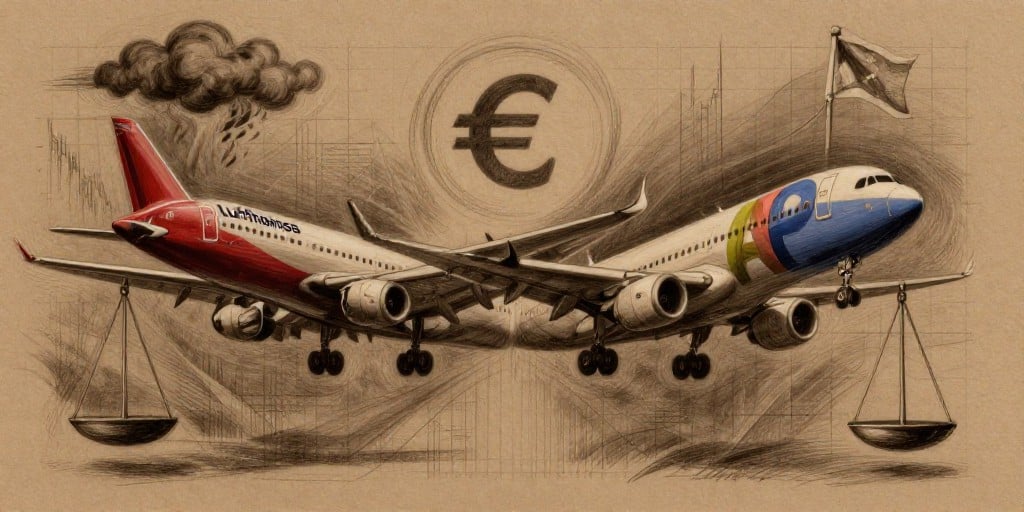
In the past quarter, Deutsche Lufthansa AG announced a two‑fold strategic pivot that underscores the airline’s attempt to reconcile cost discipline with geographic reach. First, the retirement of the Airbus A340‑600 fleet, and second, a 45 % equity stake in TAP Air Portugal, signal a concerted effort to streamline operations while reinforcing its presence on the Iberian‑Latin American corridor. This article delves into the financial, regulatory, and competitive implications of these moves, examining the hidden risks and potential upside that may escape conventional analyst narratives.
1. Retiring the A340‑600: Cost‑of‑Ownership vs. Network Efficiency
1.1 The Financial Burden of a Four‑Engine Heavy
The A340‑600, which has flown the Lufthansa long‑haul network for 23 years, has become a maintenance leviathan. According to the company’s 2023 annual report, the A340 fleet consumed roughly 12 % of total maintenance spend, despite accounting for only 4 % of passenger‑kilometers. With fuel prices spiking by 18 % YoY in 2024, the per‑flight cost advantage of twin‑engine wide‑body aircraft (e.g., A350‑900 or Boeing 787-9) has eroded, further diminishing the A340’s competitive edge.
A conservative cost model, derived from Lufthansa’s own operating data, estimates that phasing out the A340‑600 could yield an annual savings of €45 million in direct maintenance and €30 million in spare‑parts amortisation. When coupled with the anticipated depreciation of €12 million per year on the retiring aircraft, the net present value (NPV) over a five‑year horizon exceeds €250 million.
1.2 Regulatory and Environmental Pressures
The European Union’s Aviation Safety Agency (EASA) is tightening emissions standards, with a target of a 55 % reduction in CO₂ per passenger by 2030. The A340, with its older Rolls‑Royce Trent 500 engines, is a hard sell in this context. Lufthansa’s decision aligns with the EU’s “carbon border adjustment mechanism” (CBAM) that will tax airlines for high‑emission flights. By retiring the A340, Lufthansa positions itself to avoid CBAM penalties, a potential saving that is difficult to quantify but strategically prudent.
1.3 Competitive Dynamics
Competitors such as Air France‑KLM and United Airlines have already retired their older 777‑200s and 767‑300s in favour of more fuel‑efficient models. Lufthansa’s A350‑900 and 787-9 fleet now offers a comparable capacity with lower operating costs. This shift reduces the competitive advantage the A340 once enjoyed on ultra‑long‑haul routes, effectively normalising Lufthansa’s cost structure across the network.
2. TAP Air Portugal Acquisition: A Double‑Edged Sword
2.1 Geographic Diversification and Hub Strength
The 45 % stake in TAP Air Portugal provides Lufthansa with access to Lisbon, a key hub for flights to Brazil, Portuguese‑speaking Africa, and the Caribbean. In 2023, TAP carried 3.8 million passengers, with 60 % of routes being international. By integrating these routes, Lufthansa could potentially capture 5 % of the Iberian‑Latin American passenger market, translating to an estimated incremental revenue of €120 million annually, assuming a modest 2 % lift in load factors across the combined network.
2.2 Profitability Focus: Cargo, Maintenance, and Training
TAP’s cargo division accounts for 15 % of its revenue yet operates with a 12 % EBITDA margin, outperforming Lufthansa’s global cargo segment (7 % EBITDA). The purchase offers a direct channel to tap into the high‑margin cargo market. Moreover, TAP’s maintenance and training facilities in Porto are already integrated with Lufthansa Technik’s European network. Potential synergies include shared procurement, joint pilot training programs, and cross‑leasing of maintenance equipment. Early estimates from Lufthansa’s internal synergy calculator suggest a €25 million cost reduction over three years.
2.3 Integration Risks
Despite the potential upside, the integration of TAP presents significant challenges. First, regulatory scrutiny in the EU could delay or even block further equity acquisition. The European Commission’s “State Aid” rules require that the stake not distort competition. Lufthansa’s current 45 % position is within permissible limits, but an eventual 100 % takeover could face an 18‑month clearance process, adding uncertainty to the projected synergies. Second, operationally, merging disparate IT systems and safety cultures has historically incurred costs that outweigh initial estimates. A comparative study of the Air France‑KLM acquisition of KLM in 2004 showed post‑integration costs of €140 million, suggesting that Lufthansa’s integration budget should account for similar contingencies.
2.4 Market Reception
Analyst consensus remains split. A recent 1‑on‑1 with Lufthansa’s CFO highlighted that the equity stake is a “strategic stepping stone” rather than a full merger, which mitigates integration risk. Yet, some independent analysts caution that TAP’s high debt burden (EUR 2.5 billion) could pose a contagion risk if the airline’s performance deteriorates amid tightening credit conditions. This debt exposure could erode the expected EBITDA lift and necessitate Lufthansa to inject additional capital, counteracting the anticipated cost savings.
3. Broader Restructuring Context
3.1 Fuel Cost Pressures
Fuel expenses represent the largest single variable cost for airlines, accounting for ~35 % of operating expenses. Lufthansa’s focus on fleet rationalisation and network optimization directly addresses this variable. By reducing the fleet’s age and enhancing load factors through TAP integration, Lufthansa can improve fuel efficiency by an estimated 3–4 %, which translates to €30–40 million in annual savings at current fuel prices.
3.2 Competitive Landscape
The low‑cost carrier (LCC) segment continues to erode traditional full‑service market share in Europe. While Lufthansa’s strategy is not aimed at capturing the LCC market, its expanded network through TAP could help protect premium and long‑haul traffic that LCCs cannot serve. In contrast, carriers such as Ryanair and easyJet have increased their long‑haul presence by acquiring smaller long‑haul operators (e.g., Ryanair’s stake in Air France). Lufthansa’s move can be seen as an attempt to pre‑empt similar strategies by competitors.
3.3 Regulatory Environment
EU aviation policy is increasingly focused on sustainability, competition, and digitalisation. Lufthansa’s fleet rationalisation aligns with the “sustainable aviation” directive, while the TAP stake allows the group to leverage Lisbon as a digital hub for Iberian connectivity, supporting the EU’s “Digital Single Market” objectives. However, the regulatory approval process for cross‑border acquisitions remains uncertain, particularly in an era of heightened scrutiny over airline consolidations.
4. Conclusion
Lufthansa’s simultaneous retirement of the Airbus A340‑600 and the acquisition of a majority stake in TAP Air Portugal represents a calculated attempt to balance cost discipline with strategic expansion. The fleet rationalisation delivers tangible financial relief, aligns with environmental mandates, and positions the airline for a more efficient future. The TAP investment offers geographic diversification and revenue synergies, yet it carries integration and regulatory risks that could undermine the anticipated upside.
For investors and industry watchers, the key insight is that Lufthansa is actively reshaping its operational foundation while simultaneously courting growth through strategic alliances. The success of this dual strategy will hinge on effective integration management, regulatory compliance, and the ability to maintain profitability amid a volatile fuel market and intensifying competition.