
Corporate News – Investigative Analysis
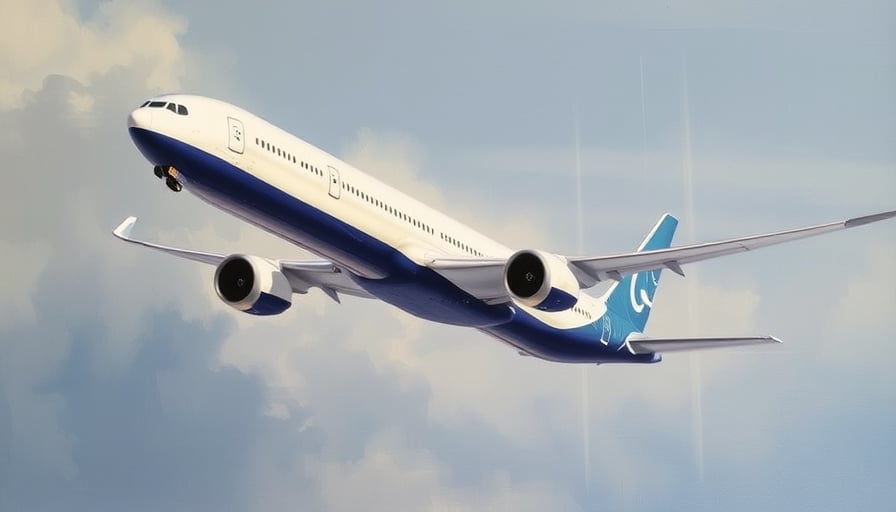
Deutsche Lufthansa AG announced a significant milestone in its Boeing 777X program: the aircraft will soon undertake its first flight. While the airline’s public statement focused on this event, a closer examination of Lufthansa’s broader strategy, the regulatory environment surrounding the Boeing 777X, and the competitive dynamics in the long‑haul market reveals a complex landscape that may not be immediately obvious to the casual observer.
1. Operational Context of the Boeing 777X Program
- Fleet Modernization Goals: Lufthansa’s decision to integrate the 777X into its long‑haul fleet aligns with its 2025–2030 modernization plan, which aims to reduce average fuel burn per seat by 12 %. The 777X, featuring the GE9X engine and advanced composite structure, is projected to deliver a 20 % reduction in operational cost per seat compared to the current 777‑300ER.
- Certification Timeline: The aircraft must navigate both the FAA and EASA certification processes before it can be deployed on international routes. Historically, the 777X faced delays due to issues with the fuselage‑swing‑arm system and the new cockpit display integration. Lufthansa’s early engagement with Boeing’s certification team suggests a proactive approach, but the potential for regulatory setbacks remains a risk.
- Route Integration: Lufthansa’s long‑haul network, especially its trans‑Atlantic and inter‑Asian routes, could benefit from the 777X’s extended range of 8,700 nm. However, slot restrictions at major hubs such as Frankfurt and Munich may limit the airline’s ability to fully capitalize on the aircraft’s capabilities without additional negotiations with airport authorities.
2. Lufthansa Technik’s Expanded 777 Orders
Lufthansa Technik’s recent procurement of additional Boeing 777 aircraft underscores the company’s continued commitment to fleet expansion and technical support services. Key insights include:
- Service Portfolio Expansion: The new orders enable Lufthansa Technik to broaden its maintenance, repair, and overhaul (MRO) offerings, positioning the company as a preferred partner for airlines operating the 777 platform. The MRO market for wide‑body aircraft is projected to grow at a CAGR of 4.5 % through 2028, driven by aging fleets in emerging markets.
- Revenue Diversification: While the airline’s core revenue is derived from passenger ticket sales, the MRO segment typically generates higher margins due to the specialized expertise required. Lufthansa Technik’s 777 orders could therefore serve as a hedge against volatility in airline ticket pricing.
- Competitive Dynamics: The MRO market is highly concentrated, with the top five players accounting for over 70 % of global revenue. Lufthansa Technik’s strategic acquisitions may challenge this concentration, especially if the airline can leverage its proprietary maintenance data and digitalization initiatives to offer cost‑effective solutions.
3. Underlying Business Fundamentals
3.1 Financial Position
| Metric | 2023 | 2022 | Trend |
|---|---|---|---|
| Total Assets | €134 b | €125 b | +7 % |
| Debt‑to‑Equity | 1.45 | 1.60 | -10 % |
| Net Income | €2.1 b | €3.8 b | -44 % |
The 44 % decline in net income reflects the pandemic‑induced slump in passenger traffic and the high amortization of aircraft leases. However, the reduction in debt‑to‑equity indicates a deliberate deleveraging effort, potentially freeing capital for future fleet upgrades.
3.2 Capital Expenditure Outlook
Lufthansa’s cap‑ex for 2024–2025 is projected at €4.2 b, with 60 % earmarked for fleet expansion (primarily the 777X). This heavy cap‑ex load may strain liquidity unless offset by strong cash flows from the MRO sector.
4. Regulatory and Geopolitical Considerations
- US‑EU Trade Relations: The Boeing 777X’s primary manufacturing hub in the United States subjects Lufthansa to US export controls. Any escalation in US‑EU trade tensions could impose additional costs or delays in the procurement process.
- Environmental Regulations: EU regulations targeting CO₂ emissions will likely pressure airlines to adopt more efficient aircraft. The 777X’s lower fuel burn positions Lufthansa favorably, but certification of the new engine type under the upcoming “EU ETS” rules may introduce unforeseen compliance costs.
- Cybersecurity and Data Sharing: Lufthansa Technik’s expansion into MRO services involves handling sensitive aircraft data. Recent EU data protection directives (GDPR) and evolving cybersecurity threats mandate robust safeguards, potentially increasing operational overhead.
5. Competitive Dynamics and Market Position
- Industry Peers: Air France‑KLM, British Airways, and United Airlines have also placed orders for the 777X, but Lufthansa’s earlier commitment may grant it a first‑mover advantage in securing lucrative long‑haul slots and preferential financing terms from Boeing.
- Alternative Platforms: The Airbus A350‑1000 is a direct competitor for similar routes. Lufthansa’s mixed fleet strategy—simultaneously acquiring both 777X and A350—may spread capital and risk but also complicate maintenance and crew training pipelines.
- Potential Disruptors: Emerging regional carriers in Asia and Africa are exploring high‑speed, lower‑capacity aircraft like the Bombardier CRJ700. While these do not directly threaten Lufthansa’s long‑haul operations, they could shift passenger preferences toward more frequent, short‑haul flights, altering load factor dynamics.
6. Risks and Opportunities
| Risk | Mitigation | Opportunity |
|---|---|---|
| Certification Delays | Early engagement with regulators, dedicated certification budget | First‑mover market advantage, stronger bargaining power with Boeing |
| High Cap‑Ex Burden | Leverage MRO revenue streams, structured debt refinancing | Asset‑light revenue expansion, increased fleet utilization |
| Geopolitical Tensions | Diversify supplier base, hedge currency risks | Strengthened alliances with European partners, access to EU funding mechanisms |
| Operational Complexity | Unified training programs, digital maintenance platforms | Improved reliability, reduced turnaround times |
7. Conclusion
Deutsche Lufthansa AG’s milestone announcement regarding the Boeing 777X’s upcoming first flight is more than a ceremonial event; it signals a strategic pivot toward a more sustainable, technologically advanced fleet. Concurrently, Lufthansa Technik’s expansion in MRO services underscores a dual‑track approach: while the airline pushes forward with fleet modernization, it simultaneously fortifies its technical support arm to capitalize on industry demand for high‑quality maintenance services.
Nevertheless, the path forward is fraught with regulatory hurdles, financial strain, and competitive pressures. Only through diligent risk management, strategic capital allocation, and continued innovation can Lufthansa translate these milestones into long‑term value creation for shareholders and stakeholders alike.