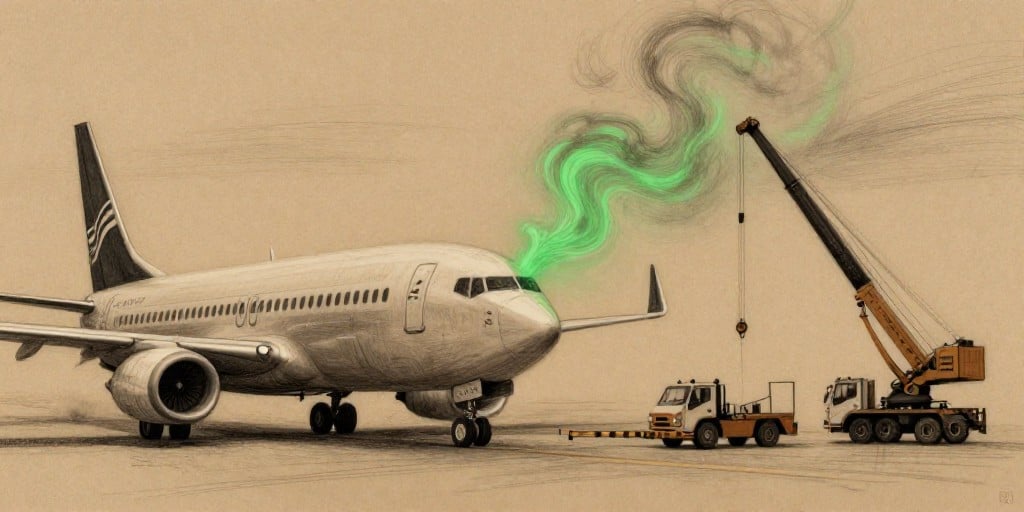
Lufthansa Group’s Strategic Modernisation and Operational Optimisation
Lufthansa Group has reaffirmed its long‑term commitment to fleet modernisation, leadership continuity, and operational efficiency. The latest developments—substantial Boeing 737 MAX 10 orders, executive contract renewals, and a ground‑handling partnership in Norway—signal a concerted effort to strengthen capacity, reduce costs, and enhance reliability in an increasingly competitive aviation market.
1. Fleet Modernisation: A Shift Toward Boeing 737 MAX 10
1.1 Order Volume and Timing
- Firm Orders: Lufthansa has converted a sizeable portion of purchase options into firm commitments for the 737 MAX 10, building on earlier 737 MAX 8 commitments.
- Delivery Horizon: Expected deliveries begin in the early 2030s, with the group’s order book projected to expand by more than 250 aircraft by 2035.
- Capacity Implications: The MAX 10’s larger cabin and longer range allow for higher seat‑load factors on medium‑haul routes, potentially improving revenue per flight hour.
1.2 Business Fundamentals
- Fuel Efficiency: The MAX platform offers up to 14% better fuel economy than the A320neo family, translating into significant operating‑cost savings over a 25‑year aircraft life cycle.
- Maintenance Synergies: Consolidating the fleet around a single manufacturer reduces training and tooling expenses, while the commonality between the MAX 8 and MAX 10 eases pilot transition and inventory management.
1.3 Regulatory Landscape
- Certification: The MAX series has faced heightened scrutiny post‑accidents; however, recent FAA and EASA approvals confirm compliance with stringent safety standards.
- Environmental Compliance: The aircraft’s advanced engines meet the ICAO’s 2035 CO₂ reduction targets, aiding Lufthansa’s ESG commitments.
1.4 Competitive Dynamics
- Market Share Pressure: Competitors such as Ryanair and easyJet continue to deploy Airbus A321neo and A320neo aircraft; Lufthansa’s shift to MAX 10 may enable higher yield routes that competitors cannot serve efficiently.
- Secondary Market Value: The MAX series has a strong resale value, mitigating financial risk in future fleet renewals.
2. Leadership Stability: Executive Contract Extensions
2.1 Continuity and Expertise
- Three Key Positions: Contracts for financial, technology, and commercial leaders have been extended, signalling confidence in current strategic direction.
- Operational Excellence: These leaders are tasked with overseeing the integration of new aircraft, ensuring seamless transitions and maintaining performance metrics.
2.2 Potential Risks
- Innovation Stagnation: While stability is valuable, prolonged tenure could risk complacency; continuous performance evaluation will be essential.
- Succession Planning: The Group must identify emerging talent to mitigate leadership gaps in the long term.
3. Ground Handling in Norway: Partnership with Aviator Airport Alliance
3.1 Scope of Agreement
- Service Transfer: Lufthansa will assume responsibility for ground handling—including de‑icing—at key Norwegian airports from February 2027.
- Operational Benefits: Centralised management of critical ground services improves turnaround times and reliability, especially during winter operations.
3.2 Financial Analysis
- Cost Savings: Transitioning to in‑house handling is projected to reduce per‑flight ground‑handling costs by 5–7%.
- Revenue Opportunities: Enhanced reliability can lead to higher load factors on routes connecting Norway and mainland Europe.
3.3 Competitive Implications
- Differentiation: Reliable ground operations in Norway differentiate Lufthansa from low‑cost carriers that rely on third‑party services, potentially strengthening customer loyalty.
4. Synthesising the Strategic Picture
Lufthansa’s multi‑faceted strategy—fleet optimisation, leadership continuity, and operational control—aligns with broader industry trends toward cost efficiency, sustainability, and service reliability. By consolidating around the Boeing 737 MAX family, the Group positions itself to capture higher‑margin routes while meeting evolving environmental regulations. Executive stability supports disciplined execution, though vigilance against stagnation remains vital. The Norway ground‑handling partnership underscores a focus on operational resilience, a critical differentiator in markets where weather‑induced disruptions are frequent.
5. Risks and Opportunities
| Risk | Mitigation | Opportunity |
|---|---|---|
| MAX Fleet Dependence | Diversify by retaining a modest Airbus portfolio | Achieve fuel‑efficiency gains and lower lifecycle costs |
| Regulatory Back‑lashes | Maintain proactive safety audits | Leverage strong ESG credentials for marketing |
| Leadership Inertia | Implement quarterly performance reviews | Sustain innovation culture through external partnerships |
| Operational Overreach | Phase in ground‑handling transition | Create new revenue streams via ancillary services |
6. Conclusion
Lufthansa Group’s recent initiatives reflect a deliberate, data‑driven strategy to reinforce its market position in a turbulent aviation landscape. The convergence of fleet modernisation, leadership stability, and operational optimisation sets the stage for sustained growth, provided the Group continues to interrogate assumptions, manage risks, and exploit emerging opportunities in both the short and long terms.