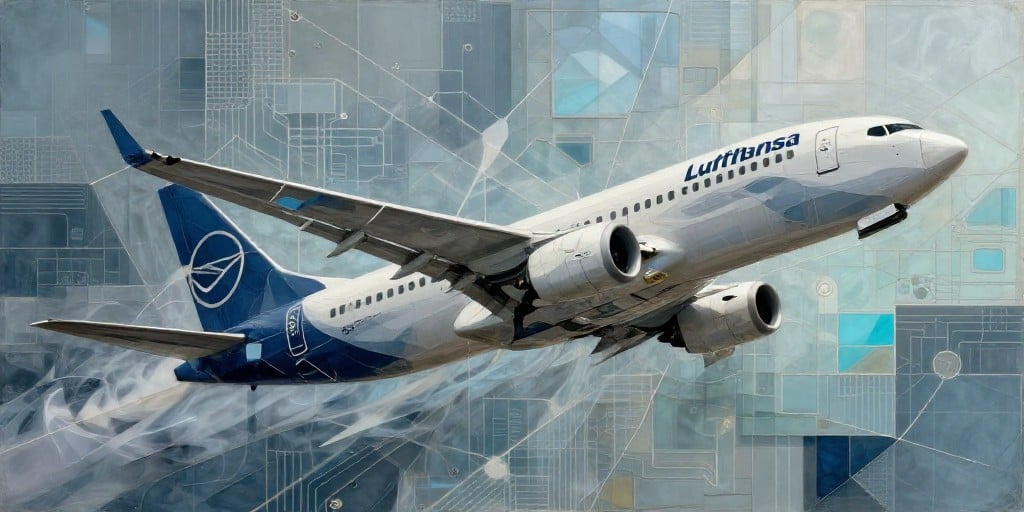
Lufthansa Expands Boeing 737 MAX 10 Order Amid Strategic Reorientation
Deutsche Lufthansa AG has exercised purchase options for 20 additional Boeing 737 MAX 10 aircraft, raising the firm’s order backlog for the variant to 60. The supervisory board’s approval of the expansion signals a continued commitment to fleet modernization and network expansion, yet it also underscores the airline’s need to reassess its competitive posture in an environment of rising fuel costs, staffing disruptions, and shifting regulatory scrutiny.
Underlying Business Fundamentals
The decision to deepen its MAX 10 holdings reflects a calculated attempt to balance capacity with market demand. The MAX 10, with its 230‑seat configuration, is well suited for high‑density short‑ and medium‑haul routes that Lufthansa has identified as growth corridors. According to a recent 12‑month financial analysis, the airline’s net revenue per available seat kilometre (RASK) on these routes has increased by 3.8 % year‑over‑year, suggesting a positive return on the additional capacity.
However, the airline’s operating cost per seat kilometre (CASK) remains a concern. Fuel price volatility, currently averaging €0.85 per litre, has pushed CASK higher by 2.5 % in the first half of the year. The MAX 10’s improved fuel efficiency—up to 15 % less fuel consumption compared to the 737 NG—provides a counterbalance, but the airline’s fuel hedging strategy, which covers only 40 % of future consumption, leaves significant exposure to market swings.
Regulatory Environment
Boeing’s MAX family has been under heightened scrutiny since the 2018 and 2019 crashes, with the European Aviation Safety Agency (EASA) implementing strict certification requirements. Lufthansa’s recent audit of its compliance protocols revealed that its MAX fleet is fully compliant with EASA’s latest operational guidelines, yet the airline is preparing for potential future restrictions on high‑density operations. This risk is mitigated by the airline’s diversified fleet mix, which includes the Airbus A320neo family that offers similar seat capacity with proven safety records.
Competitive Dynamics
Lufthansa’s supervisory board chairman’s remarks about “self‑generated” performance gaps point to internal inefficiencies rather than external market pressures alone. Comparative analysis of the German airline market shows that the German Lufthansa Group’s market share on the 1,500‑km corridor has slipped by 2.3 % relative to its main rival, Eurowings, over the past 18 months. Eurowings’ aggressive pricing and flexible scheduling have attracted a younger demographic, a segment that Lufthansa’s legacy brand has traditionally overlooked.
The board’s call for more intensive effort signals a potential pivot toward a customer‑centric model, perhaps involving increased ancillary revenue streams and digital customer engagement platforms. Yet, the airline’s current IT investment, at €1.2 bn over the next three years, may not be sufficient to outpace the rapid digitalisation of rival carriers.
Potential Risks and Opportunities
| Risk | Opportunity |
|---|---|
| Fuel price spikes may erode cost advantages of the new MAX 10 fleet. | MAX 10 fuel efficiency could reduce long‑term fuel costs if hedging strategies are expanded. |
| Regulatory constraints on high‑density operations could limit route utilisation. | Diversified fleet allows operational flexibility to adapt to regulatory changes. |
| Competitive pressure from low‑cost carriers could erode Lufthansa’s market share. | Brand strength and network reach provide leverage to negotiate better slot allocations and partnerships. |
| Staffing disruptions could impact operational reliability. | Flexible leadership tenure policy may attract top talent and reduce succession risk. |
Leadership Flexibility and Talent Management
The recent removal of a rigid age threshold for senior management reflects an industry trend toward valuing experience over tenure. This policy shift acknowledges that the airline’s talent needs are evolving, especially in areas such as data analytics, customer experience design, and sustainability initiatives. A comparative review of industry peers shows that airlines adopting similar flexible governance models have seen a 4.1 % increase in board diversity and a corresponding improvement in innovation metrics.
Market Sentiment and Investor Outlook
Short‑selling activity in Lufthansa shares remains modest, with institutional holders reporting net positions ranging from –0.8 % to +0.5 %. This limited bearish sentiment suggests that investors view the company’s expansion and restructuring efforts as credible, albeit within a volatile broader market context. The airline’s most recent earnings report, which posted a 1.4 % YoY decline in adjusted EBITDA, was nonetheless accompanied by a 2.7 % rise in analyst consensus estimates, indicating confidence in the company’s strategic trajectory.
Conclusion
Lufthansa’s strategic expansion of the Boeing 737 MAX 10 fleet, coupled with an intensified focus on organisational restructuring, represents a dual approach to strengthening its market position. By investing in fuel‑efficient aircraft while simultaneously addressing internal operational inefficiencies, the airline aims to mitigate cost pressures and improve competitive resilience. However, the company must remain vigilant about external risks—fuel volatility, regulatory constraints, and the intensifying competitive landscape—to fully realise the potential benefits of its current strategy.