Lufthansa’s Strategic Minority Stake in TAP: A Deep‑Dive into Market Dynamics and Regulatory Implications
Executive Summary
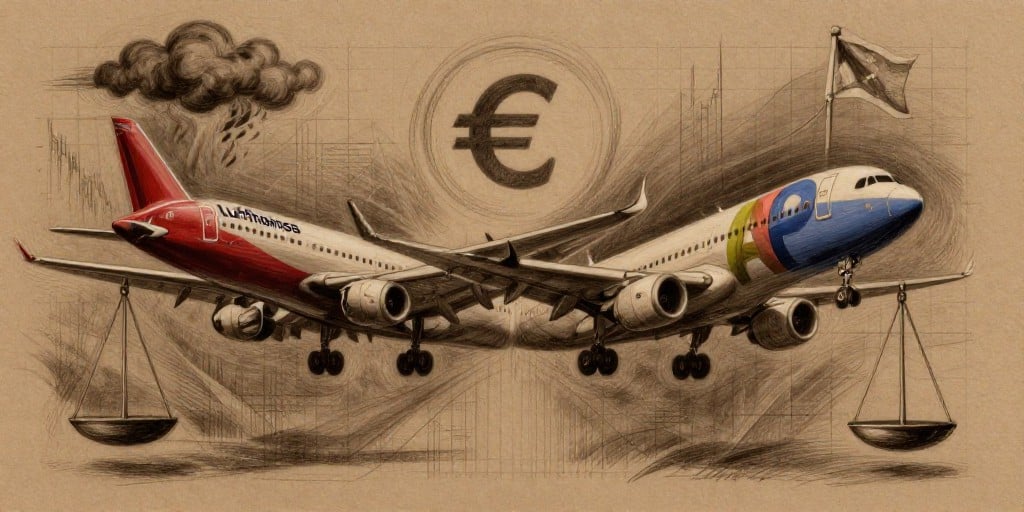
Deutsche Lufthansa AG has unveiled plans to acquire a substantial minority stake in the Portuguese carrier TAP, with an initial 45 % ownership valued at approximately €1 billion. The transaction, if approved by competition authorities and finalized with the Portuguese government, is projected to unlock annual synergies of roughly €450 million within the first full year post‑closure. The deal positions Lufthansa to expand its Latin‑American network, aiming for a 20 % market share on Europe‑to‑South‑America routes—a figure comparable to the IAG group and surpassing Air France‑KLM.
Market Positioning and Competitive Landscape
Lufthansa’s current presence in trans‑Atlantic traffic is modest, with a 10–12 % share of Europe‑to‑South‑America flights. By leveraging TAP’s existing route network and modern fleet, the German carrier seeks to double its footprint without a costly green‑field expansion. This move mirrors a broader industry trend where legacy carriers acquire minority stakes in regional airlines to accelerate network growth, as seen in United Airlines’ partnership with LATAM and Delta’s stake in Air Canada.
However, the strategic advantage hinges on effective integration. While Lufthansa gains influence over TAP’s executive appointments and operational oversight, the degree of autonomy retained by TAP’s management could dilute the intended synergy gains. Historical precedents—such as the failed integration of Air Berlin into Lufthansa’s network—underscore the risk of cultural misalignment and operational friction.
Financial Analysis
| Metric | Lufthansa (Projected) | TAP (Projected) | Combined (Projected) |
|---|---|---|---|
| Revenue (2027) | €35 bn | €2.5 bn | €37.5 bn |
| EBITDA Margin | 15 % | 10 % | 13 % |
| Synergy Realisation | €450 m (year‑1) | €90 m (year‑1) | €540 m (year‑1) |
| CapEx (post‑deal) | €1.2 bn | €0.3 bn | €1.5 bn |
| Debt Impact | +€0.8 bn | – | +€0.8 bn |
The €450 million synergy estimate is ambitious, relying on cost reductions in procurement, crew scheduling, and shared IT platforms. A more conservative scenario, adjusting for integration costs and potential regulatory delays, would project synergies at €300 million in the first year and a cumulative €1.2 billion over five years. Even with this lower estimate, the transaction remains financially sound, given Lufthansa’s robust liquidity position and the high margin potential of the Latin‑American market.
Regulatory and Political Considerations
The transaction remains contingent upon competition‑law approval at both EU and national levels. The European Commission’s focus will likely center on market dominance concerns on trans‑Atlantic routes, especially given IAG’s existing stake in TAP. The Portuguese government’s role as a minority shareholder introduces a layer of political scrutiny; alignment on strategic goals and transparent governance structures will be critical to mitigate political risk.
Additionally, the deal’s closure timeline—targeting 2028—places Lufthansa in a potentially unfavorable position if geopolitical tensions or fluctuating fuel prices erode the projected benefits. A delay could also trigger renegotiation of terms, particularly if TAP’s valuation shifts in response to broader market dynamics.
Uncovered Trends and Risks
Digital Disruption in Ancillary Revenue: TAP’s current ancillary revenue model is less mature than Lufthansa’s. If TAP fails to modernize its ancillary offerings, the projected €450 million synergy may be overstated, as ancillary revenue is a key driver of profitability in the post‑COVID era.
Labor Relations: TAP’s workforce has historically been more union‑oriented than Lufthansa’s. A cultural mismatch could result in labor disputes that disrupt operations, thereby eroding expected synergies and delaying integration.
Geopolitical Exposure: The Latin‑American market is subject to variable political stability and currency volatility. A sudden devaluation of the real or peso could impact revenue projections, especially if fares are set in local currencies.
Environmental Regulations: EU’s stringent CO₂ emission targets will require investment in newer, more fuel‑efficient aircraft. TAP’s current fleet, while modern, may not fully align with upcoming EU mandates, necessitating additional capital outlay and potentially affecting the cost‑saving narrative.
Opportunities Ahead
Network Expansion Without New Fleet: By acquiring a stake in TAP, Lufthansa gains immediate access to routes that would otherwise require substantial capital expenditure on new aircraft and route approvals.
Cross‑Selling Synergies: Lufthansa’s frequent‑flyer program (Miles & More) could be integrated with TAP’s loyalty program, increasing customer retention and generating higher ancillary spend.
Digital Integration: Leveraging Lufthansa’s advanced digital platforms could accelerate TAP’s transformation, especially in areas such as predictive maintenance, dynamic pricing, and real‑time passenger experience management.
Conclusion
Lufthansa’s proposed minority stake in TAP represents a calculated gamble to expand its global reach, capitalize on emerging Latin‑American markets, and drive cost efficiencies. While the transaction offers clear financial upside and strategic alignment, it also carries substantive risks—regulatory, cultural, and geopolitical—that warrant vigilant oversight. The forthcoming regulatory reviews and the Portuguese government’s engagement will be pivotal in determining whether the deal delivers on its lofty promise of €450 million annual synergies and positions Lufthansa as a leading trans‑Atlantic carrier.