
Hydrogen Production and the Overlooked Oxygen By‑product: A Corporate Analysis
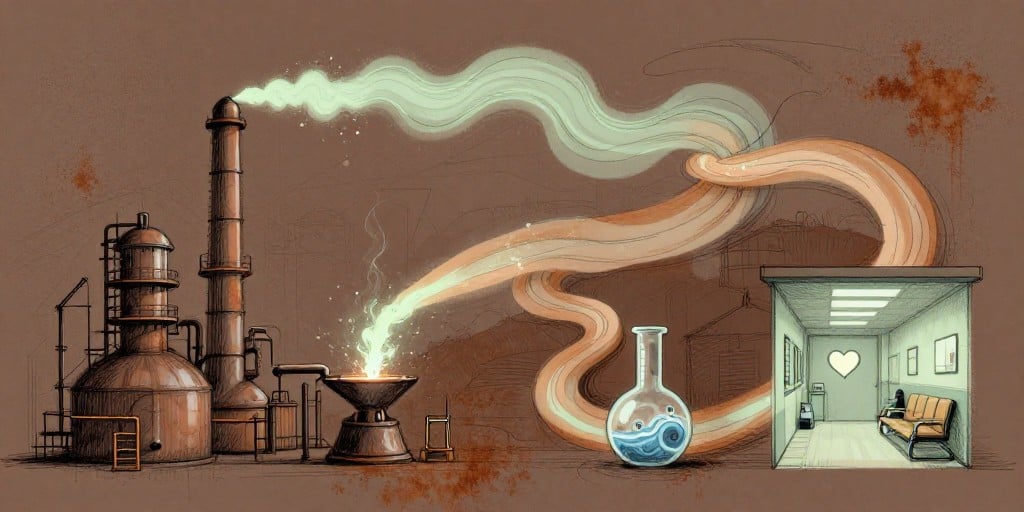
Linde PLC has recently drawn attention to a frequently neglected aspect of hydrogen generation: the large quantity of oxygen that accompanies every kilogram of hydrogen produced. According to the company’s own calculations, roughly eight kilograms of oxygen are co‑generated for each kilogram of hydrogen. Rather than treating this surplus as waste, Linde views it as a strategic commodity that can be captured, refined, and sold to industrial customers in sectors such as steelmaking, chemical manufacturing, healthcare, and wastewater treatment.
Business Fundamentals and Revenue Potential
The oxygen market is sizeable and growing. Global industrial demand for high‑purity oxygen exceeds 30 million tonnes annually, with steelmaking and chemical manufacturing accounting for the largest shares. By integrating gas streams directly at plant sites, Linde can avoid the logistics and capital costs associated with transporting oxygen over long distances. The company’s model involves a three‑step value chain:
- Capture – oxygen is recovered directly from electrolyzer exhaust streams.
- Refinement – on‑site purification ensures compliance with sector‑specific purity standards.
- Distribution – refined oxygen is delivered via dedicated pipelines or truck fleets to nearby customers, often under long‑term supply agreements.
Financially, this model delivers several advantages. First, it generates an ancillary revenue stream that can offset the high capital expenditures of electrolyzer deployment. Second, the use of existing plant infrastructure keeps marginal costs low, improving the economics of hydrogen projects that otherwise face thin profit margins. Finally, the long‑term contracts provide predictable cash flows that can be factored into project financing and risk assessments.
Regulatory Environment
Regulatory incentives for low‑carbon hydrogen are accelerating globally, with many jurisdictions offering tax credits, green certificates, or direct subsidies. However, oxygen itself is subject to a different set of regulatory frameworks. In the United States, the Environmental Protection Agency’s (EPA) Clean Air Act requires emissions controls for industrial oxygen plants, while the Occupational Safety and Health Administration (OSHA) imposes stringent safety standards for oxygen handling and storage. In the European Union, the EU Emission Trading System (ETS) may indirectly affect oxygen supply chains by influencing the cost of upstream carbon credits required for hydrogen production.
Linde’s strategy to embed oxygen recovery within hydrogen projects positions the company to benefit from both sets of regulations. By aligning oxygen capture with existing carbon‑reduction targets, the firm can argue for integrated compliance, potentially qualifying for combined incentive packages that would not be available to standalone oxygen facilities.
Competitive Landscape
Air Liquide, a French competitor, has implemented a comparable approach at its Canadian Bécancour platform, linking oxygen recovery to its Proton Exchange Membrane (PEM) electrolyser operations. The key difference lies in scale and geographic focus; Air Liquide’s Canadian operations cater primarily to North American demand, whereas Linde’s U.S. presence allows tighter integration with the Gulf Coast’s burgeoning industrial base.
Sparc Hydrogen, a start‑up specializing in photochemical water‑splitting, has yet to present a commercial model for oxygen management. While the company’s technology promises high‑efficiency hydrogen production, its lack of a defined oxygen monetisation strategy represents both a risk—potential waste of a valuable by‑product—and an opportunity, should the firm later develop a scalable gas‑stream integration platform.
The Louisiana Low‑Carbon Ammonia Project
Linde’s investment in a large low‑carbon ammonia project in Louisiana exemplifies its broader philosophy of “site‑specific gas solutions.” The firm is deploying an air‑splitting plant to supply both oxygen and nitrogen to an ammonia facility that will produce significant volumes of low‑carbon ammonia annually. By leveraging the same electrolyzer stack for multiple gas outputs, Linde can:
- Maximise Capital Utilisation: Shared infrastructure reduces the cost per unit of each gas.
- Enhance Flexibility: The ability to shift gas production mix in response to market demand mitigates commodity price volatility.
- Create a Symbiotic Ecosystem: The ammonia plant consumes nitrogen, while the oxygen by‑product is sold to adjacent industries, fostering a closed‑loop local economy.
Financial modelling for the Louisiana project indicates that the inclusion of oxygen sales improves the net present value by 12–18 % over a 20‑year horizon, primarily through reduced operating expenditures and additional revenue streams.
Risks and Opportunities
| Risk | Opportunity | Mitigation / Leveraging |
|---|---|---|
| Regulatory uncertainty surrounding oxygen handling and emissions may increase compliance costs. | Regulatory arbitrage: aligning oxygen recovery with hydrogen carbon‑reduction incentives could unlock dual subsidies. | Proactive engagement with regulators; secure joint permits for integrated facilities. |
| Market volatility in oxygen demand, especially if steel and chemical sectors contract. | Diversification: supplying oxygen to emerging sectors like healthcare and wastewater treatment expands the customer base. | Conduct regular market intelligence; develop flexible pipeline contracts. |
| Competitive entry from new photochemical technologies (e.g., Sparc Hydrogen) that may eventually capture oxygen. | First‑mover advantage: early integration of oxygen recovery establishes brand credibility and infrastructure dominance. | Accelerate pilot projects; lock in long‑term supply agreements. |
| Capital intensity of combined electrolyzer‑oxygen recovery systems. | Economies of scale: joint gas stream planning lowers per‑unit cost for both hydrogen and oxygen. | Seek co‑investment from industrial partners; leverage tax credits. |
Conclusion
Linde PLC’s focus on monetising the oxygen by‑product of hydrogen production represents a strategic pivot that aligns with the broader industry trend toward integrated gas solutions. By addressing the underlying business fundamentals—capital efficiency, regulatory compliance, and market demand—while scrutinising competitive dynamics, the company positions itself to capture a growing share of the ancillary gas market. Investors and industry observers should monitor how Linde’s model scales, particularly in large low‑carbon ammonia projects, as it may signal a shift toward more holistic, site‑specific gas supply chains that could reshape the economics of green hydrogen worldwide.