
Corporate Overview
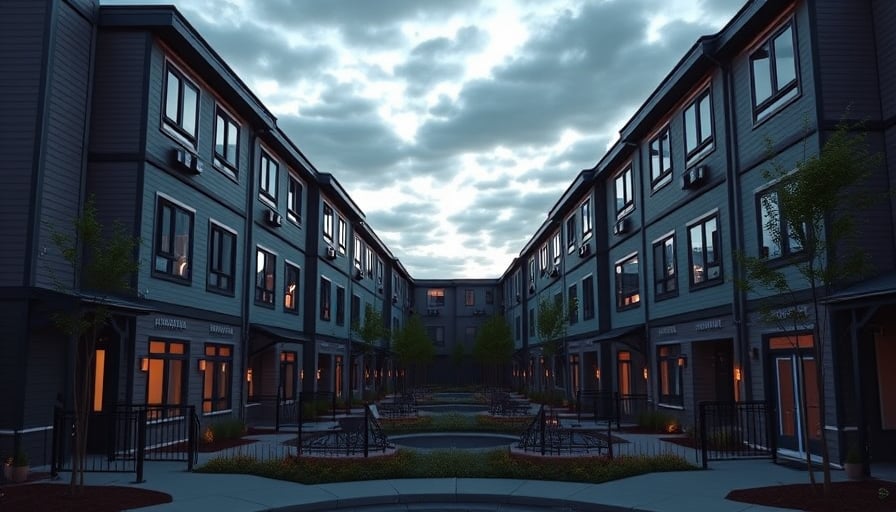
Lennar Corporation (NYSE: LEN), a leading U.S. homebuilder, has recently finalized a sizeable real‑estate transaction in Irvine, California. The company acquired the 25‑acre Von Karman Creative Campus from IRA Capital through a joint‑venture partnership with TPG Angelo Gordon. The site will be converted from office space to a residential townhome community of 426 units. This move exemplifies Lennar’s strategy of expanding its residential footprint via large‑scale developments.
Transaction Context and Strategic Implications
| Item | Detail |
|---|---|
| Acquirer | Lennar Corporation |
| Seller | IRA Capital |
| Partner | TPG Angelo Gordon |
| Location | Irvine, California |
| Site Size | 25 acres |
| Development Plan | 426‑unit townhome community |
| Sector Shift | From office space to residential housing |
The Irvine acquisition signals a deliberate pivot toward high‑density residential projects in markets traditionally dominated by office or industrial uses. By converting the Von Karman site into townhomes, Lennar capitalizes on the growing demand for mixed‑use, walkable communities—a trend that aligns with broader urbanization and sustainability priorities in the housing sector.
Market Dynamics in February 2026
Recent housing data for February 2026 highlights a supportive backdrop for Lennar’s expansion:
- Housing Starts reached a five‑month high, indicating robust construction activity.
- Single‑family starts were up 4 % compared with the same month a year earlier, underscoring sustained demand for new homes.
- Lennar’s share price experienced a modest increase in late‑month trading, reflecting investor confidence in the company’s growth trajectory.
These metrics illustrate that Lennar’s strategic focus on large‑scale residential developments is well‑aligned with prevailing market trends, providing a favorable environment for both execution and financial performance.
Cross‑Sector Connections and Broader Economic Trends
Urbanization and Mixed‑Use Development The shift from office to residential land use in Irvine mirrors a national move toward mixed‑use, transit‑oriented communities. This aligns with urban planning trends that prioritize walkability, reduced commute times, and access to amenities—factors that elevate property values and attract diverse demographics.
Interest Rate Environment The February 2026 data were posted amid a period of gradually tightening monetary policy. While higher borrowing costs can dampen home‑buyer enthusiasm, Lennar’s focus on high‑density projects mitigates per‑unit cost pressures and improves economies of scale, allowing the company to maintain competitive pricing.
Supply Chain Resilience Large‑scale developments benefit from consolidated procurement and streamlined construction workflows. Lennar’s ability to negotiate favorable contracts for materials and labor enhances resilience against supply‑chain disruptions that have historically affected the construction sector.
Demographic Shifts Millennials and Gen Z cohorts favor affordable, community‑centric housing options. Lennar’s townhome development in Irvine taps into this demographic, positioning the company to capture a growing segment that values proximity to employment hubs and quality of life amenities.
Competitive Positioning and Business Fundamentals
Lennar’s acquisition strategy showcases several key competitive strengths:
Portfolio Diversification By adding a 426‑unit townhome community to its existing mix of single‑family homes, Lennar broadens its product offering, mitigating risk associated with market volatility in any one segment.
Geographic Reach Expanding into Irvine, a high‑cost, high‑demand market, strengthens Lennar’s presence in the Southern California region, one of the nation’s most lucrative construction markets.
Operational Scale Lennar’s large‑scale development model leverages economies of scope—shared services, bulk procurement, and standardized designs—to drive cost efficiencies and accelerate time‑to‑market.
Financial Stability The company’s solid balance sheet and liquidity position enable it to pursue opportunistic acquisitions even in a tightening credit environment, ensuring sustained growth momentum.
Conclusion
Lennar Corporation’s recent acquisition of the Von Karman Creative Campus and the development of a 426‑unit townhome community in Irvine exemplify its proactive approach to capitalizing on evolving real‑estate opportunities. The transaction aligns with broader housing market trends—such as urbanization, demand for mixed‑use developments, and demographic shifts—while reinforcing Lennar’s competitive advantages in scale, diversification, and geographic reach. Coupled with positive housing market indicators in February 2026, these activities underscore Lennar’s continued focus on residential development and its capacity to adapt to dynamic industry conditions.