
Corporate News – Consumer Housing & Lifestyle Dynamics
A Case Study: Lennar Corp.’s Cedar Springs Launch
Lennar Corp. recently celebrated the inauguration of its Cedar Springs residential development in Trinity, Alabama, with a ribbon‑cutting ceremony set for the following week. In partnership with the local chamber of commerce, the event will feature model homes and a guided tour of the neighborhood, allowing prospective buyers to assess the blend of contemporary design, practical pricing, and convenient location that the developer touts as the centerpiece of its appeal to families seeking a balance between affordability and quality.
While the company’s shares remained within a modest range during the week—typical of a large consumer‑discretionary firm amid broader market volatility tied to trade‑policy debates—no dramatic investor sentiment shifts were recorded. Lennar’s sustained emphasis on expanding its single‑family‑home portfolio and ancillary services continues to anchor its market presence as it navigates the cyclical dynamics of the housing and construction sectors.
Editorial Insight – Lifestyle Trends, Demographic Shifts, and Market Opportunities
1. Digital Transformation Meets Physical Retail in the Real Estate Sector
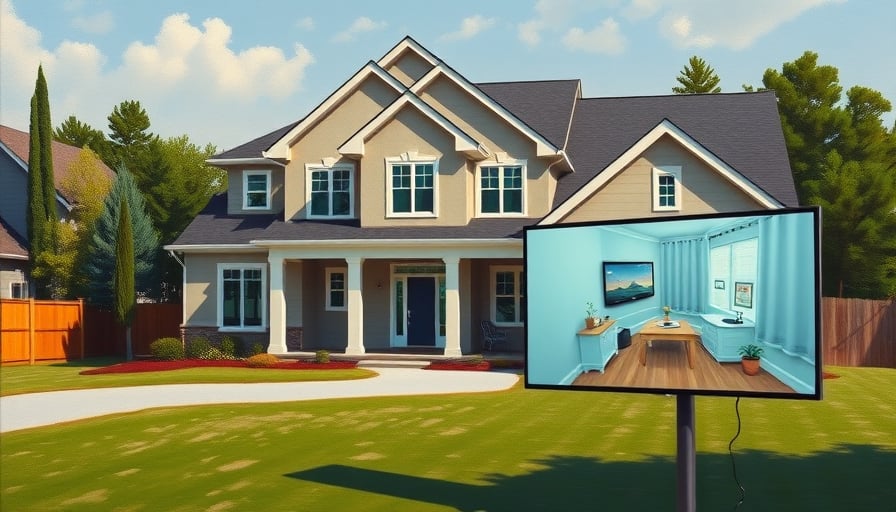
The Cedar Springs launch illustrates the growing convergence of digital engagement and brick‑and‑mortar experience in the home‑building industry. Virtual tours, augmented‑reality overlays, and data‑driven price modeling have become standard touchpoints, yet the physical presence of a well‑planned community remains a decisive factor for many buyers. The integration of a physical showcase—model homes, neighborhood walks, and local partnership events—provides a tangible extension of digital pre‑sale engagement, thereby enhancing consumer confidence and accelerating closing timelines.
Businesses that invest in hybrid sales pipelines, where online configurators feed into on‑site, experience‑based touchpoints, can capture a broader demographic. Millennials and Gen Z, accustomed to seamless digital interactions, are increasingly drawn to “experiential” home buying where they can physically sense space, community vibe, and local amenities before committing.
2. Generational Spending Patterns and Affordability
The narrative around Cedar Springs underscores a pivotal shift: affordability as a core value proposition for the first‑time‑homebuyer demographic. Younger cohorts—often delayed in entering the market due to student debt, economic uncertainty, and shifting career priorities—prioritize homes that deliver modern design at a price point that allows for lifestyle spending elsewhere (travel, technology, wellness).
Lennar’s focus on “contemporary design” coupled with “practical pricing” aligns with the emerging consumer archetype that balances long‑term investment with short‑term experiential fulfillment. Firms that can translate this narrative into modular design, cost‑efficiency, and flexible payment plans will likely capture significant market share.
3. Cultural Movements and Consumer Experience Evolution
The partnership with the local chamber of commerce signals an embrace of community‑centric cultural movements. Homebuyers today are not only purchasing a property but seeking a holistic lifestyle. Proximity to local amenities, walkable neighborhoods, and a sense of belonging are increasingly salient in decision matrices. Real estate firms that embed local culture into their marketing—highlighting nearby parks, eateries, and community events—can differentiate themselves in a saturated market.
Moreover, the integration of sustainability and wellness features (energy‑efficient appliances, biophilic design, outdoor communal spaces) reflects broader societal trends toward health‑focused living. These cultural imperatives create new product lines and service offerings (e.g., smart home ecosystems, on‑site wellness clubs) that can be monetized beyond the core home sale.
4. Forward‑Looking Analysis – Market Opportunities
| Opportunity | Drivers | Strategic Actions |
|---|---|---|
| Hybrid Sales Platforms | Digital natives demand seamless online‑offline journeys | Build immersive virtual tours that funnel into physical showcase events; implement AI‑powered configurators with real‑time pricing |
| Modular, Affordable Housing | Generation X/ Millennials face high entry costs | Develop pre‑fabricated, scalable modules; offer flexible financing, lease‑to‑own options |
| Community‑Integrated Marketing | Lifestyle consumers value local culture | Partner with local businesses; host community events; highlight neighborhood assets in digital assets |
| Smart & Sustainable Features | Growing health and environmental consciousness | Incorporate IoT devices, renewable energy systems, and green building certifications as selling points |
| Experience‑Based Financing Models | Consumers seek tangible value before commitment | Introduce tiered financing tied to experience milestones (e.g., a “first‑visit” discount or a “walk‑through” bonus) |
5. Conclusion
Lennar Corp.’s Cedar Springs initiative exemplifies a broader industry trend where digital tools enhance, but do not replace, the tactile, community‑rich experience that modern buyers demand. By aligning product offerings with generational affordability preferences, integrating cultural and lifestyle cues, and embracing technology that bridges online and physical realms, homebuilders can unlock new revenue streams and deepen customer loyalty.
In an era of shifting demographics and heightened consumer expectations, firms that orchestrate a harmonious blend of digital transformation, experiential retail, and community integration will be best positioned to capture the evolving consumer narrative—and, in turn, secure sustainable growth in the housing market.