
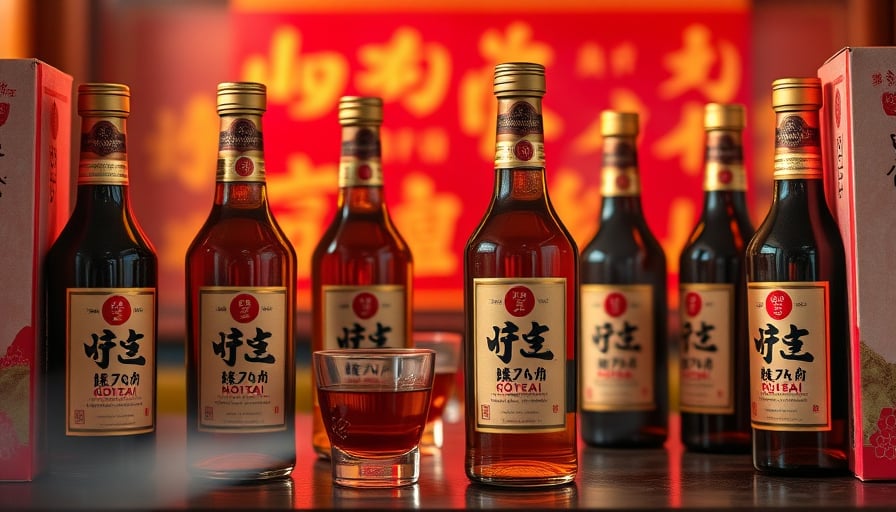
Corporate News Analysis: Kweichow Moutai Co. Ltd. and the Future of Premium Spirits
Introduction
Kweichow Moutai Co. Ltd., the flagship producer of China’s most celebrated baijiu, has recently disclosed a series of strategic recalibrations aimed at aligning its business model more closely with contemporary consumer dynamics. The company’s announcement, made during the year‑end dealers’ meeting in Guiyang, signals a departure from an exclusive high‑margin, scarcity‑driven approach toward a more consumer‑centric, market‑oriented paradigm. This shift reflects broader movements in the consumer goods sector, where premium brands are increasingly tasked with balancing exclusivity against accessibility, and where omnichannel retailing is reshaping the sales landscape.
Market Context
China’s premium spirits market, valued at roughly CNY 120 billion in 2023, has experienced heightened volatility in wholesale pricing, driven by both domestic demand fluctuations and international trade pressures. The baijiu sector, while historically resilient, is now confronting intensified scrutiny from regulators over price swings and dealer profitability. Similar patterns have emerged in other high‑end consumer categories—such as luxury watches and fine wines—where supply‑chain disruptions and shifting purchasing power have pressured traditional pricing models.
Strategic Shift Toward Consumer‑Centricity
The company’s chairman highlighted a strategic pivot that focuses on:
- Dynamic Pricing Adjustments: Aligning retail and wholesale prices more closely with real‑time demand signals to curb excessive volatility.
- Balanced Allocation of High‑Value Products: Re‑engineering distribution to prevent over‑concentration of premium items in a limited dealer network.
- Clearer Product Segmentation: Differentiating product lines (e.g., limited editions vs. standard bottlings) to better match diverse consumer profiles.
- Targeted Promotional Activities: Deploying data‑driven marketing campaigns tailored to specific demographic and psychographic segments.
These measures aim to preserve the brand’s premium positioning while fostering sustainable growth by mitigating the risks associated with a rigid high‑margin strategy.
Consumer Behavior Shifts
Recent consumer surveys indicate that Chinese buyers of premium spirits now prioritize authenticity, provenance, and experiential engagement over mere scarcity. A 2024 report from the China Consumer Insight Institute shows that 63 % of respondents are willing to pay a premium for products that can be traced back to a single production batch, whereas only 38 % value price exclusivity alone. This shift underscores the need for brands to embed storytelling and provenance into their value proposition, a trend mirrored across the luxury and high‑end food sectors.
Omnichannel Retail Implications
The integration of online and offline channels is reshaping how premium products are marketed and sold. Moutai’s future strategy, as outlined by the leadership, will likely incorporate:
- E‑commerce Partnerships: Leveraging platforms such as Tmall and JD.com for controlled distribution, ensuring brand integrity while expanding reach.
- Experiential Pop‑Up Events: Combining physical tasting rooms with digital engagement tools (e.g., QR‑coded provenance narratives) to deepen consumer connection.
- Data Analytics: Using customer purchase histories to refine segmentation and personalize promotional offers across channels.
These tactics align with cross‑sector best practices, where brands in the cosmetics and apparel industries have successfully used omnichannel frameworks to capture a broader, digitally savvy customer base without diluting brand prestige.
Supply‑Chain Innovations
To support the new pricing and allocation model, Moutai is likely investing in:
- Demand‑Driven Inventory Management: Employing predictive analytics to anticipate dealer needs and reduce surplus stock.
- Transparent Distribution Networks: Implementing blockchain‑based tracking to provide end‑to‑end visibility for both regulators and consumers.
- Local Production Hubs: Expanding small‑scale production sites closer to key markets to reduce lead times and shipping costs.
These initiatives mirror innovations in the electronics and automotive sectors, where lean supply chains and real‑time visibility have become critical to maintaining market responsiveness.
Cross‑Sector Patterns and Synthesis
When examining parallel trends across consumer categories—such as premium fashion, luxury automobiles, and high‑end food—several recurring motifs emerge:
- Data‑Driven Pricing: All sectors are moving away from static price structures toward dynamic models responsive to market conditions.
- Experiential Value Creation: Brands are investing in storytelling, provenance, and immersive retail experiences to justify premium pricing.
- Omnichannel Integration: Seamless coordination between online and offline touchpoints is becoming the norm.
- Supply‑Chain Transparency: End‑to‑end traceability is not only a regulatory requirement but also a competitive differentiator.
Kweichow Moutai’s announced reforms fit squarely within this broader pattern, suggesting a strategic alignment that could enhance its competitive resilience in an increasingly complex marketplace.
Short‑Term Market Movements vs. Long‑Term Transformation
In the immediate term, the market may react with caution, as dealer margins tighten and pricing becomes more elastic. Volatility in dealer profitability could lead to temporary adjustments in distribution volumes. However, the long‑term payoff lies in a more robust, demand‑aligned supply chain that mitigates price shocks and positions Moutai to capitalize on emerging consumer segments. By embedding data analytics, transparent sourcing, and omnichannel capabilities, the brand can maintain its premium aura while adapting to shifting purchasing behaviors, thereby securing sustainable growth well beyond the 2026 strategic horizon.
Conclusion
Kweichow Moutai’s pivot toward a consumer‑centric, market‑responsive framework marks a pivotal juncture for China’s premium spirits industry. The company’s emphasis on dynamic pricing, strategic product segmentation, and integrated omnichannel retailing reflects broader shifts across consumer goods sectors. By harnessing supply‑chain innovations and data‑driven marketing, Moutai is positioned to navigate short‑term market turbulence while steering toward a long‑term transformation that balances exclusivity with accessibility, ensuring continued relevance in a rapidly evolving consumer landscape.