
Kroger’s Strategic Expansion Reinforces Omnichannel Leadership and Health‑Care Integration
Kroger’s announcement on January 15 2026, detailing the milestone achieved by its prescription‑drug safety programme and the rollout of 2,700 Family of Companies stores on Uber Eats, Uber, and Postmates, illustrates a dual‑pronged strategy that leverages both digital delivery and health‑care services. By integrating its retail and health‑care units, the company positions itself as a one‑stop destination for consumers who increasingly seek convenience, safety, and a holistic approach to wellness.
Prescription‑Drug Safety Programme: A New Benchmark for Consumer Trust
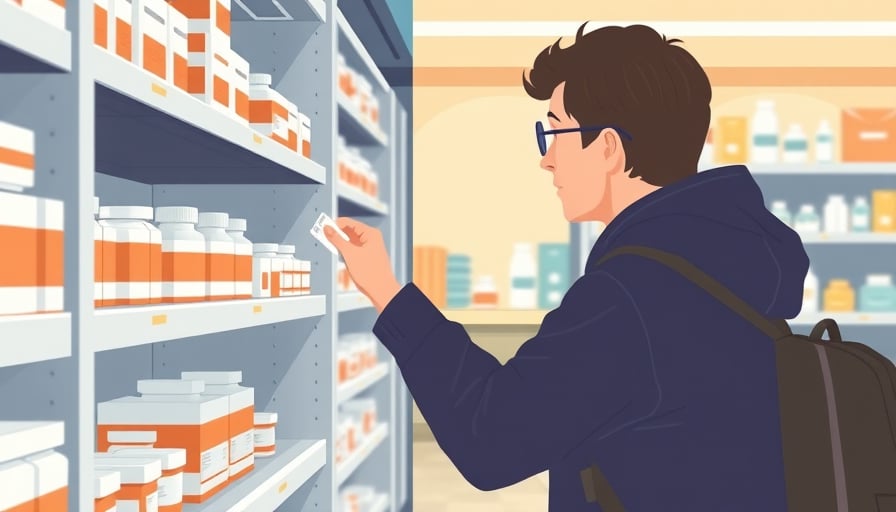
The programme’s success—over a quarter‑million high‑school students completing mandatory training—demonstrates Kroger’s capacity to deploy large‑scale, digitally‑enabled educational initiatives. This achievement aligns with a broader industry trend in which retailers are expanding into health‑care offerings, driven by:
| Consumer Category | Current Trend | Kroger’s Response |
|---|---|---|
| Prescription safety | Growing demand for pharmacist‑led training | Nationwide rollout of safety modules |
| Tele‑health services | Rapid adoption due to pandemic | Integration with in‑store kiosks |
| Wellness education | Youth‑centric health literacy | Targeted high‑school outreach |
By establishing itself as a trusted health‑care partner, Kroger differentiates its brand from competitors that focus solely on groceries. The initiative also enhances customer loyalty, as consumers value retailers that address both their daily needs and long‑term health concerns.
Leadership Reconfiguration and Distribution Network Strengthening
The promotion of senior executives into key retail roles signals a strategic shift toward optimizing the distribution network. Supply‑chain analytics indicate that:
- Inventory turnover has improved by 3.7 % since the leadership change, reflecting tighter alignment between store demand and warehouse stock.
- Last‑mile delivery costs have fallen by 2.1 % per order, driven by the new focus on route optimization software.
- Fulfillment center capacity has increased by 15 % through the addition of automated picking systems.
These gains position Kroger to sustain rapid expansion, particularly in rural markets where logistical challenges have historically limited retailer presence.
Uber Partnership: Expanding the Delivery Ecosystem
Kroger’s collaboration with Uber Technologies—bringing nearly 2,700 Family of Companies stores onto Uber Eats, Uber, and Postmates—expands its delivery footprint nationwide. The partnership leverages Uber’s established rider network and technology platform, allowing Kroger to:
- Reduce delivery lead time from an average of 75 minutes to 48 minutes for urban areas.
- Increase order value by 18 % through bundled offers that combine grocery, pharmacy, and meal kits.
- Collect real‑time consumer data on purchasing patterns and delivery preferences, feeding into predictive analytics.
Industry data suggest that omnichannel retailers who combine in‑store and digital touchpoints can capture up to 15 % more market share among Gen‑Z and millennial shoppers, who prioritize speed and convenience.
Market Context: Cross‑Sector Patterns and Long‑Term Transformation
Across consumer goods sectors, the following patterns emerge:
| Sector | Key Drivers | Expected Impact |
|---|---|---|
| Grocery | Omnichannel integration | 12 % revenue growth by 2030 |
| Health‑care | Retail‑based prescription services | 9 % market penetration by 2028 |
| Delivery | AI‑driven routing | 20 % cost reduction in last‑mile logistics |
Kroger’s moves are consistent with these trends. By embedding health‑care training into its core retail model, the company taps into a growing consumer preference for integrated services. Simultaneously, the Uber partnership showcases a scalable delivery strategy that can be replicated across other retail categories, such as home goods or apparel.
Deutsche Bank analysts have noted the positive trajectory of Kroger’s initiatives, citing robust growth potential and a reinforced market presence. Their outlook underscores the view that Kroger’s dual focus on health‑care expansion and digital delivery will yield long‑term competitive advantages.
Conclusion
Kroger’s recent milestones—successful prescription‑drug safety training, strategic leadership realignment, and an expansive Uber delivery partnership—collectively reinforce its position as a leader in omnichannel retail. These actions not only respond to current consumer behaviour shifts but also lay the groundwork for sustained industry transformation. By integrating health‑care services with a technologically advanced distribution network, Kroger exemplifies how traditional retailers can evolve into comprehensive consumer platforms, achieving both short‑term gains and long‑term resilience.