
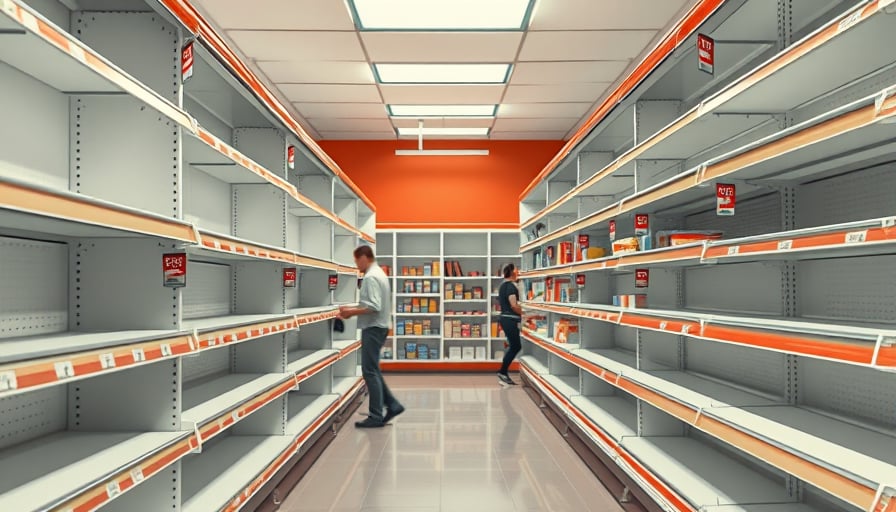
Kroger Announces Store Closures and Workforce Reductions Ahead of the Holiday Season
Kroger has announced a series of store closures and workforce reductions in the weeks leading up to the holiday season. The retailer cited a growing trend of consumers opting for online grocery ordering rather than in‑person shopping, a shift that is prompting the company to streamline its operations. Meanwhile, market analysts have noted that Kroger remains a leading name in retail, receiving a strong buy recommendation alongside its peer Albertsons. No other material developments concerning the company were reported in the available sources.
Strategic Implications for the Consumer‑Goods Landscape
The decision by Kroger to close physical storefronts and reduce its workforce underscores a broader realignment within the grocery sector, driven by accelerated adoption of omnichannel retail models. While the company has historically relied on a network of large, high‑traffic supermarkets to capture a substantial share of the grocery market, the rise of e‑commerce and the proliferation of grocery‑delivery platforms have altered the consumer value proposition. Customers increasingly prioritize convenience, speed, and a seamless digital experience over the traditional in‑person shopping ritual.
From a corporate perspective, Kroger’s move can be interpreted as a strategic pivot that consolidates resources towards its online fulfillment network and advanced logistics capabilities. By trimming the footprint of under‑performing stores, the retailer can reallocate capital to technologies that enhance inventory visibility, predictive analytics, and last‑mile delivery. This reallocation is critical given that supply‑chain disruptions—exacerbated by pandemic‑era volatility—have highlighted the need for resilience and flexibility in inventory management.
Cross‑Sector Trends in Consumer Behavior
Omnichannel Dominance The grocery industry is no longer a pure “brick‑and‑mortar” business. Across the board, retailers are investing in integrated platforms that allow customers to browse, order, and pick up or have groceries delivered. The shift to omnichannel retail is reflected in the consistent growth of e‑commerce sales in the consumer‑goods sector, which surpassed 20% of total revenue for many leading retailers in 2024.
Digital Experience as a Differentiator Consumers now evaluate retailers based on digital usability—ease of navigation, personalized recommendations, and real‑time inventory updates. A study by Nielsen found that 63% of shoppers cited a smooth digital experience as a primary reason for loyalty, indicating that technology investments directly influence brand perception.
Shift Toward Subscription and Loyalty Programs Subscription models (e.g., Kroger’s “Kroger Plus” program) and loyalty initiatives provide retailers with predictive data on shopping patterns. This data can inform inventory decisions, reduce waste, and tailor marketing campaigns. The subscription economy is growing across sectors, from apparel to household essentials, demonstrating a cross‑industry appetite for recurring revenue streams.
Supply‑Chain Transparency Consumers increasingly demand transparency regarding sourcing, sustainability, and ethical practices. Retailers who can provide end‑to‑end visibility—from farm to shelf—stand to gain competitive advantage. The adoption of blockchain, IoT sensors, and advanced traceability software is becoming a differentiator in the consumer‑goods landscape.
Long‑Term Industry Transformation
The short‑term market reaction to Kroger’s announcement—primarily a modest impact on share price—does not capture the longer‑term trajectory toward digital‑centric retail ecosystems. Key drivers include:
Technological Integration Advanced AI and machine‑learning systems are expected to refine demand forecasting and inventory replenishment, reducing excess stock and lowering operational costs.
Last‑Mile Innovation The emergence of autonomous delivery vehicles, drone logistics, and micro‑distribution centers will further reduce delivery times and costs, reshaping the traditional store‑centric model.
Consumer Loyalty Dynamics Brands that invest in personalized, data‑driven engagement will foster deeper relationships, thereby increasing customer lifetime value and reducing churn.
Sustainability Mandates Regulatory pressure and consumer demand for low‑carbon footprints will push retailers to adopt greener supply‑chain practices, influencing sourcing decisions and product offerings.
Market Outlook for Kroger and Peers
Analysts maintain a bullish stance on Kroger, citing its diversified portfolio—including pharmaceuticals, prepared foods, and digital services—alongside its strong brand equity. Albertsons, the nearest peer, mirrors this trajectory with comparable investment in omnichannel capabilities.
Despite the recent closures, Kroger’s stock performance remains robust, buoyed by its projected cost savings and the anticipated upside from its digital initiatives. Investors are encouraged to monitor the rollout of Kroger’s enhanced fulfillment network and the performance of its loyalty program, both of which could provide tangible returns over the next 12–18 months.
Conclusion
Kroger’s strategic realignment reflects a microcosm of the broader retail transformation underway in the consumer‑goods industry. By closing under‑performing physical locations and concentrating on omnichannel expansion, the retailer positions itself to meet evolving consumer expectations while improving operational efficiency. The shift highlights the pivotal role of technology, supply‑chain agility, and data‑driven customer engagement in shaping the future of retail.