Corporate News Analysis: Kroger’s Recent Stock Decline in a Shifting Consumer Landscape
Kroger Co. experienced a decline in its share price during the week, reflecting broader market movements that favored technology and consumer‑discretionary sectors. The drop in Kroger’s stock was part of a trend in the consumer‑staples sector, which saw several names underperform as investors shifted toward riskier assets. This shift coincided with a mixed performance across the market, where the S&P 500 ended a seven‑day winning streak on a weaker day, while the Nasdaq 100 managed a modest gain ahead of U.S.–Iran peace talks. Inflationary pressures, driven largely by a sharp rise in gasoline prices, weighed on consumer sentiment and contributed to a decline in the consumer‑staples index. Despite these headwinds, Kroger’s operational fundamentals were not highlighted in the broader market commentary, and the company’s valuation was not directly discussed. The overall market environment, characterized by heightened geopolitical concerns and elevated inflation expectations, continued to influence investor sentiment toward defensive stocks, leading to the observed shortfall in Kroger’s stock performance.
The Intersection of Digital Transformation and Physical Retail
The decline in Kroger’s share price underscores a pivotal moment for grocery retailers: the need to integrate digital innovations within the brick‑and‑mortgage model. While consumers increasingly expect seamless omnichannel experiences—online ordering, curbside pickup, and same‑day delivery—the underlying value proposition remains rooted in the physical convenience of a local supermarket. In this context, Kroger’s challenge is to leverage its extensive network of stores as digital hubs rather than merely physical locations. By investing in data‑driven inventory management, personalized offers, and AI‑assisted customer service, Kroger can create differentiated touchpoints that align with contemporary lifestyle trends such as health‑conscious eating and sustainability.
Generational Spending Patterns and Market Opportunities
The current demographic landscape shows a pronounced shift in spending power toward younger cohorts, particularly Gen Z and Millennials. These groups favor experiential shopping, ethical sourcing, and tech‑enabled convenience. Retailers that embed these values into their product mix—organic produce, plant‑based alternatives, and transparent supply chains—can capture a share of the growing “conscious consumer” segment. Kroger’s strategic initiatives in expanding private‑label organic lines and partnering with local farms position it to capitalize on this trend. However, the company must intensify marketing efforts that resonate with younger consumers’ social media habits and values-driven purchasing decisions.
The Evolution of Consumer Experiences
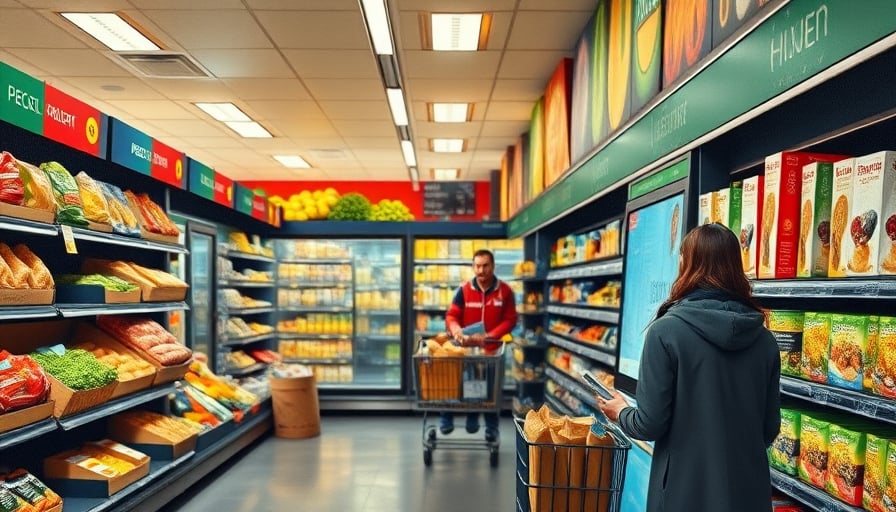
Modern consumers are demanding more than transactional efficiency; they seek curated experiences that reflect their personal identities. This evolution extends beyond product assortment to encompass store aesthetics, community engagement, and digital interactivity. Kroger’s recent pilot programs that integrate in‑store digital displays with mobile app notifications illustrate the potential for creating a “smart grocery” environment. The success of such initiatives hinges on robust data analytics to anticipate consumer preferences and adapt shelf layouts in real time.
Forward‑Looking Analysis: Turning Societal Shifts into Market Advantages
- Digital‑Physical Synergy
- Opportunity: Develop a unified platform where online orders can be seamlessly fulfilled via local stores, enhancing same‑day delivery speeds.
- Risk: Over‑reliance on technology may alienate customers who prefer in‑person interactions, particularly in regions with lower digital penetration.
- Health‑ and Sustainability‑Focused Product Lines
- Opportunity: Expand private‑label offerings that meet the rising demand for eco‑friendly and health‑centric products.
- Risk: Supply chain complexities and higher procurement costs could compress margins if not managed carefully.
- Personalized Marketing through Data
- Opportunity: Utilize machine learning to predict purchasing patterns, allowing for hyper‑personalized promotions that increase basket size and loyalty.
- Risk: Data privacy concerns and regulatory scrutiny could impose additional compliance costs.
- Community‑Centric Store Design
- Opportunity: Redesign store layouts to serve as community hubs—hosting cooking classes, local food tastings, and farmer markets—thereby deepening brand attachment.
- Risk: Significant capital expenditures may be required, with uncertain ROI if consumer participation falls short.
Conclusion
Kroger’s recent share price decline reflects a broader realignment in investor preferences, driven by geopolitical uncertainty and persistent inflationary pressures. Yet, the underlying fundamentals of the grocery sector—its resilience and essential nature—remain intact. By embracing digital transformation within its physical footprint, aligning product offerings with the values of younger consumers, and reimagining the grocery experience as a curated, community‑driven event, Kroger can transform these societal shifts into tangible market opportunities. Investors and executives alike should view the current downturn not merely as a market correction but as a catalyst for strategic innovation that will shape the next era of consumer retail.