Kroger Co.: Navigating Omnichannel Shifts Amidst Supply‑Chain Re‑engineering
Kroger Co. remains a cornerstone of the U.S. consumer‑staples ecosystem, with its shares listed on the New York Stock Exchange and a market capitalization that has advanced into the mid‑tens of billions of U.S. dollars. Over the past twelve months, the stock price has demonstrated a discernible upward trajectory, mirroring broader investor optimism toward retailers that are successfully blending physical and digital touchpoints.
Operational Decisions and Their Market Signaling
Last year, Kroger announced the shuttering of three robotic distribution centers—an initiative that had been touted as a leap toward automated fulfillment. The closures sparked a debate on the scalability of high‑automation models, especially for partners serving sparsely populated regions where last‑mile logistics remain costly and complex. Analysts now question whether the return‑on‑investment in robotics is commensurate with the consumer‑behavior realities of rural markets.
Conversely, the retailer has reported renewed collaboration with a leading British online‑grocer. The CEO of that partner highlighted the potential for shared technology stacks and joint customer‑experience strategies, suggesting that the partnership could leverage Kroger’s expansive network of fulfillment hubs while integrating advanced e‑commerce capabilities. This development points to a broader trend: retailers are increasingly viewing automation not as a monolithic solution but as a modular component that can be blended with human‑centered logistics.
Omnichannel Retail Innovation: A Cross‑Sector Lens
Across the consumer‑goods landscape, omnichannel strategies have accelerated. Data from the National Retail Federation indicates that 66 % of U.S. shoppers now engage with brands through multiple channels—brick‑and‑mortar, mobile app, and online marketplaces—before making a purchase. Within the grocery segment, this trend is amplified: 45 % of consumers report using a mobile app to scan products in-store, while 30 % have used delivery services in the last six months.
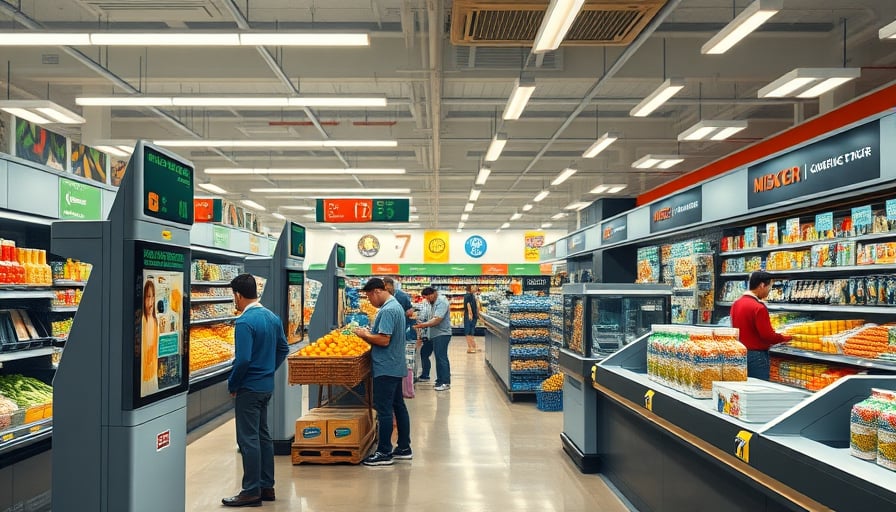
Kroger’s decision to recalibrate its fulfillment architecture aligns with this sectoral shift. By reducing the number of automated centers, the retailer can reallocate resources toward enhancing in‑store digital experiences (e.g., cashier‑free checkout, real‑time inventory displays) and expanding its curbside pickup and same‑day delivery capabilities. These initiatives dovetail with the rising consumer expectation for seamless, frictionless transactions—an expectation that is becoming a key differentiator in the highly competitive staples market.
Supply‑Chain Innovation and Consumer‑Behavior Shifts
Supply‑chain agility remains a decisive factor in consumer‑staples. Recent disruptions—from raw‑material shortages to labor shortages—have amplified the need for resilient logistics networks. Kroger’s move away from high‑automation facilities signals a strategic pivot toward a hybrid supply chain that balances scale with flexibility. Industry analysts suggest that integrating regional “micro‑fulfillment” centers—smaller, less automated hubs closer to end consumers—can reduce last‑mile costs and improve service speed, particularly in lower‑density areas.
From a consumer‑behavior standpoint, the pandemic has accelerated a preference for “contactless” and “convenient” shopping modalities. A 2025 Deloitte survey found that 52 % of consumers prefer brands that can deliver groceries within 24 hours, while 38 % value the ability to skip physical stores entirely. Kroger’s re‑investment in its omnichannel platform is thus both a response to immediate consumer demand and a long‑term positioning strategy that could buffer the company against future market shocks.
Long‑Term Industry Transformation
The current market reaction to Kroger’s operational changes—evidenced by a modest uptick in share price coupled with increased analyst coverage—underscores the industry’s heightened sensitivity to strategic supply‑chain choices. While short‑term movements are driven by immediate investor sentiment and quarterly earnings, the broader narrative points to an industry in flux: retailers must continuously reassess the balance between automation, human labor, and customer experience.
In the next five years, we anticipate a consolidation of hybrid fulfillment models, with technology serving as an enabler rather than a replacement for human expertise. Companies that successfully integrate cross‑channel data to personalize the shopping journey, while maintaining supply‑chain resilience, will likely emerge as leaders in the evolving consumer‑staples arena.
Kroger’s current strategic direction, therefore, offers a microcosm of the wider retail transformation—highlighting both the challenges and opportunities inherent in navigating an increasingly digital, yet still deeply human, consumer landscape.