
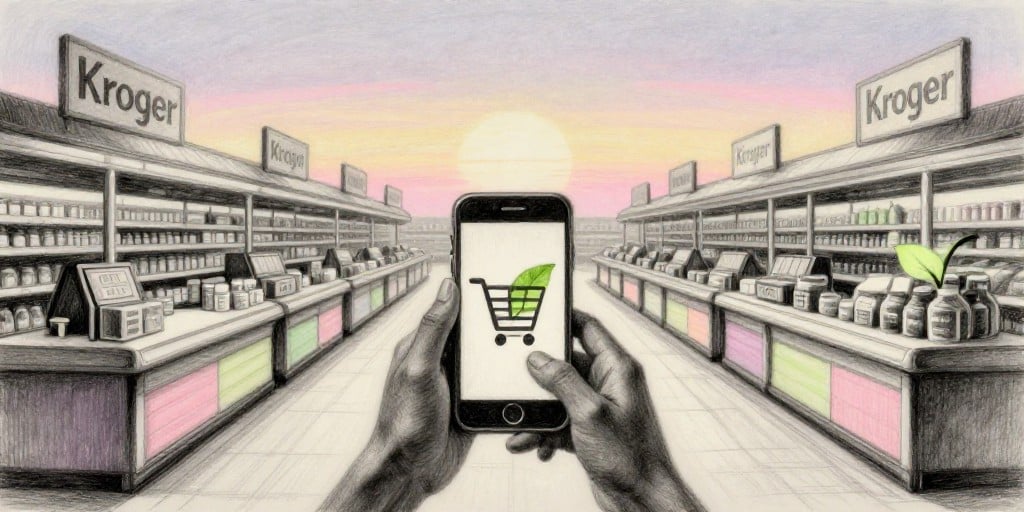
Kroger Co. Prepares for Q1 Earnings Amid Digital‑Retail Synergies and Shifting Consumer Dynamics
Kroger Co., a leading U.S. retailer, is scheduled to announce its first‑quarter earnings for the current fiscal year on June 18. Analysts expect a modest increase in earnings per share—slightly above one dollar—while revenue is projected to hover in the mid‑forties of billions, a marginal uptick from the comparable period last year. The company’s management has foregrounded its expanding e‑commerce footprint, citing a 20 % rise in adjusted online sales that has propelled the division into a multi‑billion‑dollar segment. In addition, Kroger highlights improved customer satisfaction and enhanced price perception following recent investments in pricing strategy and store experience. Nonetheless, the report is likely to address persistent concerns about operating costs, fuel price volatility, and a downward revision to free‑cash‑flow projections.
Digital Transformation Meets Brick‑and‑Mortar Realities
Kroger’s e‑commerce growth reflects a broader industry trend: the convergence of online convenience and in‑store experience. Millennials and Gen Z shoppers increasingly expect seamless omnichannel interactions, and the retailer’s digital initiatives—such as curbside pickup, same‑day delivery, and AI‑driven inventory management—are designed to meet those expectations. Yet the same demographic shifts also signal a growing appetite for experiential retail. Stores are evolving from mere purchasing venues into social hubs where consumers can sample products, attend workshops, or engage with community events. Kroger’s investments in in‑store ambiance and personalized merchandising respond to this dual demand for digital speed and experiential depth.
Generational Spending Patterns and Market Opportunities
While the broader retail sector grapples with slowing discretionary spending, younger consumers are shifting their priorities toward health, sustainability, and convenience—areas where Kroger already has a competitive advantage. The retailer’s emphasis on private‑label offerings and organic lines aligns with Gen Z’s preference for value and authenticity. Furthermore, the rising importance of subscription models and loyalty programs among this cohort presents an avenue for Kroger to deepen customer relationships and generate recurring revenue. By leveraging data analytics to tailor promotions and streamline checkout processes, the company can convert fleeting foot traffic into long‑term brand loyalty.
Cultural Movements Driving Consumer Experience Evolution
The cultural zeitgeist places increasing importance on social responsibility and wellness. Consumers now seek brands that demonstrate ethical sourcing, reduce environmental footprints, and support local communities. Kroger’s recent initiatives—such as expanding its “Clean Food” lineup and partnering with local farmers—signal an alignment with these values. These efforts not only enhance brand perception but also open new distribution channels for niche products, allowing the retailer to capture market share from boutique competitors. Additionally, the integration of augmented reality in store navigation and product recommendation systems provides a futuristic experience that resonates with tech‑savvy shoppers, thereby differentiating Kroger in a crowded marketplace.
Forward‑Looking Analysis: Translating Societal Shifts into Profitability
- Digital‑Retail Synergy – Kroger’s 20 % lift in online sales indicates a resilient digital engine that can offset the erosion of traditional shelf sales. Continued investment in cross‑channel analytics will enable more precise inventory forecasting, reducing markdowns and improving gross margin.
- Experiential Upsell – Enhancing in‑store experience can elevate average basket size. By hosting in‑store events that feature local chefs or wellness experts, Kroger can convert foot traffic into higher‑margin sales and strengthen community ties.
- Subscription and Loyalty – A robust loyalty program that rewards both in‑store and online purchases can increase customer lifetime value, especially among Gen X and Baby Boomer shoppers who are increasingly comfortable with digital interfaces.
- Sustainability Premium – Positioning sustainability as a core brand promise can command a price premium on select product lines, offsetting margin pressures from fuel and operating cost increases.
- Data‑Driven Personalization – Leveraging machine learning to personalize offers based on purchase history and demographic trends will enhance conversion rates across channels, turning data into actionable revenue streams.
Market Outlook and Analyst Sentiment
Wall Street remains cautiously optimistic. Some analysts have lowered price targets, citing Kroger’s limited upside potential over the medium term amid fierce competition from both traditional grocery chains and digital incumbents. Others maintain a neutral stance, anticipating that the company may provide an annual guidance update that could reshape expectations. Consensus views present a balanced perspective, with a moderate buy rating reflected by an equal number of buy and hold recommendations.
In sum, Kroger’s forthcoming earnings will illuminate how effectively the retailer capitalizes on the intersection of digital innovation and physical retail, while navigating generational spending shifts and evolving consumer experiences. Success in these areas will determine the firm’s ability to sustain growth, manage cost pressures, and deliver value to shareholders in a rapidly transforming consumer landscape.