
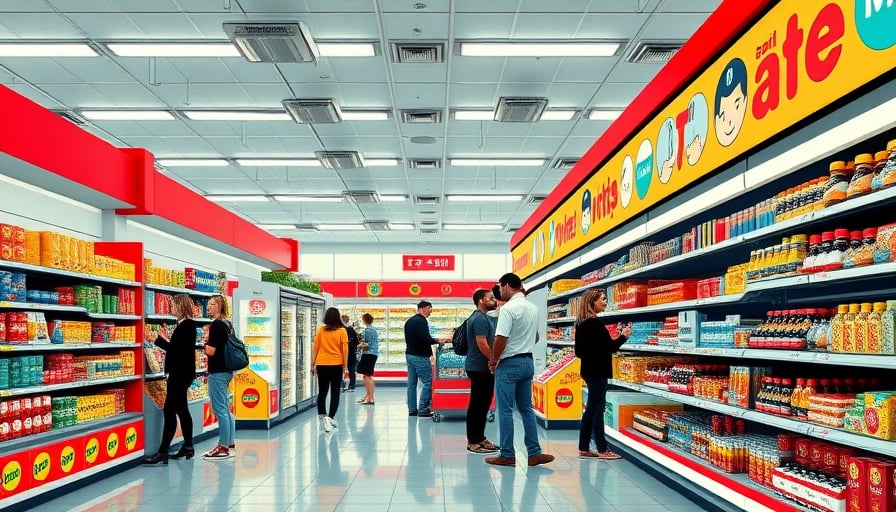
Corporate News Report
Kroger Co. (NYSE: KR) closed its shares at $62.10 on December 15, 2025, reflecting a modest upward trajectory from the January low. The grocery‑retail giant continues to command a sizable market capitalisation, and its price‑earnings ratio—situated near the sector average—suggests a valuation commensurate with its diversified product portfolio, which spans groceries, household goods, and health‑care items.
Market Position and Valuation
The company’s robust market cap underscores investor confidence in its enduring scale and operational resilience. Kroger’s P/E ratio, currently aligned with the broader retail and consumer staples index, indicates that the market perceives the firm’s earnings potential as relatively stable. This stability is reinforced by the firm’s multi‑channel retail model, integrating brick‑and‑mortar stores with an expanding e‑commerce platform that has gained traction amid shifting consumer preferences.
Resilience of the Grocery Sector
Analysts continue to highlight grocery stocks as a defensive play, citing the sector’s inherent capacity to deliver steady returns even during economic contractions. The underlying drivers include:
| Driver | Impact |
|---|---|
| Essential consumption | Food and household goods remain inelastic demand, cushioning revenue volatility. |
| Price‑elasticity moderation | Frequent promotional activity mitigates the impact of macro‑economic headwinds on sales volume. |
| Supply‑chain adaptations | Increased automation and logistics optimisation reduce operating costs and improve margin resilience. |
Kroger’s performance aligns with these dynamics. Despite a broader market downturn, the company’s revenue mix—particularly its high‑margin health‑care and pharmacy segments—has helped sustain earnings growth. The firm’s investment in digital infrastructure and data‑driven inventory management has further enhanced its competitive positioning against newer entrants such as discount retailers and specialized online grocers.
Cross‑Sector Connectivity
Kroger’s strategic initiatives echo broader economic trends observed across retail, technology, and logistics:
- Technology Integration
- The adoption of artificial‑intelligence–driven demand forecasting mirrors the technology sector’s shift toward predictive analytics.
- Partnerships with fintech firms to streamline payment solutions reflect the broader move toward digital‑first transaction ecosystems.
- Supply‑Chain Innovation
- Enhanced warehouse automation parallels logistics‑heavy players such as Amazon and UPS, indicating convergence in operational best practices.
- Health‑Care Expansion
- The company’s growing pharmacy and health‑care services align with the healthcare sector’s pivot toward retail‑based care delivery models, driven by consumer demand for convenient, cost‑effective health solutions.
Conclusion
Kroger’s December 2025 performance reinforces its status as a staple of the U.S. consumer‑goods market. The firm’s valuation, grounded in its diversified product offering and resilient business model, remains consistent with industry benchmarks. Analysts’ view of grocery stocks as defensively positioned during downturns is corroborated by Kroger’s steady earnings, reinforcing the company’s strategic posture within a complex, interconnected economic landscape.