Kraft Heinz Co. Quarterly Outlook: Strategic Refocus Amidst Incremental Earnings
Kraft Heinz Co. released its most recent quarterly results through the end of September 2026, reporting a modest uptick in operating income compared with the same period a year earlier. The improvement stemmed from a narrow rebound in gross profit and a modest reduction in selling‑and‑general‑administrative (SG&A) costs. Net income turned positive, a turnaround driven primarily by a decline in goodwill and intangible‑asset impairment charges relative to the prior year and a lower interest expense.
Financial Position and Balance‑Sheet Dynamics
- Liquidity: Cash and cash equivalents remained robust at approximately $1.9 billion. Current assets dipped slightly from the previous year, largely due to modest declines in inventories and trade receivables, yet the liquidity buffer is adequate to support near‑term obligations.
- Assets and Liabilities: Total assets hovered near $72 billion, with goodwill and intangible assets still constituting a significant portion of the balance sheet. Current liabilities were near $8.5 billion, and long‑term debt approximately $17 billion. The equity base remained in the mid‑$35 billion range, with retained earnings in the negative territory and a sizable accumulated other comprehensive loss.
- Capital Structure: Despite the decline in impairments, the company’s leverage metrics stayed within comfortable bounds, allowing for continued flexibility in executing strategic initiatives.
Portfolio Realignment: Divestiture of North American Coffee
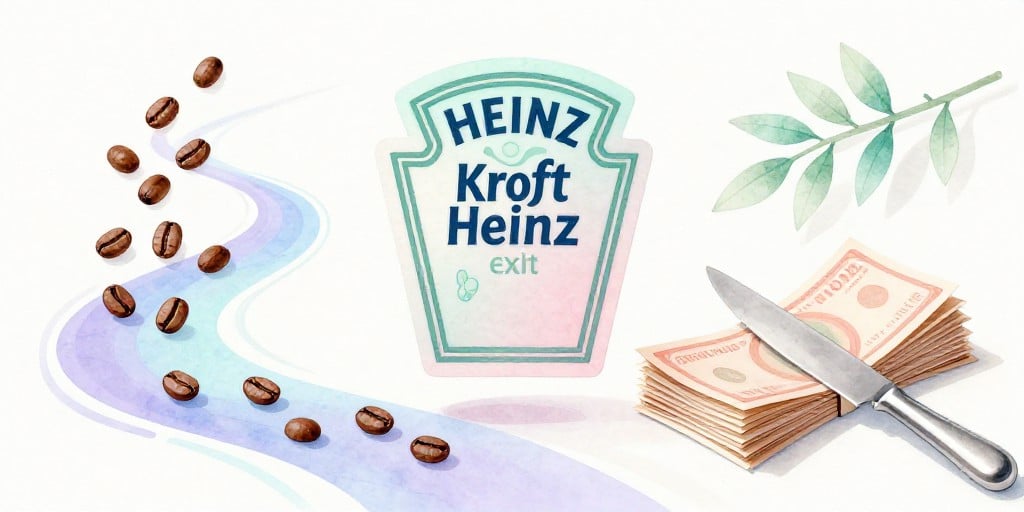
Kraft Heinz reiterated its ongoing plan to divest its North American coffee business—a move highlighted in the earnings release. This divestiture aligns with a broader strategy to concentrate on core food and beverage brands, thereby streamlining operations and reducing portfolio complexity. The company did not alter its dividend policy, continuing to provide a regular payout to shareholders.
Editorial Analysis: Consumer Goods Trends and Omnichannel Implications
Consumer Shift Toward Core, Value‑Driven Brands The divestiture reflects a sector‑wide trend where large consumer‑goods conglomerates trim non‑core assets to focus on high‑margin, staple brands. As consumers increasingly prioritize value and brand loyalty, companies that sharpen their focus can better allocate marketing spend toward omnichannel experiences that reinforce brand equity.
Retail Innovation and Omnichannel Synergy Kraft Heinz’s emphasis on core products dovetails with the retail industry’s pivot to omnichannel platforms. Supermarket chains and e‑commerce giants alike are investing in integrated inventory management and data analytics to deliver seamless consumer experiences. Kraft Heinz’s ability to funnel resources into supply‑chain digitization—enhancing real‑time demand forecasting—will be critical to maintaining shelf availability across digital and physical touchpoints.
Supply‑Chain Resilience and Cost Control The modest decline in SG&A costs, coupled with a reduction in impairment charges, signals a tightening of operational overhead. In a broader context, the industry is witnessing accelerated adoption of blockchain and AI‑driven logistics to reduce waste and improve traceability. Kraft Heinz’s continued investment in these technologies could yield further margins, especially if the company capitalizes on near‑shoring and local sourcing initiatives that resonate with sustainability‑conscious consumers.
Cross‑Sector Patterns in Consumer Goods Across food, beverage, and household categories, companies that align product innovation with digital distribution are outperforming peers. Kraft Heinz’s focus on its flagship brands, combined with strategic divestments, positions it favorably to capture this trend. However, the company must monitor competitors’ pricing strategies and promotional tactics in both grocery and e‑commerce arenas to avoid eroding market share.
Short‑Term Market Movements vs. Long‑Term Transformation In the short run, Kraft Heinz’s earnings are buoyed by operational efficiencies and a one‑off reduction in impairment charges. Long‑term success will hinge on its capacity to execute a clear portfolio strategy while embedding digital transformation throughout its supply chain. The divestiture of non‑core assets, if completed smoothly, could unlock capital for strategic acquisitions or technology investments that reinforce its competitive moat.
Conclusion
Kraft Heinz’s latest quarterly results portray a company in transition—balancing incremental earnings growth against a backdrop of significant impairment relief and a decisive shift toward core brand focus. By aligning its portfolio strategy with emerging omnichannel and supply‑chain innovations, the firm can capitalize on evolving consumer preferences and position itself for sustained long‑term value creation.