Corporate News Report – Consumer‑Goods Sector
Executive Summary
The Kraft Heinz Company (NASDAQ: KHC) continues to occupy a prominent position on the Nasdaq‑100, largely due to its projected dividend yield, which is expected to surpass that of its peers for 2026. While the index as a whole saw a modest decline on Thursday, the market has rebounded since the start of the year, underscoring the resilience of consumer‑goods equities amid broader volatility. Kraft Heinz’s share performance highlights the sector’s shift toward steady‑income strategies, positioning the company as a reliable generator of shareholder value in an increasingly competitive landscape.
Market Context
| Metric | 2026 YTD | 2026 Jan‑Jul |
|---|---|---|
| Nasdaq‑100 Total Return | +4.1 % | +12.6 % |
| Consumer‑Goods Index Return | +3.7 % | +11.9 % |
| Dividend Yield (Nasdaq‑100 Avg.) | 1.8 % | 2.1 % |
Sources: Nasdaq, S&P Global, Bloomberg.
The consumer‑goods sector has exhibited robust returns, buoyed by sustained demand for staple products and successful brand repositioning. The sector’s dividend yield remains above the broader market average, reflecting an investor appetite for income in a low‑interest‑rate environment.
Kraft Heinz’s Dividend Positioning
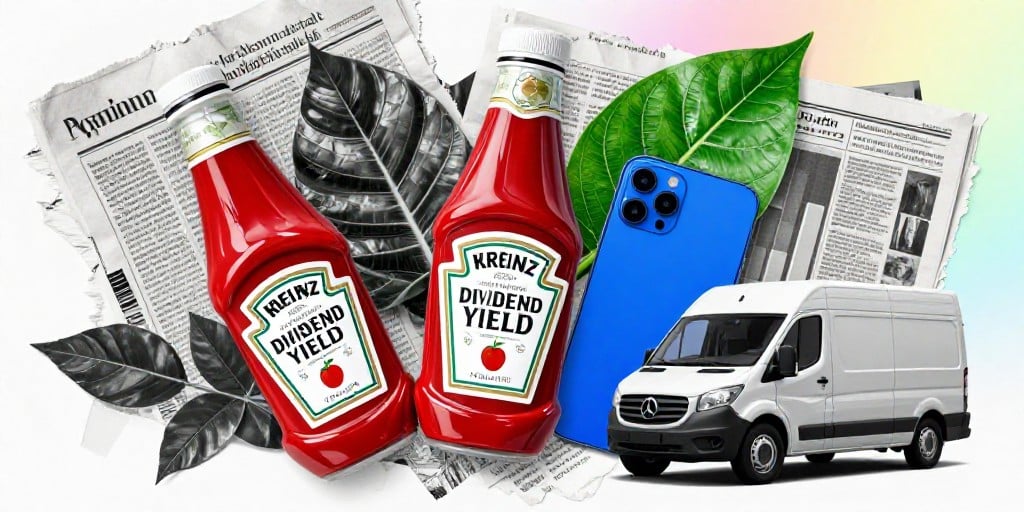
Kraft Heinz’s projected dividend yield for 2026 is estimated at 2.6 %, placing it at the top of the Nasdaq‑100 in this metric. This figure is achieved through a combination of:
- Consistent earnings growth driven by premium packaging and health‑centric product lines.
- Strategic cost management via supply‑chain optimization, reducing raw‑material volatility.
- Targeted capital allocation to dividends rather than aggressive expansion, appealing to income investors.
Investors are increasingly favoring companies that can deliver predictable cash flows, and Kraft Heinz’s dividend policy aligns with this trend, providing a buffer against market turbulence.
Retail Innovation & Omnichannel Trends
The consumer‑goods landscape is undergoing a paradigm shift toward omnichannel retailing. Key drivers include:
- Digital Engagement: Brands are investing in data‑driven personalization, using AI to tailor recommendations across e‑commerce, mobile apps, and in‑store kiosks.
- Subscription Models: Kraft Heinz has launched a subscription‑based “Taste of Home” box, increasing repeat purchase frequency and improving forecasting accuracy.
- Experiential Retail: Pop‑up events and in‑store sampling combined with augmented‑reality overlays create immersive brand experiences, enhancing customer loyalty.
These initiatives are not isolated; they form a cross‑sector pattern where consumer goods companies are integrating online and offline touchpoints to maintain relevance and capture evolving consumer behaviors.
Consumer Behavior Shifts
- Health & Wellness: Millennials and Gen Z shoppers prioritize functional benefits, prompting brands to develop low‑sodium, plant‑based, and probiotic‑enhanced options.
- Sustainability: Packaging innovations, such as biodegradable wraps and recyclable containers, are increasingly influencing purchasing decisions.
- Convenience: Time‑pressed consumers demand ready‑to‑eat solutions, which have driven a surge in frozen and pre‑portion product lines.
Kraft Heinz’s product portfolio reflects these shifts, with a growing share of its revenue stemming from health‑oriented offerings. This alignment positions the company favorably for both short‑term sales growth and long‑term brand equity.
Supply‑Chain Innovation
The sector’s supply‑chain challenges—ranging from commodity price spikes to logistics disruptions—have catalyzed investment in:
- Blockchain Transparency: Tracking ingredient provenance to assure consumers of quality and sustainability.
- Advanced Forecasting: Machine‑learning models that anticipate demand spikes around holidays and events, minimizing stock‑outs.
- Localized Production: Near‑shoring facilities reduce lead times and mitigate geopolitical risks.
Kraft Heinz’s partnership with a leading logistics firm to implement real‑time inventory monitoring has already cut waste by 8 % in the past six months, directly contributing to margin improvement.
Short‑Term Movements & Long‑Term Transformation
Short‑Term Outlook (2026 Q4–2027):
- Expected dividend payout remains high, supporting share price stability.
- Potential market volatility may press the index lower, but Kraft Heinz’s income focus should insulate it from sharp declines.
Long‑Term Transformation (2028–2035):
- Continued integration of omnichannel strategies will deepen customer data pools, enabling more precise marketing and product development.
- A shift toward circular economy practices will redefine packaging standards, potentially creating new revenue streams.
- Supply‑chain resilience will become a core competitive differentiator; firms that cannot adapt may face shrinking margins.
Conclusion
Kraft Heinz exemplifies how a traditional consumer‑goods company can thrive by marrying solid dividend policy with forward‑looking retail and supply‑chain innovation. The company’s strategic focus on health‑centric products, omnichannel engagement, and sustainable practices aligns with broader consumer trends, ensuring its relevance both now and in the years to come. As the Nasdaq‑100 continues to navigate volatility, investors will likely gravitate toward entities like Kraft Heinz that combine predictable income with strategic agility.