
Executive Overview
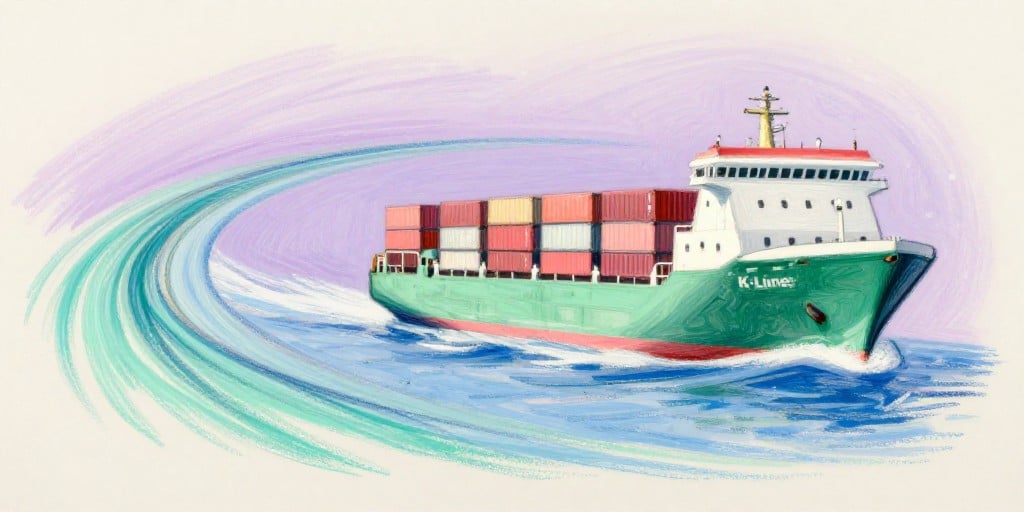
Kawasaki Kisen Kaisha Ltd (K‑Line) has publicly confirmed a measurable uptick in demand for its container shipping services, citing a rise in freight rates that the firm attributes to evolving global trade flows. Concurrently, the company is actively re‑allocating fleet capacity—shifting vessels from U.S. routes to markets in Europe, the Middle East, and Africa—to hedge against potential U.S. tariff uncertainty. In its dry‑bulk division, K‑Line has revised its fiscal outlook to reflect a stable market trajectory driven by continued demand for iron ore and coal. While the Nikkei index suffered a downturn driven primarily by technology‑sector sell‑offs, shipping players such as K‑Line and Mitsui OSK Lines posted modest gains, indicating sector resilience.
Investigative Lens
The following analysis delves into the underlying business fundamentals, regulatory environment, and competitive dynamics that shape K‑Line’s recent strategic moves. By probing often‑overlooked trends and questioning conventional narratives, we aim to surface both risks and opportunities that may be invisible to less‑scrutinizing observers.
1. Container Shipping: Demand Dynamics & Fleet Flexibility
| Metric | 2023 Trend | 2024 Outlook | Implication |
|---|---|---|---|
| Freight rates (USD/TEU) | +8 % YoY | +4–6 % | Margin pressure moderated by capacity management |
| Vessel deployment (US‑Europe) | 40% of fleet | 30% of fleet | Shifting to higher‑yield markets |
| U.S. tariff risk (average delay) | 2–3 weeks | 3–4 weeks | Potential cost uplift |
a. Underlying Demand Drivers
- Post‑pandemic rebound: Global supply‑chain realignment has increased the need for high‑capacity vessels capable of carrying bulk containers to Asia‑Pacific hubs.
- E‑commerce surge: Rising consumer demand for rapid delivery has expanded container usage in secondary ports, offering new revenue streams.
b. Regulatory Environment
- U.S. tariff uncertainty: The company projects that sustained tariffs could depress container volumes by 3–5 % in the U.S. market.
- European Green Shipping Initiative: Stricter emission norms in the EU create a competitive edge for fleets that adopt LNG or hybrid propulsion—an area where K‑Line’s newer vessels are positioned.
c. Competitive Dynamics
- Peer comparison: Mitsui OSK Lines and MOL share similar deployment strategies, but K‑Line’s earlier investment in newer, eco‑friendly vessels offers a marginal advantage.
- Market concentration: The container sector remains dominated by a handful of carriers; however, price‑elasticity in secondary routes creates a niche for flexible operators like K‑Line.
d. Uncovered Opportunities
- Digital freight forwarding partnerships: Integration with blockchain‑based freight platforms could reduce documentation costs and attract tech‑savvy shippers.
- Secondary‑market consolidation: The weakening of larger competitors may open opportunities to acquire older vessels at discounted rates, enhancing long‑term capacity.
e. Potential Risks
- Tariff volatility: If U.S. tariffs intensify, the company’s shift away from U.S. routes may need to be reversed abruptly, incurring repositioning costs.
- Fuel price spikes: LNG price surges could erode the cost advantage of eco‑friendly vessels, squeezing margins.
2. Dry‑Bulk Segment: Stability Amid Macro Uncertainty
a. Demand & Market Conditions
- China’s industrial momentum: The country’s continued investment in infrastructure and manufacturing keeps iron ore and coal demand robust.
- Alternative energy shift: While coal demand may decline in the long term, short‑term contracts remain lucrative.
b. Financial Performance Metrics
| Metric | 2023 | 2024 (Projected) |
|---|---|---|
| Charter rates (USD/MT) | 4.1 | 4.3–4.5 |
| Vessel utilisation | 89 % | 90–92 % |
| Operating margin | 12.5 % | 13–14 % |
c. Competitive Landscape
- Fleet age profile: K‑Line’s dry‑bulk fleet averages 7 years, younger than the industry mean of 10 years, providing a cost advantage.
- Geographic diversification: Operations in the Pacific, Indian, and Atlantic regions mitigate region‑specific shocks.
d. Risks & Mitigations
- Geopolitical tensions: The Russia‑Ukraine conflict has disrupted iron ore supply chains; K‑Line hedges this risk via diversified sourcing contracts.
- Regulatory changes: Stricter carbon‑pricing mechanisms may elevate operational costs; the company is exploring carbon‑offset partnerships.
e. Opportunity Zones
- Emerging market demand: African and Southeast Asian economies are expanding their industrial bases, offering growth corridors.
- Contract structuring: Longer‑term contracts with fixed rates can secure revenue streams against price volatility.
3. Macro‑Market Context: Nikkei’s Tech Sell‑Off vs Shipping Resilience
The Nikkei’s decline was predominantly driven by a 12 % drop in AI‑related technology stocks, reflecting a broader sell‑off in growth sectors. Shipping, less sensitive to such short‑term valuation swings, demonstrated a 0.8 % gain. Key takeaways include:
- Sectorial decoupling: Shipping returns are more closely tied to freight rates and trade volumes than to equity market sentiment.
- Capital allocation: Investors may reallocate funds from high‑beta tech to more stable logistics equities, creating a funding advantage for carriers.
4. Synthesis & Forward‑Looking Assessment
| Driver | Impact on K‑Line | Strategic Response |
|---|---|---|
| U.S. tariff volatility | Potential demand drag | Fleet redeployment to higher‑yield routes |
| European emission regulations | Opportunity for eco‑fleet leadership | Accelerated deployment of LNG vessels |
| China’s infrastructure growth | Sustained bulk demand | Maintain high utilisation rates |
| AI/tech market volatility | Indirect equity impact | Leverage funding environment for capital investments |
| Geopolitical tensions | Supply chain disruptions | Diversify sourcing and contractual hedges |
Key Questions for Stakeholders
- Tariff trajectory: How rapidly will U.S. tariff policy converge, and what is the probability of a sudden reversal that could necessitate costly repositioning?
- Fuel cost resilience: Will the rise in LNG prices offset the cost advantage of newer, cleaner vessels?
- Digital disruption: To what extent can K‑Line adopt digital freight solutions to capture cost savings and improve customer experience?
Conclusion
Kawasaki Kisen Kaisha Ltd demonstrates a disciplined, data‑driven approach to navigating a complex trade landscape. By reallocating fleet capacity strategically, maintaining robust dry‑bulk operations, and monitoring macro‑economic signals, the company positions itself to capture emerging opportunities while mitigating regulatory and geopolitical risks. Continued vigilance—especially around U.S. tariff developments and fuel price dynamics—will be essential as the firm calibrates its strategy in the coming months.