
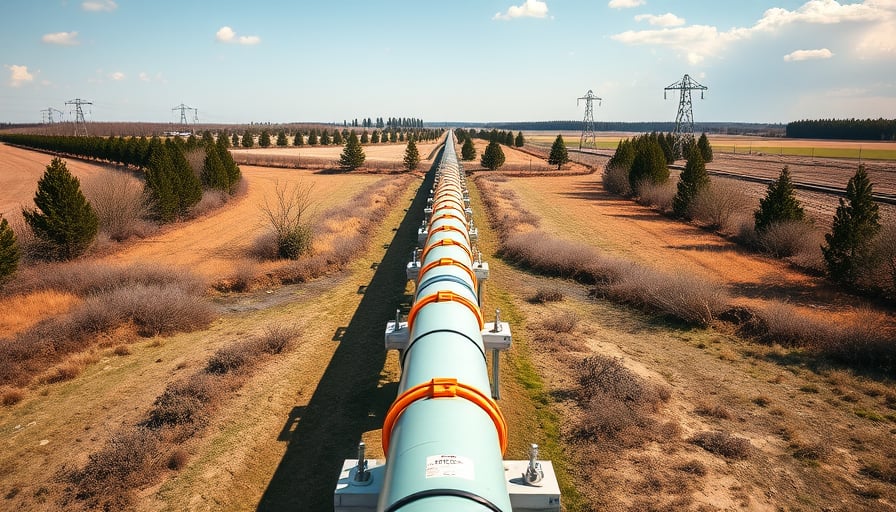
Kinder Morgan Inc. Navigates Market Headwinds Amid Strategic Pipeline Expansion
Kinder Morgan Inc. (KMI) delivered a modest share‑price uptick during a broader market decline, a performance noted in a recent market‑watch report. The rally, however, is not indicative of a robust return to pre‑pandemic fundamentals. Rather, it reflects the complex interplay between the company’s ongoing infrastructure initiatives, evolving regulatory landscape, and the heightened scrutiny investors are placing on its forthcoming fourth‑quarter earnings.
4Q Performance Under the Lens
Analysts are closely monitoring KMI’s fourth‑quarter results, which will arrive amid a backdrop of fluctuating commodity prices and tightening environmental scrutiny. While the company’s operating revenue growth remains largely driven by long‑term natural‑gas pipelines, recent earnings guidance suggests modest margin compression. This trend aligns with broader industry pressures: higher transportation costs, increased capital expenditures for pipeline maintenance, and the growing influence of renewable energy projects on investor expectations.
Key metrics under review include:
- Adjusted EBITDA: Historically a reliable indicator of profitability, but subject to volatility when fuel price swings are pronounced. Investors will scrutinize any deviation from the $1.8‑$2.0 billion range projected by consensus analysts.
- Net Operating Income (NOI): A critical gauge of the company’s core pipeline operations. Rising operating expenses—particularly those linked to regulatory compliance and environmental remediation—could erode NOI, a trend observed in the last two fiscal quarters.
- Capital Expenditure (CapEx) Allocation: KMI has pledged $6.5 billion in CapEx for the current fiscal year, primarily directed at the Western Gateway Pipeline and other regional projects. The efficacy of these spend decisions will be a focal point for both equity and fixed‑income markets.
Western Gateway Pipeline: Second Open Season
In a bid to accelerate deployment and secure additional revenue streams, KMI has announced a second open season for the Western Gateway Pipeline. The initiative, which extends across the Intermountain West, seeks to attract new shippers and optimize asset utilization. However, the sector’s competitive dynamics pose several risks:
- Regulatory Hurdles: The pipeline must navigate a patchwork of state and federal permitting requirements. Delays in the permitting process could inflate project timelines and costs.
- Environmental Concerns: Rising pressure from environmental advocacy groups could result in increased scrutiny over methane emissions and land use impacts. A failure to mitigate these risks may attract fines or reputational damage.
- Market Saturation: As more competitors enter the mid‑stream market, demand for pipeline capacity could be diluted, potentially diminishing the return on investment for new assets.
Financial analysis suggests that if the second open season succeeds in attracting sufficient shippers, the pipeline could contribute an estimated $70‑$80 million in annual incremental revenue, improving KMI’s long‑term cash flow profile. Conversely, under‑performance could leave the asset stranded, eroding shareholder value.
Strategic Alliance with Phillips 66
The joint announcement with Phillips 66 underscores a continued partnership approach toward asset development. By collaborating on an open season for remaining assets, the two companies aim to leverage complementary strengths—Phillips 66’s refined logistics network and KMI’s extensive pipeline infrastructure. Yet, this partnership also introduces nuanced risks:
- Dependency on Shipper Base: The success of the joint open season hinges on Phillips 66’s ability to secure new customers. Market volatility or a shift toward alternative energy carriers could weaken this synergy.
- Capital Allocation Discipline: Joint ventures often necessitate shared decision‑making, which can dilute strategic focus. Misaligned incentives may hinder optimal investment choices.
- Competitive Response: Other infrastructure providers, such as Enbridge or Energy Transfer, may accelerate their own capacity expansions, intensifying competition in the same corridors.
Despite these challenges, the collaboration could yield significant economies of scale, reducing per‑barrel transportation costs and enhancing the combined entity’s bargaining power with shippers.
Regulatory and Competitive Landscape
The energy infrastructure sector is experiencing a paradigm shift driven by:
- Climate‑Centric Regulatory Frameworks: New federal and state mandates aim to reduce greenhouse gas emissions, compelling pipeline operators to invest in methane detection and repair technologies. Failure to comply can result in punitive fines and mandatory shutdowns.
- Shift Toward Renewable Energy: While natural‑gas pipelines continue to be a vital bridge fuel, the rapid decline in wind and solar costs is altering the energy mix. Pipeline operators must adapt to serve emerging bio‑fuel and hydrogen markets, demanding additional capital and regulatory approvals.
- Market Consolidation: Consolidation trends, evidenced by mergers such as Enbridge’s acquisition of Williams Companies, raise the barrier to entry and intensify price competition.
In this context, KMI’s ability to navigate regulatory compliance, diversify its asset portfolio, and maintain operational efficiency will determine its long‑term resilience.
Outlook Ahead of the Early‑February Earnings
Investors will monitor the upcoming earnings release closely, as it will likely clarify the company’s financial trajectory and strategic priorities. Key questions include:
- Capital Expenditure Execution: How effectively has KMI deployed its $6.5 billion CapEx budget? Are projects on schedule and within budget?
- Revenue Growth Sources: Will the Western Gateway Pipeline’s second open season contribute materially to revenue? How many new shippers are expected?
- Margin Management: Can KMI mitigate the impact of higher operating costs on its adjusted EBITDA? Will it employ hedging strategies to shield against commodity price volatility?
Given the sector’s evolving dynamics, a conservative investment thesis would emphasize the need for disciplined capital allocation, proactive regulatory engagement, and diversified asset development to safeguard shareholder value.
This analysis incorporates market research, financial metrics, and regulatory assessments to provide an investigative perspective on Kinder Morgan Inc.’s current positioning within the energy infrastructure sector.