
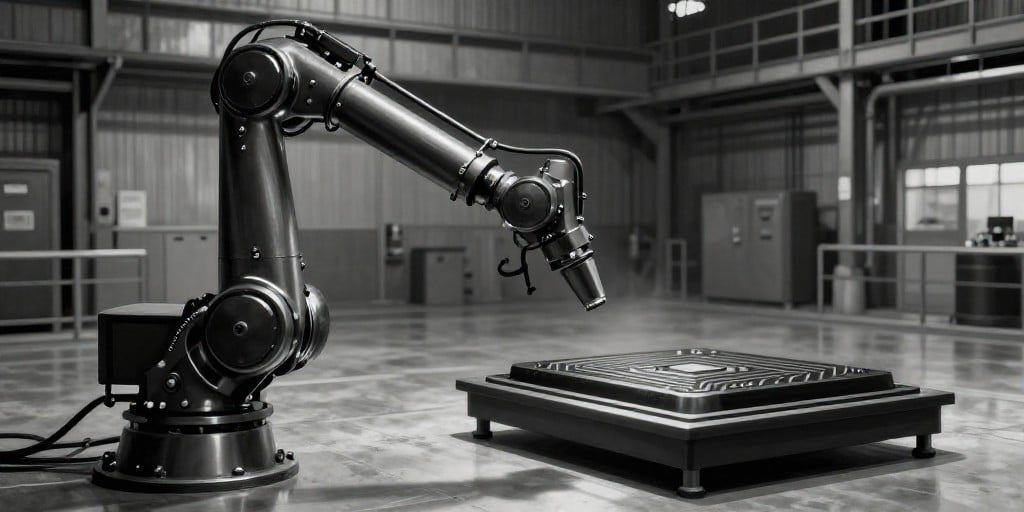
Overview of the Collaboration
Kawasaki Heavy Industries (KHI) has formally joined a consortium spearheaded by Fujitsu Limited, along with FANUC Corporation and YASKAWA Electric Corporation, to advance the development and deployment of physical artificial intelligence (AI) in heavy industry. The partnership is designed to create a collaborative control platform that merges advanced digital AI systems with physical robotic actuators, leveraging NVIDIA’s open‑source physical AI frameworks. The primary objective is to elevate automation, boost productivity, and mitigate labor shortages across manufacturing, logistics, and healthcare sectors.
Technical Architecture and Manufacturing Implications
Sovereign Collaborative Control Infrastructure
The consortium is developing a stand‑alone control infrastructure that allows robots and industrial equipment to:
- Sense real‑world conditions through integrated vision, tactile, and sensor fusion modules.
- Interpret situational data using deep neural networks optimized for edge deployment.
- Decide autonomously the optimal action sequence, taking into account constraints such as safety envelopes, material handling limits, and dynamic process variables.
By embedding these capabilities directly onto the robot platform, the system eliminates reliance on cloud connectivity for real‑time decision making, thereby reducing latency and enhancing resilience to network outages—a critical requirement in safety‑critical manufacturing lines.
Integration of NVIDIA’s Open Physical AI
NVIDIA’s open physical AI stack provides a modular framework for:
- Physics‑informed neural networks that can predict the kinematics and dynamics of robotic manipulators under varying load conditions.
- Reinforcement learning (RL) algorithms that can learn optimal motion policies through simulation and transfer to real hardware.
- Simulation environments (e.g., Isaac Gym) that accelerate training cycles and reduce the risk of hardware damage during development.
The consortium plans to standardize these components across member platforms, ensuring interoperability and easing integration for downstream customers.
Impact on Manufacturing Processes
The adoption of autonomous, AI‑enabled robotic systems is expected to influence productivity metrics in several ways:
| Metric | Traditional Automation | Physical AI‑Enabled Automation |
|---|---|---|
| Cycle Time | Fixed, deterministic | Adaptive, optimized per part |
| Throughput | Limited by process constraints | Increased by dynamic re‑routing |
| Downtime | Proportional to manual interventions | Reduced via predictive maintenance |
| Workforce Utilization | High skill requirement | Lower skill threshold due to autonomous guidance |
In heavy industry, where batch sizes can be large and processes complex, even modest reductions in cycle time translate into significant cost savings. Moreover, the ability to dynamically adapt to process deviations enhances yield rates and reduces scrap.
Capital Expenditure Drivers
Economic Factors
- Labor Cost Pressures: Japan’s aging population and declining working age cohort are inflating labor costs, driving firms to invest in automation to maintain competitiveness.
- Global Supply Chain Resilience: Recent disruptions (e.g., semiconductor shortages, pandemic‑induced port delays) have highlighted the need for localized, resilient production systems. Physical AI enables on‑site, autonomous reconfiguration, reducing dependency on upstream logistics.
- Government Incentives: Japanese national policies, such as the Industrial Competitiveness Strategy for 2030, provide subsidies and tax incentives for digital transformation initiatives, including AI and robotics integration.
Capital expenditure (CapEx) in the heavy industry segment has historically focused on Industrial Control Systems (ICS) and Industrial Internet of Things (IIoT). The consortium’s platform represents a next‑generation CapEx, combining hardware (robots, sensors, compute nodes) with advanced software stacks (AI models, simulation tools).
Infrastructure and Regulatory Considerations
- Infrastructure Spending: The rollout of 5G and edge computing hubs across industrial parks will support the high‑bandwidth, low‑latency requirements of real‑time AI control. Governments are allocating funds for Digital Twin infrastructure, enabling virtual testing of physical AI deployments.
- Regulatory Landscape: Safety certifications (e.g., ISO/TS 15066 for collaborative robots) will evolve to encompass AI decision logic. The consortium is proactively engaging with standards bodies to define AI‑specific safety frameworks that address explainability, fault tolerance, and cyber‑security.
Supply Chain Impacts
The integration of autonomous decision‑making in production lines reshapes supply chain dynamics:
- Demand Forecasting: AI can analyze real‑time demand signals and adjust production schedules, reducing lead times.
- Inventory Management: Robots equipped with AI can perform spot inspections and quality control, allowing just‑in‑time inventory levels.
- Logistics Automation: Autonomous mobile robots (AMRs) can navigate warehouses without human oversight, improving throughput and reducing labor costs.
By aligning production with real‑world demand, firms can achieve leaner inventory profiles, decreasing carrying costs and minimizing waste—a key driver of CapEx return on investment.
Market Implications and Future Outlook
The consortium’s collaborative control platform positions KHI and its partners at the forefront of physical AI deployment in heavy industry. Key market implications include:
- Competitive Differentiation: Clients adopting the platform can claim superior productivity gains, potentially commanding premium pricing for their products.
- Ecosystem Growth: Standardizing the platform encourages third‑party developers to build complementary applications (e.g., predictive maintenance SaaS, advanced analytics), expanding the ecosystem.
- Workforce Transition: The shift toward AI‑augmented operations necessitates reskilling initiatives, which could open new markets for vocational training providers and educational institutions.
Over the next 3–5 years, the expected trajectory is a gradual increase in CapEx for physical AI systems, driven by demonstrable ROI in pilot deployments. As the technology matures, it will likely permeate other domains such as mining, shipbuilding, and offshore wind farms, where heavy equipment and complex logistics dominate.
The collaboration between KHI, Fujitsu, FANUC, and YASKAWA signals a strategic alignment of engineering expertise, digital innovation, and industrial experience. By embedding AI directly into the control loops of physical systems, the consortium aims to usher in a new era of productive, resilient, and economically viable manufacturing, responsive to both demographic challenges and global supply chain imperatives.