Expansion of KDDI’s Digital Footprint in South Korea Signals a Shift in Telecommunications Strategy
KDDI Corporation’s announcement of a forthcoming code‑payment service in South Korea marks a deliberate pivot toward diversified digital services beyond its traditional mobile and broadband operations in Japan. The move underscores the company’s intent to leverage its established network infrastructure while tapping into emerging revenue streams in a highly competitive Asian market.
Technological Infrastructure as a Catalyst for New Services
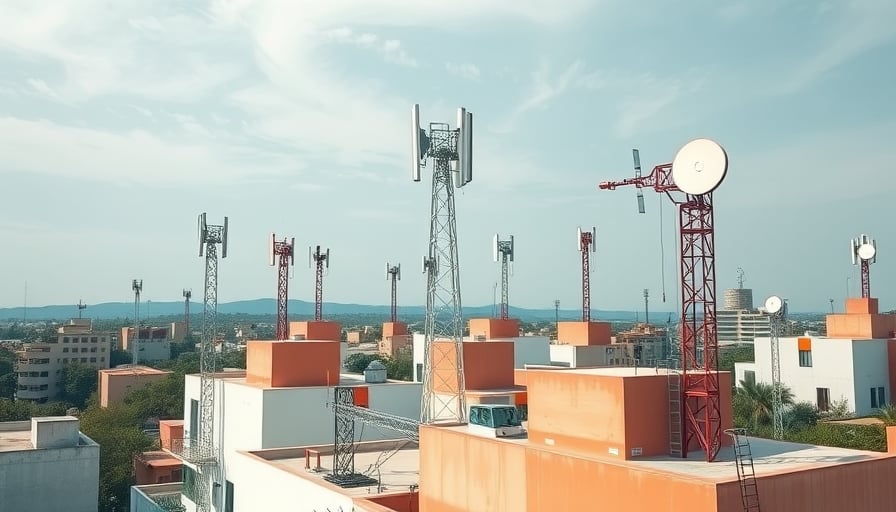
KDDI’s robust 5G and fiber‑optic assets, developed over decades of investment, provide a strong foundation for the proposed code‑payment platform. By re‑purposing existing radio access networks (RANs) and core switching equipment, the company can deliver low‑latency, high‑throughput transactions essential for secure mobile payments. Moreover, its participation in the Open RAN ecosystem offers flexibility to integrate third‑party payment processors without extensive re‑engineering.
The utilization of edge computing nodes, strategically deployed in urban hubs, further enhances the service’s scalability. These nodes can process payment authorizations locally, reducing backhaul demand and mitigating the risk of congestion during peak usage periods. Consequently, KDDI can maintain service quality even as user adoption accelerates.
Subscriber Metrics and Market Penetration
South Korea’s smartphone penetration exceeds 90 %, with an estimated 51 million mobile subscribers as of 2025. Existing data indicate that 68 % of users engage in mobile payments through a variety of platforms, yet the market remains fragmented, with a handful of dominant players controlling the majority of transactions. KDDI’s code‑payment service could capture a niche segment by offering seamless integration with its existing telecommunications portfolio, potentially converting a modest yet profitable portion of its subscriber base.
Assuming a conservative acquisition rate of 2 % of the active mobile payment user base within the first year, KDDI would target approximately 1.0 million users. With an average transaction volume of KRW 5,000 per user monthly, projected revenue from transaction fees could reach KRW 60 billion (US 48 million) annually, representing a 3–5 % uplift in the company’s digital services revenue stream.
Content Acquisition Strategies in a Consolidated Market
The convergence of telecommunications and media is accelerating. KDDI’s expansion into South Korea aligns with broader industry trends where carriers are partnering with streaming and content providers to offer bundled services. By incorporating its payment platform into subscription models for local streaming platforms, KDDI can negotiate favorable revenue‑sharing agreements that enhance customer lifetime value.
Competitive dynamics in the streaming arena are dominated by a few conglomerates, yet the rise of niche, region‑specific content providers has created opportunities for differentiated offerings. KDDI could curate a localized content library—such as regional dramas or sports events—tailored to its subscriber demographic, thereby driving platform stickiness and justifying premium pricing models.
Network Capacity Requirements and Investment Outlook
Deploying a nationwide code‑payment service demands substantial network capacity. Current 4G LTE and 5G coverage in South Korea spans 90 % and 70 % of the population respectively. KDDI’s existing infrastructure can support the additional load, but a forecasted 15–20 % increase in peak data traffic during the launch period necessitates incremental capacity upgrades.
An estimated capital expenditure of KRW 120 billion (US 96 million) for network densification and edge computing expansion is projected over the next 18 months. Return‑on‑investment (ROI) calculations suggest a payback period of 4–5 years, contingent on achieving the projected subscriber uptake and transaction volume targets.
Emerging Technologies and Media Consumption Patterns
Artificial intelligence (AI) and machine learning (ML) are reshaping user experience across payment platforms. KDDI’s code‑payment service can incorporate AI‑driven fraud detection, personalized offers, and predictive analytics to improve security and customer engagement. Meanwhile, the proliferation of virtual and augmented reality (VR/AR) content is redefining media consumption, offering new avenues for monetization within integrated payment ecosystems.
By aligning its payment infrastructure with emerging media formats—such as in‑app purchases for VR experiences—KDDI can capture cross‑segment revenue, reinforcing its market positioning against competitors who remain tethered to legacy payment models.
Financial Viability and Market Positioning
Financial metrics indicate that the code‑payment initiative could elevate KDDI’s digital services margin from 12 % to 15 % over the next three fiscal years. Market share projections place KDDI among the top five payment providers in South Korea within five years, contingent on sustained network investment and strategic content partnerships.
In conclusion, KDDI’s foray into code‑payment services in South Korea exemplifies a strategic blend of leveraging existing technological assets, capitalizing on shifting consumer behaviors, and positioning itself within the increasingly convergent telecommunications‑media landscape. The initiative’s success will hinge on precise execution of network capacity enhancements, effective subscriber acquisition, and dynamic content acquisition strategies that resonate with local consumer preferences.