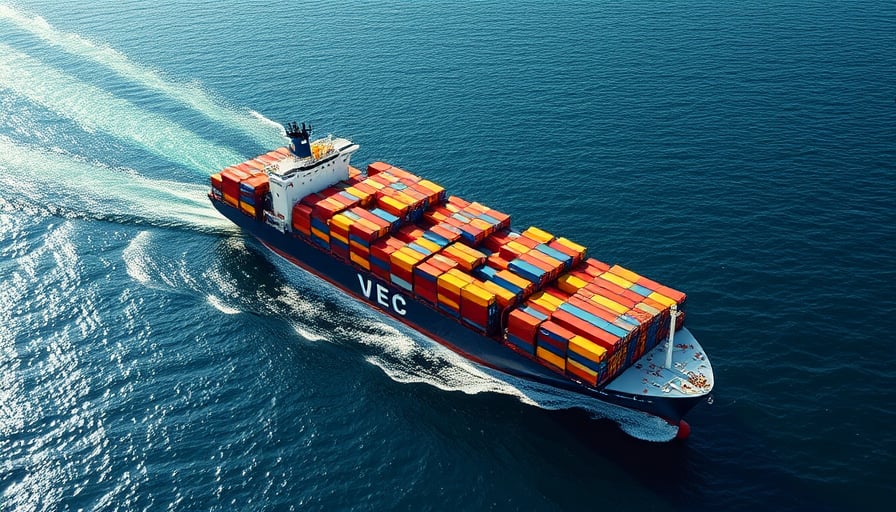
Corporate Analysis of Kawasaki Kisen Kaisha Ltd. in a Volatile Market Environment
Market Performance Overview
Kawasaki Kisen Kaisha Ltd. (KHI), a prominent Japanese marine transportation company listed on the Tokyo Stock Exchange, has exhibited modest fluctuations in its share price during early March. The modest decline aligns with a broader downturn in Japanese equities, which has been influenced by negative signals from Wall Street and heightened geopolitical tension in the Middle East. While Kawasaki Kisen’s peers in the container shipping sector have also faced declines, the firm’s stock movement remains comparatively restrained, reflecting its diversified operations and strategic positioning.
Industry Context and Sector Dynamics
Global Shipping Landscape
The shipping industry is undergoing significant structural changes driven by several macro‑economic and regulatory forces:
- Geopolitical volatility in key shipping lanes (e.g., the Middle East) continues to affect freight rates and route planning.
- Regulatory pressures regarding emissions (IMO 2020, upcoming sulphur cap, and forthcoming carbon intensity targets) are accelerating fleet modernization.
- Digital transformation is reshaping operations through blockchain-based logistics, AI‑driven route optimization, and predictive maintenance.
KHI operates a multi‑segment fleet that includes bulk carriers, car carriers, and specialized vessels, allowing it to absorb sectoral shocks more effectively than firms with narrower focuses. Additionally, the company’s ancillary services—insurance, warehousing, and cargo handling—provide diversified revenue streams that can cushion the impact of volatile freight markets.
Competitive Positioning
KHI’s competitive advantages can be summarized as follows:
- Fleet Versatility: The ability to deploy vessels across various cargo categories mitigates exposure to any single commodity cycle.
- Geographic Reach: A global presence enables the company to exploit regional trade dynamics and diversify route portfolios.
- Ancillary Services: Vertical integration into insurance and warehousing expands profitability margins beyond freight rates.
- Strategic Alliances: Participation in shipping coalitions and joint ventures enhances capacity utilization and network efficiency.
In comparison to peers, KHI’s diversified asset base and ancillary offerings give it a resilience advantage during market downturns.
Economic Drivers and Broader Trends
Global Trade Momentum
Despite the slowdown in Japanese equities, global trade volumes remain relatively stable, buoyed by:
- Emerging market growth in Asia and Africa, driving demand for bulk and container transport.
- Shift towards green logistics, leading to increased investment in low‑emission vessels.
KHI’s positioning in both bulk and container sectors allows it to capture demand from these growth regions. Its ability to pivot between passenger and cargo operations further enhances flexibility.
Currency and Interest Rate Dynamics
Japanese yen volatility impacts shipping companies that borrow in foreign currencies or receive revenue in multiple currencies. While a weaker yen can compress profit margins, it may also improve competitiveness in price‑sensitive routes. KHI’s hedging policies and diversified revenue mix help mitigate currency exposure.
Regulatory and Sustainability Pressures
The International Maritime Organization’s (IMO) forthcoming regulations on carbon intensity and decarbonization incentives are reshaping fleet renewal strategies. KHI’s ongoing investments in modern, efficient vessels position the company favorably to meet future compliance requirements and capture green‑fleet premium rates.
Conclusion
Kawasaki Kisen Kaisha Ltd. demonstrates a robust business model that leverages fleet diversity, geographic breadth, and ancillary service integration to navigate a challenging macro‑economic landscape. While short‑term market pressures—such as the recent downturn in Japanese equities and geopolitical tensions—have modestly impacted its share price, the company’s strategic positioning and adaptive operational capabilities suggest resilience against sector‑specific volatilities. Continued focus on fleet modernization, sustainability compliance, and digital transformation will be critical for maintaining competitive advantage in the evolving global shipping arena.