Iberdrola’s Market Momentum Amidst Strategic Grid Modernization
Iberdrola’s shares experienced a modest uptick in Madrid’s primary index, bolstered by a broader market recovery following an early‑day dip and a temporary easing of geopolitical tensions in the Middle East. The lift in oil prices helped temper volatility across European equities, allowing a handful of utilities—including Iberdrola—to deliver positive returns. This incremental appreciation reflects a confluence of favorable macro‑economic sentiment, a clear long‑term growth strategy focused on the United States, and a robust balance‑sheet optimization program.
Expansion of Grid Assets in the United States
During a recent investor conference, Iberdrola’s Executive Chairman emphasized the strategic priority of expanding grid assets in high‑demand segments such as data‑center power. The United States represents a pivotal frontier for the company’s renewable portfolio, offering attractive policy incentives, a mature transmission network, and a burgeoning demand for low‑carbon, reliable energy supply to support data‑center operations.
From a technical standpoint, the integration of high‑penetration renewable resources—wind, solar, and battery storage—into the U.S. grid presents both opportunities and challenges. Grid stability hinges on maintaining synchronous inertia and voltage support, which can be compromised when conventional thermal generators are displaced by intermittent renewables. Iberdrola’s investment strategy includes deploying advanced inverter technologies that provide synthetic inertia, frequency regulation, and voltage control. By coupling these inverters with large‑scale battery energy storage systems (BESS), the utility can mitigate short‑term variability, deliver ancillary services, and enhance system resiliency.
Renewable Generation, Natural‑Gas Plants, and Battery Storage
The announced capital commitment spans renewable generation, natural‑gas plants, and battery storage across the United States and other regions. The inclusion of natural‑gas peaking units serves dual purposes: it offers flexible dispatch to counteract the stochastic nature of wind and solar, and it acts as a bridge technology during the transition to a fully renewable grid. Modern natural‑gas units equipped with carbon capture and sequestration (CCS) can further reduce emissions while maintaining grid reliability.
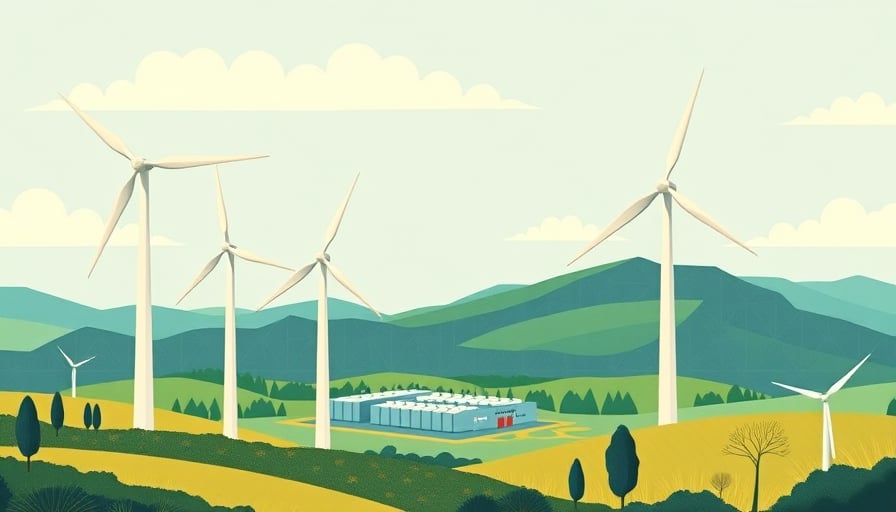
Battery storage, meanwhile, is integral to smoothing load curves and providing ancillary services such as spinning reserves and voltage support. Iberdrola’s deployment plan targets high‑capacity, fast‑response BESS installations at strategic sub‑station locations, enhancing both local grid stability and the ability to interconnect remote renewable resources.
Regulatory Frameworks and Rate Structures
The U.S. regulatory environment is characterized by state‑level policies that encourage renewable integration while ensuring grid reliability. Renewable portfolio standards (RPS), net‑metering policies, and demand‑response incentives directly influence utility revenue models and investment decisions. Iberdrola must navigate these frameworks to optimize asset placement and maximize return on equity.
Rate structures are evolving to reflect the cost of integrating variable renewables. Time‑of‑use tariffs, dynamic pricing models, and capacity‑market mechanisms are increasingly common in jurisdictions with high renewable penetration. By aligning its rate design with these mechanisms, Iberdrola can recover investment costs while promoting energy efficiency among consumers. Furthermore, the utility’s proactive management of its debt profile—extending maturities to 2030 and executing a capital increase—provides the financial flexibility necessary to adopt new rate structures without imposing undue burden on consumers.
Infrastructure Investment Requirements
Achieving a stable, renewable‑rich grid requires substantial investment in both generation and transmission infrastructure. Iberdrola’s long‑term strategy incorporates:
- Transmission Upgrades – Upgrading existing high‑voltage lines to accommodate bidirectional power flows and integrating smart grid technologies to enhance real‑time monitoring and control.
- Distributed Energy Resource (DER) Integration – Deploying advanced distribution management systems (ADMS) and microgrid capabilities to manage the influx of rooftop solar, electric vehicles, and residential storage.
- Resilience Enhancements – Implementing grid hardening measures, such as underground cabling and fault‑recovery automation, to improve outage performance and reduce service interruptions.
The capital-intensive nature of these upgrades necessitates a robust financing strategy. Iberdrola’s debt restructuring—extending maturities and infusing capital from strategic shareholders—positions the company to fund these investments without compromising liquidity or increasing consumer rates.
Economic Impacts and Consumer Costs
The transition to a high‑renewable grid has nuanced economic implications. While the upfront capital outlay is significant, the long‑term cost of renewable generation is generally lower than that of conventional thermal plants once fuel price volatility is considered. Iberdrola’s strategy to blend renewables with natural‑gas peakers and battery storage aims to stabilize wholesale generation costs and, consequently, retail rates.
Additionally, the deployment of smart grid technologies reduces operational inefficiencies, decreases transmission losses, and enables demand‑side management, which can translate into lower utility bills for end‑users. However, the cost of advanced infrastructure may initially be reflected in capital investment rates, particularly in regulated markets where utilities recover these costs over a multi‑year period.
Conclusion
Iberdrola’s recent stock performance reflects confidence in a well‑articulated strategy that combines expansion in the U.S. market, a diversified mix of renewable and dispatchable generation, and significant investment in grid modernization. The company’s proactive debt management and alignment with evolving regulatory and rate frameworks demonstrate a commitment to sustainable financial health while advancing the broader energy transition. As Iberdrola continues to deploy advanced power system technologies, it positions itself to deliver reliable, low‑carbon power to a growing demand base, thereby supporting both economic growth and consumer affordability.