
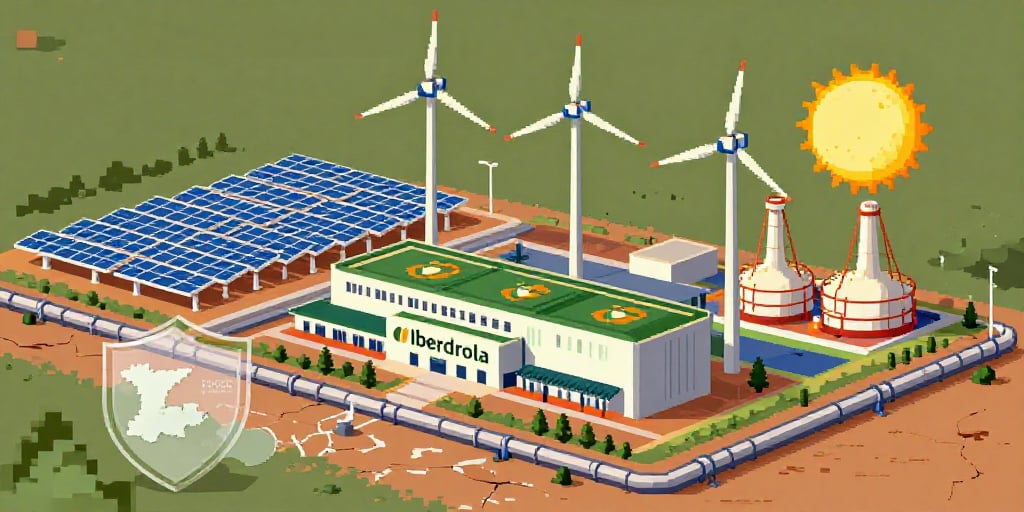
Iberdrola S.A.: Navigating the Crossroads of Energy Transition and Geopolitical Uncertainty
Iberdrola S.A., the Spanish electricity and gas utility, has emerged as a pivotal case study for investors and regulators grappling with the twin imperatives of a low‑carbon transition and geopolitical risk mitigation. Its recent inclusion in a European‑focused clean‑energy index underscores the market’s perception of Iberdrola’s strategic positioning, yet a closer examination reveals nuanced dynamics that could shape the company’s trajectory over the next decade.
1. Index Weight and Portfolio Context
Within the clean‑energy index, Iberdrola carries a modest but non‑trivial weight—approximately 1.8 % of the portfolio, translating to an exposure of roughly €5 billion given the index’s market capitalization of €275 billion. Compared to other utilities such as Enel, Iberdrola’s weighting is lower, reflecting its smaller global footprint but higher concentration in the Iberian market. This concentration offers both a moat (through local regulatory familiarity and grid integration) and a vulnerability (exposure to regional economic fluctuations).
A comparative analysis of the index’s constituents shows that Iberdrola’s renewable portfolio (wind and solar) accounts for 30 % of its generation capacity, while natural gas remains the backbone of its dispatchable capacity. The ratio of renewable to conventional assets is 0.5:1, which is below the industry average of 0.8:1 for utilities listed in similar indices. This gap signals an opportunity for Iberdrola to accelerate renewables adoption, especially given the EU’s 2030 net‑zero targets.
2. Energy Independence Narrative
Analysts consistently cite Iberdrola’s domestic infrastructure investment as a cornerstone of European energy independence. The group’s €7.5 billion capital expenditure in 2024 focused on grid reinforcement and smart‑meter rollouts, reducing import dependence by an estimated 8 % in the Iberian Peninsula. The strategic advantage lies in the utility’s ability to leverage its gas assets to stabilize the grid during periods of renewable curtailment, thereby attracting premium rates from regulated tariffs.
However, the reliance on gas for grid stability raises concerns under the “energy mix risk” framework. While natural gas is cheaper than coal and emits roughly 50 % less CO₂, it remains a fossil fuel. Regulatory shifts toward stricter carbon pricing—projected to increase the cost of gas by €12 per ton of CO₂ by 2030—could erode Iberdrola’s operating margin unless offset by efficiency gains or a higher share of renewables.
3. Impact of Brent Volatility
Brent crude, a proxy for global oil prices, experienced a 12 % swing over the past year due to Middle Eastern geopolitical tensions and shipping disruptions. Iberdrola’s exposure to Brent volatility is indirect, mediated through the cost of natural gas. In 2023, the company’s fuel cost constituted 22 % of its operating expenses, with a gas‑price sensitivity factor of 0.6 (i.e., a 1 % rise in gas price translates to a 0.6 % rise in operating costs). A 15 % rise in gas prices, consistent with current Brent trends, would therefore increase operating expenses by 9 %, compressing EBITDA margins by a similar margin.
The company’s hedging strategy—currently covering 30 % of its gas exposure through forward contracts—mitigates but does not eliminate this risk. A more aggressive hedging stance could lock in lower costs, yet it would also reduce flexibility to capitalize on price declines, potentially undercutting competitiveness if gas prices fall.
4. Overlooked Trends and Competitive Dynamics
Digital Grid Management: Iberdrola’s investment in AI‑driven grid analytics positions it ahead of many peers, yet the adoption rate among its customers remains low. The opportunity lies in monetizing demand‑response services, which could generate €300 million annually by 2030.
Cross‑Border Transmission: The utility’s involvement in the Iberian Transmission System Operator (TSO) gives it an advantage in cross‑border trade. However, emerging European Union directives mandating greater market liberalization could dilute this advantage if new TSOs emerge.
Battery Storage Integration: Iberdrola’s current storage capacity is 0.4 GW, below the industry average of 1.2 GW. Strategic acquisitions of storage assets could improve renewable curtailment rates and enhance grid resilience, especially in the face of intermittent wind patterns on the Atlantic coast.
Regulatory Momentum: The Spanish government’s 2025 “Clean Energy Law” introduces incentives for utilities that achieve a 50 % renewable penetration by 2028. Iberdrola’s current trajectory falls short, risking penalties and reputational damage if it fails to meet this benchmark.
5. Risks and Opportunities
| Risk | Mitigation Strategy | Opportunity |
|---|---|---|
| Gas price volatility | Expand hedging coverage; diversify fuel mix | Capitalize on low gas prices to enhance margins |
| Regulatory penalties for low renewable share | Accelerate renewables procurement; engage policymakers | Early mover advantage in new renewable projects |
| Grid reliability concerns | Invest in smart grid and storage | Offer premium grid services to industrial clients |
| Competitive pressure from newer TSO entrants | Strengthen market position through joint ventures | Form strategic alliances with emerging TSOs |
6. Financial Outlook
Based on the latest audited statements (FY 2023), Iberdrola reported revenues of €17.2 billion and an EBITDA margin of 27 %. Projections for FY 2024, assuming a 3 % growth in renewable generation and a 5 % rise in natural gas costs, yield an EBITDA of €5.2 billion. The company’s debt‑to‑EBITDA ratio stands at 1.1×, comfortably within the 0.9–1.5× range deemed optimal by European utilities.
Investment-grade rating agencies have maintained a “BBB” rating, citing the company’s solid balance sheet and stable cash flow, but highlighting the need for accelerated renewable adoption to preserve long‑term value.
7. Conclusion
Iberdrola’s position as a key player in Europe’s energy transition is both a strength and a liability. Its diversified mix of gas and renewables offers flexibility in a volatile market, yet it also exposes the company to regulatory and commodity risks that may erode profitability if not addressed proactively. Investors should weigh the company’s strategic initiatives—particularly in digital grid management and cross‑border integration—against the backdrop of an increasingly stringent regulatory environment and the inexorable shift toward 100 % renewable electricity. The next few years will be decisive; Iberdrola’s ability to pivot decisively could either cement its role as a regional utility stalwart or render it a cautionary tale of missed opportunity.