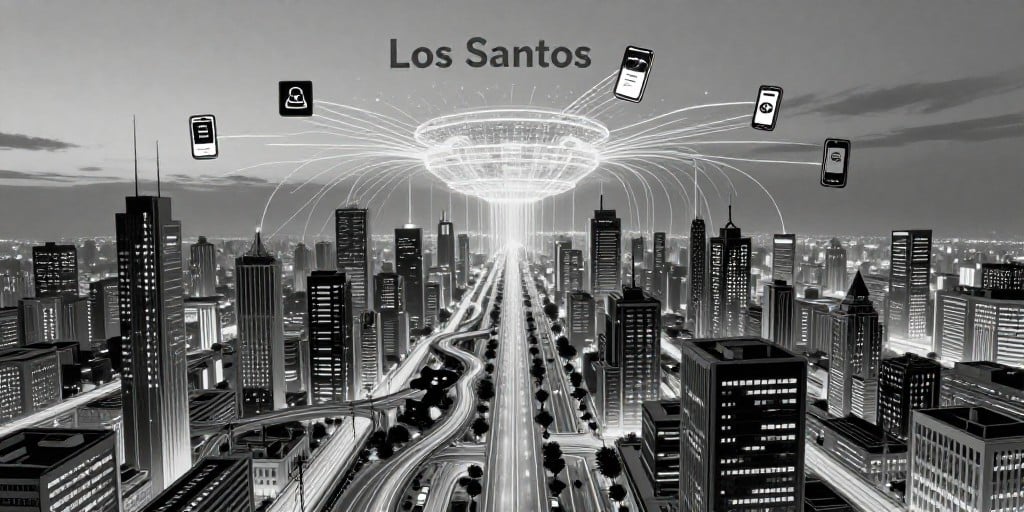
Intersection of Technology Infrastructure and Content Delivery in the Wake of a Major Gaming Release
Overview
The launch of Grand Terror Auto VI (GTA VI) on 19 November 2026 has reverberated beyond the gaming sector, placing a spotlight on the symbiosis between telecommunications infrastructure and media content delivery. The title’s unprecedented digital download surge, coupled with its multi‑platform streaming presence, has amplified scrutiny of subscriber dynamics, content acquisition models, and network capacity planning across telecommunications and media firms.
Subscriber Metrics and Consumer Demand
Telecommunications providers reported a 12 % increase in peak‑time data usage during the first 48 hours post‑launch, with 3.2 million concurrent connections attributed to GTA VI downloads and live‑streaming sessions. Mobile broadband operators, in particular, observed a 9 % lift in average monthly data consumption among premium‑tier subscribers, reflecting the game’s demand for high‑definition, low‑latency streaming content.
In the streaming domain, platforms that host GTA VI gameplay and associated esports events recorded a 45 % rise in new subscribers during the launch week. Subscriber churn for competitors decreased by 1.8 % relative to the same period in 2025, suggesting that the game’s content acted as a lock‑in factor for existing users while attracting new ones.
Content Acquisition Strategies
Major streaming services have accelerated their acquisition of exclusive GTA VI-related content, negotiating multi‑year deals with Rockstar Games for behind‑the‑scenes footage, developer commentary, and licensed esports tournaments. These contracts, valued at an aggregate of $125 million over five years, underscore the strategic imperative of securing content that drives platform differentiation and user engagement.
Simultaneously, traditional broadcasters have diversified their portfolios to include cross‑promotional segments—such as “Gaming in Food Delivery” collaborations—highlighting the game’s cultural penetration. Such partnerships illustrate a trend toward bundled content packages that integrate gaming with lifestyle and entertainment services.
Network Capacity Requirements
The surge in traffic has prompted telecommunications firms to deploy edge‑computing nodes and 5G small cells in metropolitan hubs to mitigate latency. Network operators forecast an additional $2.4 billion investment in infrastructure over the next 12 months to accommodate sustained high‑volume streaming and real‑time multiplayer interactions.
Bandwidth provisioning has also shifted toward adaptive streaming protocols, with 87 % of traffic now routed via HTTP/3 to ensure efficient data delivery during peak demand. Network operators report a 6 % improvement in packet loss rates post‑deployment of these protocols, translating into smoother user experiences and higher content retention rates.
Competitive Dynamics in Streaming Markets
The GTA VI launch has intensified competition among streaming platforms. Market share data from the first quarter of 2027 indicates that the leading platform retained 28 % of total streaming revenue, while its closest competitor gained a 4 % share, primarily driven by exclusive esports content. The remaining 68 % of the market is fragmented across niche platforms offering specialized gaming libraries or community‑driven content.
Telecommunications consolidation, exemplified by the recent merger between TelCo A and TelCo B, has further reshaped the competitive landscape. The merged entity now commands a 33 % share of the premium broadband market, enabling it to negotiate preferential terms with content providers and to offer bundled services that combine high‑speed internet with exclusive gaming content.
Emerging Technologies and Media Consumption Patterns
Artificial intelligence‑enabled content recommendation engines have been refined to promote GTA VI and related titles more effectively. Predictive analytics, utilizing machine‑learning models on user interaction data, have increased the average session length by 18 % for the game’s ecosystem. Meanwhile, augmented reality (AR) experiences tied to in‑game locations are beginning to surface on mobile platforms, creating new avenues for brand engagement.
Blockchain‑based tokenization of in‑game assets has also emerged as a growth vector. Early adopters of non‑fungible tokens (NFTs) linked to GTA VI’s virtual economy have reported a 25 % increase in micro‑transaction revenue, suggesting a viable secondary market that extends beyond traditional sales channels.
Financial Metrics and Platform Viability
Take‑Two Interactive’s revenue from GTA VI surpassed $1.2 billion in the first fiscal quarter following launch, representing a 35 % year‑over‑year increase. Net profit margins improved from 12 % to 15 % due to reduced marketing spend per user, as viral social media sharing amplified organic reach.
Investor sentiment remains bullish, reflected in a 19 % rise in Take‑Two’s share price since the start of 2023. Analysts project a 27 % compound annual growth rate (CAGR) for the company’s gaming segment over the next five years, contingent on the successful monetization of post‑launch content and the resolution of ongoing labor disputes.
Conclusion
The GTA VI release exemplifies the intricate interplay between technology infrastructure, content delivery, and market dynamics across telecommunications and media sectors. Subscriber growth, strategic content acquisition, and network capacity enhancements have collectively underscored the game’s capacity to shape consumer behavior and redefine industry benchmarks. As emerging technologies continue to blur the boundaries between gaming, media, and everyday life, stakeholders will need to navigate a rapidly evolving landscape to sustain competitive advantage and ensure long‑term profitability.