Corporate Update and Strategic Implications for Power Systems
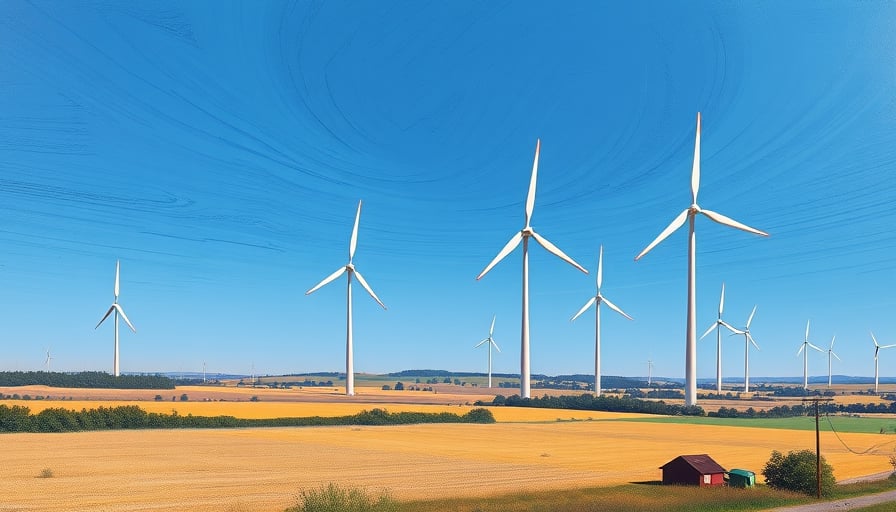
Emera Inc. released a comprehensive financial and operational review on April 3, 2026, highlighting a measurable improvement in revenue attributable to the expansion of its renewable asset base and the commissioning of a new wind farm. Earnings before interest, taxes, depreciation and amortisation (EBITDA) increased, underscoring gains in operational efficiency and a lower cost of goods sold. While the company maintains a positive revenue outlook, it has revised its profit‑margin forecast downward in light of elevated commodity prices and modest rises in interest expenses, both linked to persistent supply‑chain constraints.
1. Impact on Power Generation and Transmission Dynamics
The new wind farm enhances the firm’s generation portfolio by adding capacity that is synchronous to the regional grid. This increase in capacity margin contributes to a more robust generation mix, improving system inertia and reducing the reliance on peaking plants. In transmission terms, the additional capacity necessitates upgrades to inter‑substation links to accommodate higher power flows without incurring overloads or excessive voltage deviations. From a grid‑stability perspective, the integration of variable wind output is mitigated by advanced forecasting and real‑time dispatch controls, which maintain frequency regulation within statutory limits.
2. Renewable Integration Challenges
The company’s focus on renewable generation brings inherent challenges:
| Challenge | Engineering Response | Economic Implication |
|---|---|---|
| Variability & Forecasting | High‑fidelity weather models and predictive analytics. | Reduced need for spinning reserve, lowering operational cost. |
| Grid Congestion | Reinforcement of 345 kV corridors and deployment of FACTS devices. | Capital outlays but improved market participation. |
| Voltage Regulation | On‑load tap changers and dynamic reactive power compensation. | Enhanced power quality, reducing compensation costs for consumers. |
Effective integration hinges on synchronizing generation output with demand patterns, requiring sophisticated control algorithms that can react within seconds to prevent cascading outages.
3. Infrastructure Investment Requirements
To support the expanding renewable mix, Emera must invest in several key infrastructure components:
- Transmission Upgrades – Extending high‑voltage corridors and integrating phase‑shift transformers to alleviate bottlenecks.
- Distributed Energy Resources (DER) Interconnection – Upgrading substation automation to accommodate bidirectional power flows from rooftop solar and battery storage.
- Grid‑Stability Enhancers – Deploying synchronous condensers or inverter‑based resources that provide inertia and frequency support.
These projects represent multi‑million‑dollar capital expenditures but are essential to preserve reliability as renewable penetration climbs beyond 50 % of total generation.
4. Regulatory and Rate‑Structure Context
Regulatory agencies are increasingly adopting capacity‑based tariffs and time‑of‑use (TOU) structures to reflect the true cost of maintaining grid stability under high renewable penetration. Emera’s commitment to renewable investment aligns with the Clean Energy Standard (CES) provisions in several states, which require utilities to procure a specific percentage of power from renewable sources. The company’s cost‑of‑goods reduction is likely to influence the setting of net‑rate structures, potentially allowing for lower retail prices if the savings are passed to consumers.
5. Economic Impacts on Utility Modernization
The shift toward renewables necessitates a modernized control architecture capable of handling distributed assets. Such modernization typically results in:
- Short‑Term Costs – Capital expenditures for hardware, software, and personnel training.
- Long‑Term Savings – Reduced fuel costs, lower emissions penalties, and potential avoidance of costly frequency‑control procurements.
Moreover, the integration of renewable generation can enhance market competitiveness by enabling participation in ancillary services markets, thereby generating additional revenue streams that offset initial investments.
6. Conclusion
Emera’s financial performance demonstrates that strategic investment in renewable generation can drive revenue growth while maintaining a resilient grid. The modest adjustment to profit‑margin expectations reflects realistic market conditions without undermining the company’s long‑term sustainability objectives. By addressing grid stability challenges through targeted infrastructure upgrades and embracing evolving regulatory frameworks, Emera positions itself to capitalize on the economic opportunities presented by the energy transition while safeguarding consumer costs.