
Corporate Developments and Technical Implications for Edison International
Edison International (NYSE: EIX), the parent company of Southern California Edison, has experienced a series of institutional transactions in recent trading days. The Goldman Sachs Strategic Factor Allocation Fund acquired a sizeable block of shares, Trilogy Capital divested a larger position, Richardson Financial Services added a modest holding, and City Holding Co. sold a small number of shares. Concurrently, Barclays has lowered its price target for the utility while maintaining an overweight recommendation. These movements reflect routine portfolio adjustments and analyst commentary rather than a fundamental shift in the company’s outlook.
1. Institutional Activity and Market Perception
From a market‑capitalization perspective, the net effect of the transactions is relatively modest, with total shares changing hands amounting to only a fraction of Edison’s outstanding equity. The Goldman Sachs purchase is consistent with the firm’s focus on long‑term infrastructure assets that provide stable cash flows, while Trilogy Capital’s exit aligns with a broader portfolio rotation toward assets with higher yield curves. The Barclays revision signals a recalibration of risk‑adjusted returns in light of evolving regulatory and grid‑transition dynamics.
2. Grid Stability in the Context of Institutional Trades
Edison’s power system comprises over 10,000 MW of generation capacity, a mix of coal, natural gas, nuclear, hydro, and an expanding portfolio of renewables. The utility’s transmission network spans more than 40 000 km of high‑voltage lines, with a distribution mesh that delivers power to approximately 12 million customers. Institutional trading activity can influence short‑term liquidity but does not directly affect grid stability. However, changes in shareholder composition may impact long‑term capital‑allocation decisions that affect investment in grid modernization—an essential element for maintaining frequency and voltage regulation in the face of intermittent renewable generation.
3. Renewable Energy Integration Challenges
Southern California’s renewable energy targets—30 % of electricity from renewables by 2030 and 50 % by 2045—create several technical challenges:
| Challenge | Engineering Implications |
|---|---|
| Curtailment | Variable output from solar and wind can exceed transmission capacity, requiring curtailment or energy storage solutions. |
| Voltage Regulation | Distributed generation reduces voltage rise, necessitating on‑load tap changers and voltage‑control devices. |
| Frequency Response | Rapid changes in load or generation can lead to frequency excursions; dynamic inertia from synchronous generators must be complemented by synthetic inertia from inverter‑based resources. |
| Protection Coordination | Higher penetration of power electronics alters fault current magnitudes, necessitating updated relay settings. |
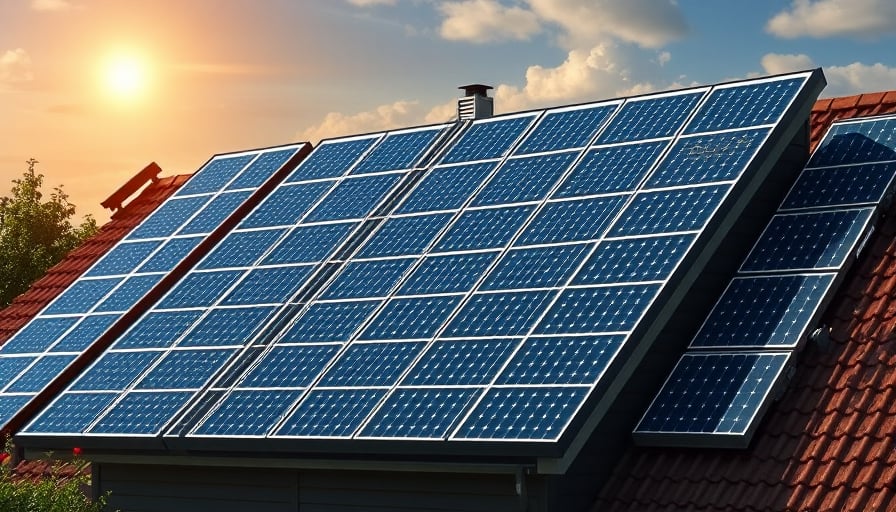
Edison’s investment in a 3 GW battery storage facility and the integration of 1.5 GW of rooftop solar under the “Solar Plus Storage” program are strategic responses to these issues.
4. Infrastructure Investment Requirements
Maintaining grid reliability while accelerating decarbonization requires a capital outlay in the range of $30 billion to $45 billion over the next decade. Key projects include:
- Transmission Upgrades – Building 800 km of 500 kV lines to accommodate long‑haul renewable imports.
- Grid‑Forming Inverters – Deploying 1.2 GW of grid‑forming capability to provide virtual inertia and voltage support.
- Smart Grid Controls – Implementing advanced SCADA and PMU networks for real‑time monitoring and automated corrective actions.
- Microgrid Development – Piloting 150 MW microgrids for resilience against extreme weather events.
These investments are funded through a mix of regulated rate increases, strategic debt issuance, and potential public‑private partnerships.
5. Regulatory Frameworks and Rate Structures
California’s Public Utilities Commission (PUC) mandates that utilities adopt a “Transmission and Distribution (T&D) Rate Structure” that separates capacity charges from energy charges. The new “Renewable Energy Credit (REC) Program” requires utilities to procure 50 % of their power from renewable sources, with a price floor to protect renewable developers. The PUC’s “Modernization Fund” allows utilities to recover costs associated with grid upgrades through a dedicated surcharge on customer bills.
Edison’s current Tiered Energy Rates—where residential customers pay $0.13/kWh up to 400 kWh and $0.15/kWh thereafter—provide a revenue cushion to fund renewable integration while limiting the impact on low‑income households. However, the projected rate increase of 2.5 % in FY 2027 reflects the need to finance the 3 GW storage project and the associated smart‑grid upgrades.
6. Economic Impacts of Utility Modernization
From an economic standpoint, the modernization effort yields several benefits and costs:
| Impact | Detail |
|---|---|
| Job Creation | 15,000 construction and engineering jobs during the 2025‑2032 construction window. |
| Operational Savings | 12 % reduction in outage costs due to improved predictive maintenance and faster fault isolation. |
| Consumer Cost | Short‑term rate hikes of 1.2 % to 2.5 % for residential customers; long‑term benefits include reduced outage frequency and potentially lower wholesale price exposure. |
| Renewable Development | Encourages private investment in distributed generation through net‑metering and time‑of‑use tariffs. |
| Environmental Benefits | Reduction of 1.8 Mt CO₂ annually by 2030, aligning with California’s cap‑and‑trade program. |
The net present value (NPV) of the projected modernization projects, discounted at 5 %, exceeds $50 billion, indicating strong fiscal justification even after accounting for the temporary increase in consumer costs.
7. Conclusion
While the recent institutional trading activity at Edison International is largely a routine portfolio rebalancing, it underscores the broader narrative of a utility positioned at the intersection of traditional power generation and a rapidly evolving renewable landscape. The company’s commitment to grid stability, coupled with significant capital investments and a robust regulatory framework, lays the groundwork for a reliable, low‑carbon electricity supply. Stakeholders—including shareholders, regulators, and consumers—must navigate the short‑term cost implications in order to reap the long‑term economic and environmental benefits that come with a modernized power grid.