
Corporate Update: Eaton Corporation PLC
Eaton Corporation PLC, a prominent industrial firm listed on the Frankfurt Stock Exchange, continues to command attention in the electrical equipment sector. Recent market commentary has highlighted a strategic shift in investor focus within the broader power‑related industry, moving from the generalized growth of AI‑driven power companies toward firms that are actively generating revenue and managing supply constraints. This selective approach is likely to influence the valuation of companies such as Eaton, which supplies critical electrical distribution and control solutions that underpin the expanding AI and data‑center infrastructure.
Manufacturing Process and Capital Investment Context
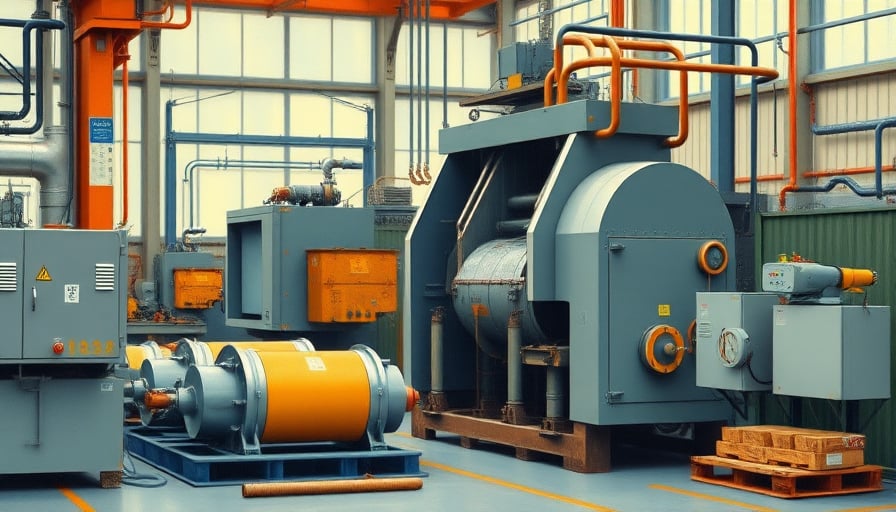
Eaton’s product portfolio—spanning power distribution, control, and safety equipment—relies on precision manufacturing processes that blend advanced metrology, additive manufacturing, and robotic assembly. The firm’s recent capital allocation reflects a dual emphasis:
Automation and Digitalization – Investments in Industry 4.0 platforms, including real‑time condition‑monitoring sensors and edge‑computing analytics, enhance production efficiency. By embedding predictive maintenance algorithms into production lines, Eaton can reduce unplanned downtime and improve throughput, directly impacting productivity metrics such as units per labor hour.
Supply Chain Resilience – Capital expenditures are directed toward securing critical raw‑material sources and diversifying suppliers, mitigating the risk of component shortages. Strategic stockpiling of high‑value components, coupled with in‑house fabrication capabilities, allows Eaton to maintain production schedules even amid global supply chain disruptions.
The company’s capital budgeting decisions are guided by a rigorous cost‑of‑capital framework that incorporates both the internal rate of return (IRR) and the weighted average cost of capital (WACC). By targeting projects that exceed a 12–15 % IRR threshold—above the firm’s WACC of approximately 6.8 %—Eaton ensures that capital is deployed in ways that maximize shareholder value while sustaining operational resilience.
Productivity Metrics and Technological Innovation
Eaton reports a steady improvement in key productivity indicators:
- Yield Rates – Enhanced process control and statistical process control (SPC) methodologies have lifted yield rates from 96 % to 98 % over the past fiscal year.
- Labor Productivity – Automation of repetitive tasks has increased labor productivity by 7 %, measured as units produced per labor hour.
- Energy Efficiency – Adoption of energy‑efficient motors and smart grid components has reduced energy consumption per unit by 4 %, contributing to lower operating costs and environmental compliance.
These metrics are underpinned by innovations in heavy‑industry technologies:
- High‑Voltage Circuit Breakers – New designs incorporate advanced ceramic insulators and micro‑gap monitoring, enabling safer operation at voltages up to 400 kV.
- Smart Transformers – Integration of silicon‑on‑insulator (SOI) semiconductor technology facilitates real‑time fault detection and dynamic load balancing.
- Modular Distribution Panels – A modular architecture supports rapid reconfiguration, aligning with the flexible demands of data‑center and AI workloads.
Technological advancements not only elevate Eaton’s competitive standing but also resonate with the broader market’s demand for smart electrical solutions.
Economic Drivers of Capital Expenditure
Several macroeconomic factors shape Eaton’s capital expenditure strategy:
Infrastructure Spending – Government initiatives, such as the European Union’s Green Deal and national grid modernization plans, stimulate demand for high‑voltage and energy‑efficient equipment. Eaton’s product lines align closely with these policy directives, generating a robust pipeline for capital investments.
Interest Rate Environment – Current low‑interest rates (EU short‑term rates hovering around 0.1 %) reduce the cost of debt financing, encouraging the firm to undertake large‑scale capital projects without compromising liquidity.
Currency Volatility – Exchange rate fluctuations impact the cost of imported raw materials. Eaton mitigates this through hedging strategies and by sourcing components from multiple geographic regions to stabilize input costs.
Regulatory Changes – Evolving safety standards and environmental regulations—such as the EU’s Machinery Directive and the upcoming REA (Renewable Energy Act) amendments—drive the need for compliant, high‑performance equipment. Compliance necessitates ongoing research and development investments.
Supply Chain Implications
Eaton’s strategic focus on supply chain resilience addresses several challenges:
- Component Scarcity – By investing in in‑house manufacturing capabilities for high‑value components (e.g., specialty windings, advanced semiconductor packages), the company reduces dependency on external suppliers.
- Lead Time Reduction – Automation and digital supply‑chain platforms streamline procurement processes, cutting lead times by up to 20 %.
- Risk Diversification – Multi‑source supplier networks spread geopolitical and logistical risks, ensuring continuous production during disruptions.
These measures directly support Eaton’s ability to meet the stringent delivery requirements of AI and data‑center customers, who demand rapid provisioning and high uptime.
Market Implications and Investor Outlook
Eaton’s robust trading activity—its share price maintaining a position well above the lower end of its 52‑week range—reflects confidence in the firm’s strategic execution. Analysts observe that:
- Sector Peer Comparison – Eaton’s performance remains steady relative to peers in the electrical distribution and control sector, suggesting resilient operating fundamentals.
- Investor Focus Shift – The market’s recalibration toward revenue‑generating, supply‑chain‑capable firms underscores the importance of Eaton’s current trajectory.
- Long‑Term Growth – As data‑center and AI workloads continue to expand, the demand for advanced electrical infrastructure will likely sustain Eaton’s growth prospects.
In sum, Eaton Corporation PLC’s emphasis on precision manufacturing, productivity enhancement, and capital‑efficient innovation positions the company well to capitalize on evolving industrial demands. Its proactive approach to supply‑chain resilience and regulatory compliance further fortifies its market standing, offering investors a compelling case for continued support amid tightening supply chains and shifting industry dynamics.