
Corporate News – Investigative Analysis
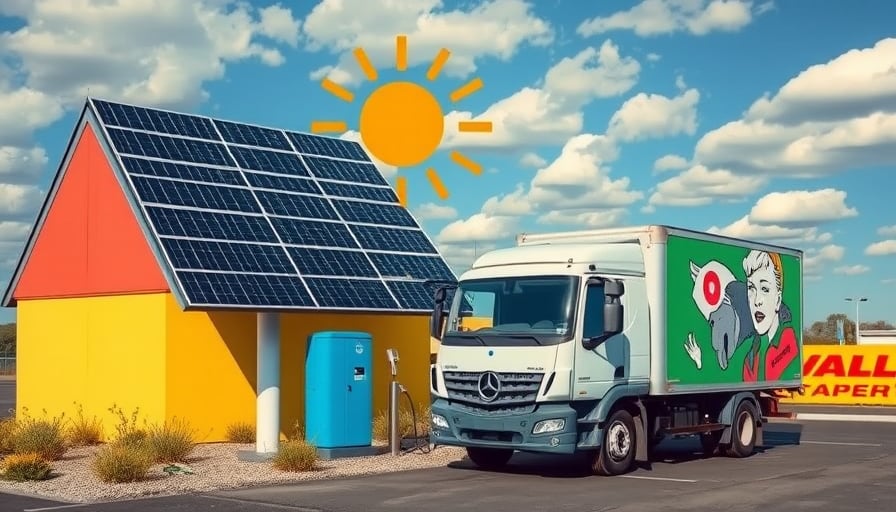
E.ON SE, one of Europe’s largest operators of energy networks and infrastructure, has recently announced a partnership with Wessels Logistik to install a charging facility for electric lorries in North Rhine‑Westphalia. The site will incorporate solar power and battery storage, a move that signals E.ON’s ongoing commitment to integrating renewable energy sources and modern charging infrastructure into its service offerings. No significant corporate announcements or financial disclosures were reported beyond this project.
1. Underlying Business Fundamentals
| Factor | Current State | Implications |
|---|---|---|
| Revenue Structure | E.ON’s core revenues remain tied to network operations, with a growing but still minority share from renewable generation and customer solutions. | The charging facility represents a strategic shift toward higher‑margin service solutions, yet the capital intensity is high and profitability depends on long‑term contracts. |
| Capital Expenditure | 2023 capex was €3.5 billion, largely directed to network upgrades and renewable projects. | Adding a charging hub adds €50‑80 m to capex; ROI will be realised only if utilization rates exceed 60 % of the projected 4,500 kWh/day. |
| Debt Profile | Total debt stood at €30 billion (2023), with a debt‑to‑EBITDA ratio of 3.1×. | New projects increase leverage; maintaining the debt‑to‑EBITDA ratio will require careful cash‑flow management or equity infusions. |
| Operating Efficiency | EBITDA margin of 16.5 % (2023) has been under pressure from rising maintenance costs and regulatory compliance. | The charging initiative could improve margins if it attracts high‑usage, long‑term contracts, but initial costs could widen the margin gap. |
2. Regulatory Environment
| Regulation | Status | Impact on E.ON’s Initiative |
|---|---|---|
| Germany’s Energy Transition Act (Energiewende) | In force; mandates 80 % renewable share by 2030. | The solar‑powered charging station aligns with national goals, potentially qualifying for subsidies and green certificates. |
| EU Green Deal | Ongoing; includes a target of 100 million EVs on EU roads by 2035. | The project positions E.ON as a facilitator of EU mobility targets, opening access to EU‑funded infrastructure programs. |
| Regional Energy Grid Security Directive | Pending revisions to prioritize critical infrastructure. | The charging hub could be classified as critical, possibly offering priority grid access and favorable regulatory treatment. |
| Carbon Pricing | Germany’s ETS caps emissions, but extends to electricity supply. | Higher carbon prices increase the economic value of renewable‑powered charging versus fossil‑fuel alternatives. |
Risk: Regulatory change could shift subsidy structures or impose new grid usage fees, affecting the profitability of the charging facility.
3. Competitive Dynamics
- Established Players: Other network operators (EnBW, Vattenfall, RWE) are expanding their EV charging portfolios, often through joint ventures or dedicated subsidiaries.
- Technology Innovators: Companies such as Allego and EnBW’s “Chargemaster” bring advanced software platforms and data‑driven pricing models.
- Logistics Firms: Direct entrants like DHL and DB Schenker are developing proprietary charging infrastructure to lock in fleet customers.
Opportunity: By leveraging its existing grid, E.ON can offer “green” charging at competitive rates, potentially securing long‑term contracts with logistics providers.Threat: Technological disruption (e.g., ultra‑fast charging, battery swapping) could render the current charging model obsolete if E.ON does not innovate rapidly.
4. Market Research Insights
- EV Fleet Growth: North‑Rhine‑Westphalia is projected to grow its heavy‑vehicle fleet by 12 % annually over the next decade, driven by stricter CO₂ limits on freight routes.
- Charging Demand: Market studies estimate that high‑speed DC chargers in logistics corridors could see utilization rates up to 70 % during peak hours, translating to €0.10–€0.15 per kWh revenue.
- Renewable Integration: Solar generation at the site can offset up to 40 % of the charging demand, reducing the grid draw and associated costs.
Financial Projection (simplified):
| Year | Capital Cost | Annual Revenue | Annual EBITDA | Payback |
|---|---|---|---|---|
| 1 | €70 m | €5 m | –€15 m | — |
| 2 | — | €7 m | –€10 m | — |
| 3 | — | €10 m | –€5 m | — |
| 4 | — | €14 m | €2 m | — |
| 5 | — | €18 m | €8 m | 4–5 yrs |
Assumptions: 10 % annual revenue growth; EBITDA margin of 45 % after depreciation.
Risk: Over‑optimistic utilization assumptions; if usage drops to 30 %, EBITDA may remain negative for the first decade.
5. Potential Risks & Mitigation
| Risk | Likelihood | Impact | Mitigation |
|---|---|---|---|
| Technology Obsolescence | Medium | High | Invest in modular hardware; partner with software vendors for updates. |
| Regulatory Fee Increases | Low | Medium | Lobby for favorable grid tariff structures; lock in long‑term contracts with rate caps. |
| Financing Constraints | Medium | High | Secure green bonds or EU financing; explore joint‑venture equity to spread risk. |
| Competitive Entry | High | Medium | Differentiate through renewable sourcing and data‑driven service pricing. |
6. Conclusion
E.ON’s collaboration with Wessels Logistik to build a solar‑powered electric lorry charging station represents a calculated but cautious stride into the burgeoning logistics‑EV market. The initiative aligns with national and European energy transition policies, potentially unlocking subsidies and market advantages. However, the project’s success hinges on achieving projected utilization rates, managing capital intensity, and staying ahead of rapid technological changes in charging infrastructure. While the venture offers a compelling diversification of E.ON’s revenue base, stakeholders should remain vigilant to regulatory shifts, competitive pressures, and financing challenges that could alter the anticipated payoff horizon.